by Gary Mays | Oct 12, 2013 | Consumer Issues, Emergency Plumber, Gold Coast Plumbing, Insurance, Leaking Pipes, LPG / NG Gas Leaks
The plumbers at Whywait Plumbing are constantly bewildered by some people think if they ignore the smell of gas that it will go away. Gas leaks are never something you should ignore, even if you perceive it to be that you only have a small gas leak. A suspected gas leak can be dangerous and you should deal with it immediately.
If you smell that distinctive gas smell inside your home we recommend the following:
- Evacuate everyone from the house and open all of your doors and windows
- leave the house and turn off gas at the meter (or LP Gas cylinder if that’s what you’re using).
- If you can and it’s safe to do, switch the power off at the electricity meter box too, so electrical appliances can’t generate a spark.
- Then move to a safe distance and call your plumber or local gas authority (see below).
If you smell that distinctive gas smell outside your home then we recommend the following:
- Immediately turn off or remove all sources of ignition such as cigarettes, mobile phones, and any outdoor electrical equipment in the immediate are
- Call the 000 emergency number and inform you have a gas leak and where you suspect the leak is plus any other relevant information that you have observed
- Turn off the gas at your meter
Your gas meter is usually located at the side or front of your home and to turn off do the following:
- Turn the valve at the gas meter to the OFF position
- If the OFF position is not obvious or has worn off over time then generally the valve is off when the handle is at right angles or to the gas inlet pipe.
Modern gas appliances are almost fool proof but like all appliance they must be maintained. Signs to look for and observe that may indicate that your gas appliances may not be operating correctly include:
- fluctuating flames on your cook top
- you are running out of hot water
- you are running out of gas
- faint smell of gas
- sudden increase in gas bill
- hissing noises from pipe joints
- flames are yellow or red
If you observe any of these appearances or problems then turn off the appliance and contact Whywait Plumbing immediately for a gas-fitter to be sent to your home. Because if nothing else you and your family may be at risk of carbon monoxide poisoning.
Finally never ever attempt to fix a gas leak yourself. It must always be undertaken by a licensed gas-fitter. Repairing a gas leak must always be undertaken by a licensed gas fitter with a gas certificate of compliance issued where pipes, fittings or appliances are modified or replaced. Very simply all these requirements are the law, they are not voluntary options.
When it comes to installing, repairing and maintaining your gas pipes & appliances you can depend on the professionalism, expertise and experience you receive from the experienced gas fitting experts at Whywait Plumbing.
by Gary Mays | Sep 25, 2013 | City of Gold Coast, Cold Water, Consumer Issues, DIY Plumbing, Emergency Plumber, Gold Coast Plumbing, Gold Coast Water, Leaking Pipes, Plumbers, Plumbers Gold Coast, Plumbing Emergencies, Plumbing Maintenance, Toilets, Water, Water Leaks, Water Meters
How to check if you have a water pipe leak
With a water pipe leak, it’s commonly said that prevention is the key. Positive preventive maintenance saves you thousands of dollars in hassles and water damage.
That’s why you want to follow the simple step by step check for a water pipe leak. This will prevent the hassles before they hit you where it hurts most – in your pocket!
Step by Step Instructions
Below we run through:
- Check your taps
- Check your toilets
- Turn the taps off
- Check your water meter
- Wait 15 minutes
- Compare water meter readings
- Turn the taps back on
- When to call a plumber
- When your good to go
At Whywait Plumbing, we have always preached that preventative maintenance policies and procedures will prevent many of the significant cost blowouts in plumbing maintenance.
As always, prevention on checking for a water leak is the best solution. An underground concealed water pipe leak is often impossible to see or hear. More so if your home is on sandy soil or has lots of garden vegetation.
The simplest way to check if you have a concealed water pipe leak is to follow the how-to steps below:
Step 1 – Check your taps
Check all taps both inside the house and outside the house are not dripping.
Step 2 – Check your toilets
Check the toilet cisterns are not overflowing or running into the toilet bowl by tipping a few drops of food dye into the cistern and if there is no colouring of the water in the toilet bowl you know there is no leak.
Step 3 – Turn the taps off
 Turn off all the taps that you normally leave turned on, such as the washing machine, dishwasher and the toilet cisterns.
Step 4 – Check your water meter
At the council water meter check the meter is not turning and write down the figures on the meter dial.
Step 5 – Wait 15 minutes
After 15 minutes recheck the water meter and write down the figures on the meter dial again.
Step 6 – Compare water meter readings
Compare the figures you have written down, and if the numbers have not changed at all, then you have no water pipe leak. If the numbers have changed very slightly repeat the test but do it for at least 1 hour.
Step 7 – Turn the taps back on
If you are satisfied there are no leaks remember to turn back on the taps you turned off at the washing machine, dishwasher and toilet cisterns.
Step 8 – When to call a plumber
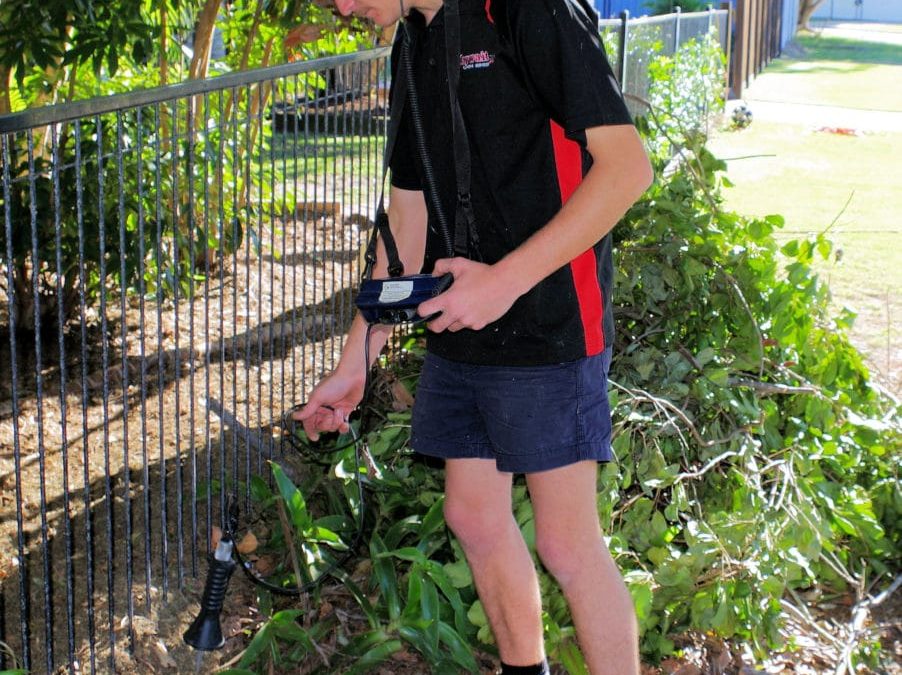
 If the meter dial reading on the water meter has changed after 1 hour then in all likelihood you have an underground concealed water pipe leak, and you need to give Whywait a call to organise leak detection.
Step 9 – When your good to go
If the meter dial reading has not changed, that means your underground water reticulation piping is in good condition.
Prevention is the key
No matter what your results in the above step by step preventative maintenance suggestions, we recommend you repeat it monthly. We also recommend you record your water meter readings every month as any change in water use patterns will quickly indicate a possible leak.
As a rule of thumb, YOU ARE RESPONSIBLE for any water leak after the council water meter that is on your property. Therefore we recommend that you at least check your water meter reading every month and seriously consider the installation of an AquaTrip water pipe leak detection and control system.
by Gary Mays | Sep 5, 2013 | bathroom mould, Bathrooms, Consumer Issues, Drain Odours, Gold Coast Plumbing, Health Issues, Leaking Pipes, Plumbers, Plumbers Gold Coast, Sustainable Plumbing
Do you have mould around the tiles or on the walls in your bathroom or kitchen? If you do then you are not alone as it is a common problem particularly in bathrooms but also in kitchens in South East Queensland due to our sub-tropical climate. Like most problems prevention is vital and often very simple.
Because your bathroom and especially the shower area are the wettest areas in your home it is not uncommon to see mould growing in the grouting and silicon sealants. Bathroom Mould loves the perfect atmosphere to create the ideal conditions for mould growth in the cracks and gaps in the tiling. Consequently mould grows in behind and through the grout joints on the tiles. As can be seen on the photo on the right mould loves getting in behind the silicon seal on the internal corners whether it be the wall or the floor.
The most common area to find mould is in your shower where it is nourished by your body oils, shampoo and soap residue that are left behind every time the shower is used.
Poor air circulation actively assists mould growth as the warmth and moisture created in the enclosed area of a shower offer further ideal conditions for mould growth in the dark areas of the shower around the internal corners and the shower floor drain. Poor air circulation is easily resolved by ensuring you install a good quality bathroom extraction fan above the shower that turns on automatically to remove all of the steam and water particles while you are using the shower.
If you are suffering from mould growth in your bathroom and or kitchen then Whywait Plumbing recommend that you act now to remove it before permanent stains are created. To not only prevent but also treat mould you need to use what nature uses and that is enzymes rather than corrosive chemicals. Enzymes are a natural part of our world and play an important role in everyday life. They are found in every living organism and life is not possible without enzymes. Enzymes are catalysts – not living organisms.
The success Whywait Plumbing have enjoyed with utilising Enzyme Wizard products is incredible with every problem we have utilised it on exceeding not only our expectations but those of our clients. Enzyme Wizard products are a guaranteed supply of plant based enzymes and enzyme products that by their very nature eliminate odours and organic matter, from blood stains, to cleaning carpets and counter tops, removing wallpaper, and even used as a high quality cleaner/degreaser.
For preventing and treating bathroom mould in the bathroom or the kitchen you need to utilise Kitchen & Bathroom Mould & Mildew spray which is a spray and wipe product which is suitable for all surfaces in a bathroom or kitchen whether they are formica or stone bench tops, tiles, glass, timber or stainless steel as it will not only attack existing mould but prevent mould developing.
If you have surface mould in areas such as tiles grout simply spray the effected area with Mould & Mildew spray whilst cleaning the area with a stiff brush. Once you have finished brushing the area leave it 5 minutes then rinse it with clean water. If you have heavy infiltration of mould it maybe necessary to apply a couple of extra times to completely remove the mould.
Frequently you will find mould behind the silicon sealant on the internal corners in tile areas which will require more thorough work. You will need to use a utility knife such as a Stanley knife to scrape off all of the silicon plus ensure you use use a blade to scrape the remnants of silicon clear off the tiles. Once all of the silicon has been removed spray the mould with Mould & Mildew spray as above until it has all disappeared. Once the mould has gone rinse the area clean and dry it thoroughly with a hot air dryer to ensure there is no moisture trapped in the open joint. Finally you will need yo apply a good quality mould resistant silicon to the joint which is specifically designed for high moisture areas.
Once you have removed the kitchen or bathroom mould you need to ensure that you remove the chemical cleaners and bleaches from your cleaning regime and use Enzyme Wizard products in your bathroom and kitchen to prevent mould reoccurring and ensure you have a positive prevention program in place in your home that contain no harmful phosphates or caustic chemicals.
If you observe mould reappearing after a few days of removing then you may have problems with leaking pipes or fittings that require a thorough investigation by Whywait Plumbing to ensure you are not damaging internal frames and wall linings. If you have leaking pipes or fittings behind the wall then mould is only a sympton of a bigger problem and ignoring will not make it disappear. If in any doubt contact Whywait Plumbing for advice on how to deal with mould in your bathroom and or kitchen.

by Gary Mays | Aug 23, 2013 | City of Gold Coast, cloudy hot water, Consumer Issues, Gold Coast Plumbing, Health Issues, Hot Water, Hot Water Heat Pump, Hot Water Temperature, licensed plumber, Plumbers Gold Coast, Plumbing Maintenance, Taqua built in filtration sink mixer tap, Water Filtration
Why does my hot water look yuck?
Why is my hot water cloudy is one of those perennial questions that arise for the plumbing technicians at Whywait Plumbing.
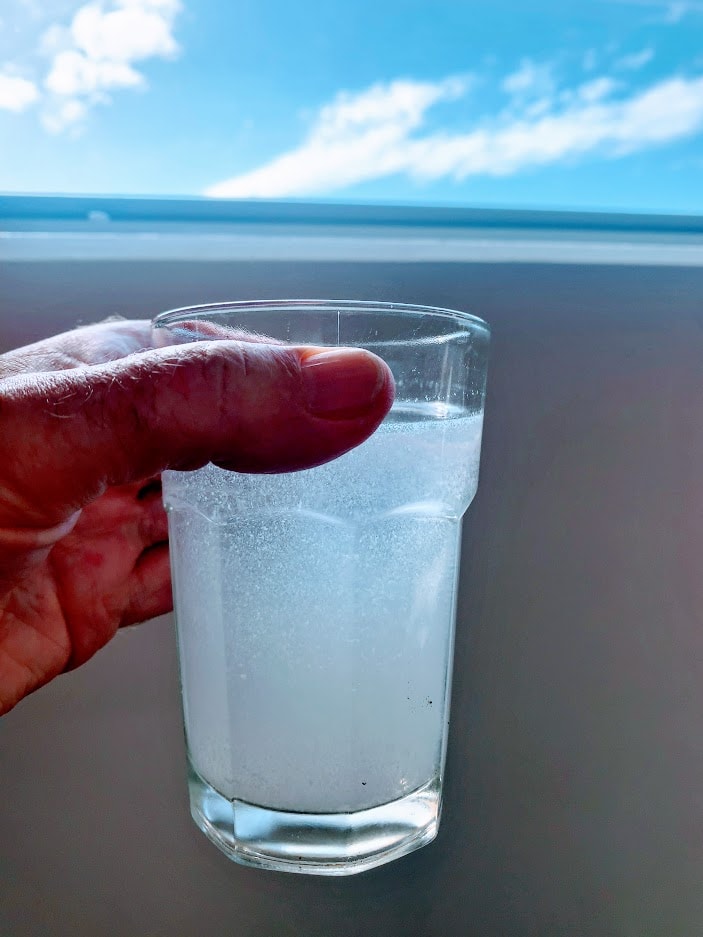
Generally, the problem is based around reoccurring issues of “what do you think causes cloudy (white, not dirty) water that comes out of the kitchen tap when on hot? It doesn’t do it in the cold; you don’t get the same residue if you boil cold. The photo below is the residue after 30 seconds when the water settles.”
Very simply, in most cases, cloudy, hot water is caused by dissolved gases in the water. We assure you it is safe to use.
To get cloudy water from your hot tap, you must create the right set of circumstances for everything to come together simultaneously.
So why is my hot water not clear but looks milky?
Turning on the hot water tap and having milky or cloudy water for a few seconds is not unusual. This is a common occurrence that a fundamental principle of physics can explain.
To understand why hot water can appear cloudy, you first need to know that all the water in your home is stored in your pipes under pressure. When water is under pressure, it has a higher capacity to hold dissolved gases. However, when you heat water, the ability to hold those dissolved gases is reduced. This creates supersaturation, which is when there are more dissolved gases in the water than they can carry.
When you turn on the hot water tap, the release of pressure causes those dissolved gases to be released in the form of tiny gas bubbles, which give the water a cloudy or milky appearance. Think of it like popping the cork off a bottle of champagne – all that pressure has to go somewhere!
What causes hot water to look milky or cloudy when you first turn on your tap?
If you’ve ever turned on your hot water tap and found that the water is milky or cloudy, don’t worry, you’re not alone. This common occurrence can happen when turning on the tap releases the pressure, often in an initial highly pressurised burst. The dissolved gas in the water comes out of the solution in the form of tiny gas bubbles, which fill the water and give it a cloudy or milky appearance.
But the good news is that this is a normal and healthy condition for your water. In fact, reasonable quantities of dissolved gas or air in water are not uncommon. And as the gas bubbles dissolve, the water will clear from the bottom up, like a disappearing act. You can easily observe the water rapidly clearing from the bottom up in a glass.
So, if you’re concerned that your hot water service is defective or your water is contaminated, don’t be. We guarantee that cloudy water does not mean anything wrong with your hot water service or water quality. In fact, gas bubbles in your hot water supply will increase with the increase in temperature of your water because the hotter your water, the lower the number of gas bubbles that can be held. So, give it a few seconds, and your hot water will be clear and ready to use.
What should I do if my hot water is always cloudy?
If your water is continually cloudy after the initial burst of hot water, it needs further investigation. Gas bubbles do not cause cloudiness that does not dissolve in hot water.
Seldom is it a fault with your hot water service? If the water does not lose the cloudiness within thirty seconds, you likely have a water filtration problem or a sediment buildup in the hot water tank.
Investigating cloudy, hot water needs to be undertaken by a licensed plumber, so if you are continuously asking yourself why is my hot water cloudy, you need to call us at Whywait Plumbing on (07) 5580 4311 and book a site visit.

by Gary Mays | Apr 27, 2013 | Consumer Issues, DIY Plumbing, Gold Coast Plumbing, Health Issues, Insurance, Plumbers, Plumbers Gold Coast, Plumbing Emergencies, Plumbing Legislation, Sustainable Plumbing
Plumbing is public health, now and in the future. Just as Vaccination Protects Individuals and the Community. Plumbing Protects the Whole Community, and Individually Plumbers Protect the Health of the Nation.

The plumbers at Whywait Plumbing every day protecting your health
Albert Einstein towards the end of his life in 1954 wrote “If I would be a young man again and had to decide how to make my living, I would not try to become a scientist or scholar or teacher. I would rather choose to be a plumber.”
Einstein, like many others, recognised that plumbing is public health, now, and in the future.
A survey of 11000 doctors by the British Medical Journal in 2007 voted hands down that the world’s greatest medical milestone since 1840 was sanitation. Despite all the tremendous medical breakthroughs and scientific advances, the seemingly mundane advance of reliable sewage and reliably clean water supply was judged the most significant medical advance.
The recognition of reliable sewage and water supply is a testament to the strength of plumbing laws, standards, and licensing in not only Australia but also in Europe and North America. This is because doctors recognised the best measure of medical advance is not its complexity, but what it does for the average person concerning the length and quality of our lives. The average life expectancy has increased 35 years since 1840, and roughly 30 of those years are attributable to the advances in sanitation and living conditions.
For most of us in Australia, plumbing is something we take for granted. We have never known what it is like not to have on-demand clean running water inside our homes or a fully functional sewer system to take away the used water. Close to 90% of us live in an urban environment, and for that, we can thank plumbing, that allows us to do so safely, without fear of contracting waterborne diseases. Yet even plumbers fail to understand the impact that they have on modern urban society and that their work is essential as plumbing is public health.
 Clean potable water is the basis for life and without it the risk to public health and the population as a whole increase. The cost to the community of plumbing failures are substantial and always have been. Plumbing is and always has been a significant part of the public health system. This was first learnt by the Romans, who were the first civilised society over 2000 years ago to realise the requirements to have an integrated plumbing system to pipe in clean water and dispose of used water.
In Asia alone, some 2 billion people, which is over 60% of the population of Asia, live without adequate access to sanitation such as toilets. In many places, open sewers are the norm. This would not be tolerated in Australia, and we are protected from it by our plumbing laws.
Recent natural disasters here in Australia and internationally are essential reminders of the role plumbing plays in modern life. Homes in Brisbane during the recent floods were made uninhabitable with the loss of plumbing. This is further reinforced by the earthquakes in Christchurch, the tsunami in Japan, cyclones in North Queensland, and the floods in Victoria where homes were not suitable to be lived in again until full plumbing services were reinstalled. In all of these natural disasters, the restoration of plumbing was a significant component of the recovery process.
As with everything in life, change is the constant and this is undoubtedly true of plumbing. As we solve one problem, another one arises. Diseases related to water always have required vigilance in preventing their spread. This is as true today as it has always been. As always, this is where the plumbing will once again prove to be a significant part of the solution.
The mosquito has always been a significant source of transmission of serious diseases such as malaria, ross river fever, dengue fever, to name a few. New arboviruses such as Chikungunya are increasingly a threat to Australia. These emerging infectious diseases are all spread by mosquito and are dependant on water. This intimate dependency on water increase risk without high plumbing standards of becoming endemic in Australia.
With the increasing threat to the community from the mosquito-spread of waterborne strong plumbing, practices are essential.
Plumbers have a continuing obligation to the community to use their knowledge and experience to demonstrate the impact that poor plumbing could have in the future because plumbing is public health.
by Gary Mays | Mar 24, 2013 | Bathrooms, Blocked drain, Consumer Issues, drain fly, Drain Odours, Gold Coast Plumbing, Health Issues, Plumbing Maintenance
Recently here at Whywait Plumbing, we have had several calls from clients who are concerned they are about to be overrun by small drain flies in their bathroom. Generally, the concern is that they are in large numbers, and no matter what is done to kill them, every drain fly seems to multiply as there is always more the next day.
Cleaning Your Drains Doesn’t Get Rid Of A Drain Fly
Many clients had cleaned the bathroom until it could be cleaned no more. So by process of elimination, they had decided that they were coming out of one of the drains in the bathroom. Frustratingly no matter how often some clients sat and observed the drains, they never saw any of the drain flies emerging from the drain in the shower or basin or the floor waste. Many clients describe them as lazy flies, accumulating on the bathroom walls and seldom flying.
Most people observed that the flying drain flies were mainly sitting on the walls or ceiling in the bathroom. We can confirm that everyone was experiencing what is commonly known as drain flies or bathroom flies emerging from the floor waste drain where they breed.
What Do Drain Flies Look Like

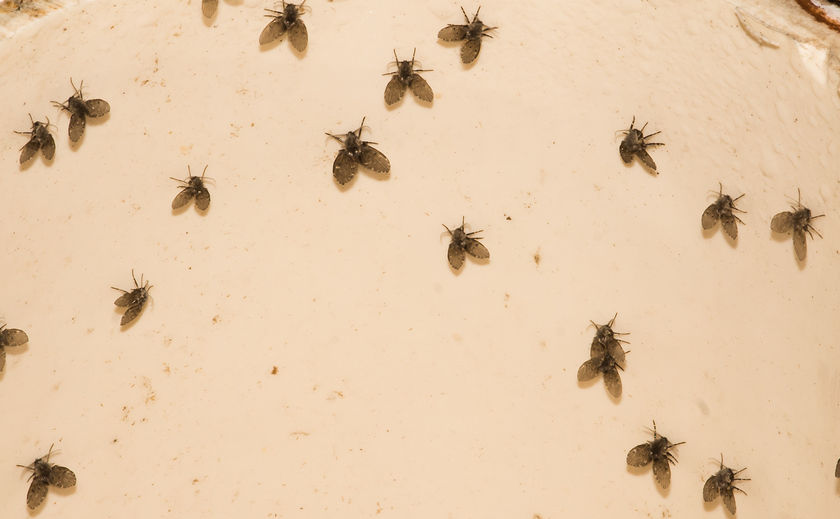
A typical-looking drain fly on a bathroom wall
Drain flies are dark grey and 2mm – 4mm long with hairy moth-like wings. They have a jerky flight as they are weak fliers and usually are found close to the floor waste drain or other areas of origin, such as the shower or bath waste. This is why they seldom stray outside the bathroom. In most cases, they are breeding in the bathroom floor waste trap.
Drain flies do not bite and are not known to transmit diseases of any sort. They do not damage clothes or linen and are considered to be more of an unsightly nuisance value in your home.
The adult drain flies and larvae can be controlled by eliminating or reducing breeding sites. If the infestation is minor, pouring bleach into the floor trap will usually kill them. However, if that does not solve the problem, then you will need to kill them by thoroughly cleaning the drain lines and or sealing the floor trap.
They continually seem to be in large numbers despite always killing them because eggs hatch in 32 to 48 hours when the temperature is above 20 degrees. The larvae mature in 9 to12 days and feed on the decaying organic matter that accumulates in the floor waste trap. The life cycle of drain flies is 1-3 weeks. Adults drain flies live about two weeks, with old ones dying and new ones emerging. They feed on the wastewater in the floor waste trap. During the day, the adults rest in shaded areas under the basin or on walls near plumbing fixtures and showers and baths. Most activity occurs during the evening when the flies are seen hovering about.
Septic Tanks Breeders
If you are on acreage and have septic tanks or treatment plants, they may breed in large numbers in and around the tanks. Drain flies may be carried by prevailing wind to nearby homes up to 3 kilometres away. Adult drain flies are small enough to pass through ordinary window insect mesh screens.
Thorough Cleaning of Drains and Traps
It is the experience of Whywait Plumbing that cleaning the drains from the basin, shower and bath that discharge into the floor trap is only part of the answer. It is also beneficial to clean the floor waste trap and grate thoroughly. We recommend cleaning the whole area with No–Rinse Floor Cleaner, Sanitiser & Disinfectant, which will clean and disinfect the floor and drain. We don’t recommend the need to continually pour chemicals such as bleach down the drain as it is washed away as soon as you use any water in the basin or shower fixtures.
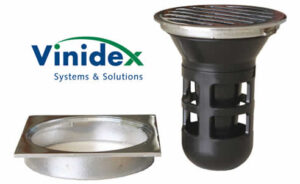 Drain PRO™ – The Drain Fly Solution
In 2010 Gary and Michele Mays, the owners of Whywait Plumbing Services, went through this entire experience of drain flies invading their ensuite bathroom. Gary Mays installed a Drain PRO™ unit into the floor waste, which prevents not only drain flies but also bacteria, odours and insects from exiting through the drain into the bathroom.
It is three years since the installation of the Drain PRO™ units in all of the bathroom floor traps in their home, and they have eliminated the reoccurrence of the annoying tiny lazy drain flies.
If you are experiencing the annoyance of drain flies that will not go away, call Whywait Plumbing at (07) 5580 4311 to book a service call so we can eliminate them once and for all.