
by Gary Mays | Jan 23, 2012 | Bathrooms, City of Gold Coast, Consumer Issues, DIY Plumbing, Emergency Plumber, Form 4 notifiable work, handyman, Health Issues, Insurance, licensed plumber, Plumbers Gold Coast, Plumbing Legislation, Queensland Government
Cleaners are not plumbers.
A phone call I received last week from a cleaner asking me are cleaners able to legally undertake plumbing work alerted me to the pressures many cleaning contractors face from unscrupulous building owners and property managers. Increasingly there is a tendency by commercial building owners and their property managers to require their cleaning contractors to undertake work tasks that are legally plumbing. Cleaners undertaking plumbing tasks are quite merely breaking several laws as are their employers and supervisors.
 The most common plumbing tasks that cleaners who are untrained, unskilled and unlicensed appear to be being required to undertake as part of their cleaning duties are:
- unblocking of drains
- unblocking of toilets
- disconnecting and clearing of traps
- servicing of urinals
What plumbing work can a cleaner perform
The only plumbing-related tasks a cleaner or any other person can legally undertake are:
- cleaning or maintaining ground level grates to traps on sanitary drains
- replacing caps to ground level inspection openings on sanitary drains
- maintaining an above or below ground irrigation system for the disposal of effluent from an on-site sewerage facility
- installing or maintaining an irrigation or lawn watering system downstream from an isolating valve, tap or backflow prevention device on the supply pipe for the irrigation or lawn watering system
- replacing a jumper valve or washer in a tap
- changing a showerhead
- replacing, in a water closet (WC) cistern, a drop valve washer, float valve washer or suction cup rubber.
All other work must be undertaken by a licensed plumber and drainer – no ifs, no buts, no exceptions.
Laws that apply to who can do plumbing
Cleaners who are required and frequently forced by their supervisors and employers to undertake plumbing tasks usually at the behest of building owners and property managers are all breaking the following laws and regulations:
- Building Services Authority Act 1991
- Work Health and Safety Act 2011
- Queensland Plumbing and Wastewater Code
- Plumbing and Drainage Act 2002
- Plumbing and Drainage Regulation 2003
- Standard Plumbing and Drainage Regulation 2003
Plumbers and drainers, unlike cleaners, are trained to undertake tasks such as clearing of drains or working on toilets or urinals. All of these tasks require specialised training, diagnostic skills and an awareness of health and safety issues. Above all plumbers are licensed to undertake the work by the Queensland Government plumbing regulator, the Plumbing Industry Council. The latter are legally required to protect public health and safety through Queensland’s plumbing and drainage licensing system.
Standard Plumbing & Drainage Regulation 2003 requirements
Tasks such as unblocking of drains, unblocking of toilets, disconnecting and clearing of traps or servicing of urinals are covered explicitly by schedule 2 of Standard Plumbing & Drainage Regulation 2003 as detailed below:
- work necessary for maintaining, repairing or replacing a fitting or fixture
- work necessary for maintaining or repairing an apparatus other than a backflow prevention device or thermostatic mixing valve
- work necessary for replacing apparatus other than a backflow prevention device, thermostatic mixing valve, tempering valve, water heater, cistern, pump or water meter
- work necessary for maintaining, repairing or replacing fire hydrants or fire hose reels
- unblocking a pipe that is sanitary plumbing or sanitary drainage
- work necessary for maintaining or repairing a solar or heat pump hot water system in a building classified under BCA as a class 1, 2, 3 or 4 building
Work undertaken under schedule 2 does not require the lodgement of form 4 with the local government plumbing & drainage inspectors. Still, all work must be conducted by a licensed plumber or drainer.
A cleaner despite what they are told cannot undertake any of the above tasks. They and those that instruct them to do the work are breaking the law, and all are liable for fines plus leave themselves exposed to common law claims under the due diligence provisions of the new WHS Act 2011.
It is straightforward if there is general cleaning of a plumbing fixture then there is no issue its a cleaning task. Where a component part is replaced or disconnected from the plumbing or drainage system, fixture or fitting for maintenance or servicing it can only be legally undertaken by a licensed plumber.
I reiterate the answer to the question are cleaners able to legally undertake plumbing work is a resounding NO and if you are unsure call Whywait Plumbing any time of (07) 5580 4311 to get assistance.

by Gary Mays | Aug 26, 2011 | bathroom renovation regret, Bathrooms, City of Gold Coast, Consumer Issues, Gold Coast Plumbing, Gold Coast Water, Plumbers, Plumbers Gold Coast, Toilets, Water Saving Tips, Waterless Urinals, ZeroFlush waterless urinals
Waterless urinals increase water sustainability

Falcon waterless urinals at The Oasis Shopping Centre installed by Whywait Plumbing in 1998
In 1998 Whywait Plumbing installed the first waterless urinals on the Gold Coast at The Oasis Shopping Centre. At that time the owners of The Oasis Shopping Centre, Thakral Holdings had as Engineering Director, Tony Harvey. Tony Harvey was ahead of his time focusing on setting sustainability targets for all Thakral properties in both electricity and water.
These first waterless urinals were fibreglass Falcon urinals with disposable cartridges. To say they were not successful was an understatement. We were continually servicing the Falcon urinals as they suffered from frequent blockages due to their cartridge design. The cost to replace cartridges constantly far outweighed the water-saving benefits at that time.
Servicing these Falcon waterless urinals became a detested task by Whywait’s plumbing technicians as invariably removing the cartridge resulted in getting covered in urine that was in the cartridge. To all of our plumber’s relief we ripped them out and replaced them with ZeroFlush waterless urinals in 2004.
Water flushing urinals stink
Traditional water flushing urinals are a significant waster of potable water in most commercial buildings. Most men are aware of that distinctive odour of male public toilets. Contrary to popular believe that odour is not usually from the urinals. It is, in fact, an odour created by the mixing of water vapour and urine creating bacteria that thrive in the wet environment of the grout in the tiled floors and walls.
In fact the installation of Australian WaterMark approved waterless urinals such as ZeroFlush creates a dry environment that does not allow bacteria to grow in the tile grout and create that distinctive odour. A properly maintained and serviced waterless urinal will give trouble free service, eliminate expensive and ever increasing water costs plus reduce carbon emissions.
Do waterless urinals stink?
Whywait Plumbing technicians have investigated numerous instances of waterless urinals being blamed for blocked drains or odours. In reality this is consistently not the case as investigation always reveals the real causes such as dry floor wastes, incorrect installation or incorrect servicing.
The most common cause is inappropriate or non-existant servicing procedures. Far too many plumbers fail to upskill themselves with current sustainability skills, methods or requirements. Often these same plumbers fail to read simple instructions on servicing methods and requirements and instead advocate the removal of the waterless urinals. It is normally simple to identify the poor servicing as the plumbers maintaining the urinals fail to purchase servicing materials and then blame the waterless urinals for poor performance.
Whywait Plumbing is aware of buildings where government subsidies have been paid to the owners to install waterless urinals and ignorant building managers have allowed plumbing companies to remove the urinals and replace them with expensive water guzzling urinals. The plumbers who undertake these activities are in our opinion conducting a fraud and their motives are transparent.
This approach is to the detriment of their clients and the community as a whole whom have embraced sustainability to make efficient use of expensive water and protect our environment.
If you want assistance with your urinals contact Whywait Plumbing on (07) 5580 4311 to organise a site audit.

by Gary Mays | Jul 21, 2011 | City of Gold Coast, Consumer Issues, DIY Plumbing, Gold Coast Plumbing, Health Issues, Insurance, Plumbers Gold Coast, Whywait Plumbing
Legal DIY or do it yourself plumbing work is extremely restricted in Queensland to protect the integrity of the potable water supply and ensure the high levels of public health. Plumbing laws nationwide safeguard the health of the nation.
 Plumbing is and always has been part of the public health solution. This, in itself, has created a level of complacency within the community about the benefits of good professional plumbing practices and the laws that enforce them. Plumbing laws are frequently unappreciated with professional plumbing being a victim of its own past success. Many sections of the community do not appreciate the vital role that plumbing plays in everyday health because we have always had professional plumbing to bring a clean potable water supply into our homes and to remove the used water from our toilets, showers and laundry.
In Queensland plumbing law is covered by the Plumbing and Drainage Act 2002, Plumbing and Drainage Regulations 2003, Standard Plumbing and Drainage Regulation 2003 and Queensland Plumbing and Waste Water Code 2010. These acts and regulations are comprehensive and regulate individual plumbing licences and training plus call into law AS3500 for installation.
To be a plumbing contractor in Queensland, a company or individual must also hold contractors licences issued by the Building Services Authority under the Building Services Authority Act 1991. This licence ensures that all plumbing contractors have the correct technical qualifications and occupational license issued by the Plumbing Industry Council. No one other than a licensed plumbing contractor can undertake plumbing work no matter what the value of the work is. The threshold amount of $3000 does not apply to plumbing, drainage or gasfitting that applies to several other trades
So what an unlicensed person can undertake plumbing work on their own home is not a great deal and for a good reason, as outlined above. The Standard Plumbing and Drainage Regulation 2003 outlines quite specifically in Schedule 3 Unregulated Work what this work is. Unregulated work is defined as the following:
- cleaning or maintaining ground level grates to traps on sanitary drains
- replacing caps to ground level inspection openings on sanitary drains
- maintaining an above or below ground irrigation system for the disposal of effluent from an on-site sewerage facility
- installing or maintaining an irrigation or lawn watering system after the isolation valve
- replacing a jumper valve or washer in a tap
- changing a shower head
- replacing a toilet cistern drop valve washer, float valve washer or suction cap rubber
And those seven tasks listed above are the only plumbing related tasks that you may undertake without a plumbing licence.
It is not worth the risk to undertake DIY plumbing. It is illegal.
Plumbing is public health, now, and in the future.

by Gary Mays | Jul 15, 2011 | City of Gold Coast, Consumer Issues, Gold Coast Plumbing, Health Issues, Hot Water, Hot Water Temperature, Insurance, Plumbers Gold Coast, Plumbing Legislation
Queensland law since 1995 has been that hot water delivered to bathrooms be regulated so that it does not exceed 50°C. The most common method to achieve this is by installing a tempering valve.
At 60°C, a severe burn can happen in 1 second.
At 55°C, a severe burn would take 10 seconds.
At 50°C, a severe burn would happen after 5 minutes.
 If your hot water unit has a valve that looks like the one pictured on the right, then you have a tempering valve installed. The most common valve installed has a blue cap, but valves used on gas units frequently have a green cap and those on solar or heat pump units have an orange cap.
It is almost a guarantee that your valve has never been serviced as most homeowners do not realise they even had such a device or that they are required to be tested and certified annually. Very simply a tempering valve blends hot and cold water to deliver hot water at a constant temperature and thus reduces the risk of scalding accidents.
Recent litigation places a deed of care to ensure the safe delivery of hot water in domestic situations. Very simply this means you should be having the tempering valve serviced annually whether you are a homeowner or a property investor or a real estate property manager. To ensure your hot water delivery is safe, you need an annual report signed by a licensed plumber that states:
- the model, manufacturer and identification of the tempering valve installed
- the temperature of the hot water recorded during the test
- details of the test undertaken, details of what maintenance was undertaken and what parts were replaced
- the location of the valve in the property
- a reference to the test method undertaken being compliant with AS 4032.3, Appendix C
Duty of care provisions applies to us all and without an annual test and a written report you leave yourself liable if anyone suffers a burn from your hot water. Most electric hot water units heat water to 70°C, so that has the potential to produce a severe burn in 1 second without a correctly working tempering valve.
Whywait Plumbing is contacting clients to book in compliant testing, maintaining and reporting of your tempering valves but if you have any concerns over the temperature of your hot water, contact us now to schedule your service.

by Gary Mays | Jul 10, 2011 | City of Gold Coast, Climate Change, Consumer Issues, Gold Coast Plumbing, Green Plumbers, Health Issues, Plumbers, Plumbers Gold Coast, Plumbing Emergencies, Whywait Plumbing
Plumbing is health as plumbing protects the whole community, and individual plumbers protect the nation’s health.
Whywait Plumbing Services has consistently promoted the importance of excellent plumbing  practices combined with sustainable plumbing exercises based on plumbing is health. Whywait Plumbing was the first GreenPlumber in Queensland and remained the only fully licensed GreenPlumber on the Gold Coast.
At the 2011 National Plumbers Regulators Forum, Dr Barry Gilbert, a Specialist in Public Health, spoke on the costs of poor plumbing, confirming that plumbing is public health. Issues highlighted by Dr Gilbert were at the heart of future plumbing practice and were:
- The complex global problems of scarce potable water, the use of recycled water, global warming and climate change, together with the influence that man has on the environment, all determine the risk to the population. In the future, plumbing will have an even more critical role in mitigating those risks as plumbing is health.
- Plumbing is a significant part of the public health solution and always has been.
- Plumbing is at risk of being a victim of its past success since the population at large does not appreciate the vital role that plumbing plays in everyday community health.
- Just as vaccination protects individuals and the community, plumbing protects the whole community, and individual plumbers protect the health of the nation.
- Plumbers are obligated to impart their knowledge and experience to the community and demonstrate the potential impact that poor plumbing will have in the future.
- Plumbing is public health, now and in the future.

Ray Herbert CEO of MPMSAA
Whywait Plumbing has always been at the forefront of sustainability so being part of GreenPlumbers was a natural choice when MPMSAA founded it in 2001. Ray Herbert, CEO of MPMSAA, worked with RMIT University to develop the training and recruited Gary Workman to run the courses.
MPMSAA, or Master Plumbers and Mechanical Services Association of Australia, is one of Australia’s oldest Associations, having been founded in 1891 when 57 Melbourne plumbing contractors paid a £5 ($10.00) entrance fee and £1 ($2.00) subscription to enable the establishment of the Associated Master Plumber of Victoria. Therefore, it was only natural that MPMSAA has taken the lead to ensure plumbers are at the forefront of water sustainability and water conservation.
Most of the plumbers at Whywait Plumbing have now completed their GreenPlumbers training of the five basic courses which are focused on plumbing is health:
- Climate Care – how to take care of our climate, including gas emissions in homes and businesses that cover hot water heating, energy consumption, heating appliances, and cooling appliances.
- Caring for Our Water – an introduction to the water cycle process and the new technologies and behaviours that contribute to conservation through topics like water-efficient products, reducing household water consumption, stormwater runoff pollution and prevention, and household water audits.
- Solar Hot Water – the latest information on new technology in the solar hot water industry, rebate information, retrofit sizing and installation.
- Water Efficient Technology – an overview of the ever-changing technologies that shape future conservation efforts through the use of Recycled Water, rainwater, Greywater, Septic Tanks/Wastewater Treatment Systems, and Environmental/Public Health/Safety Regulations.
- Inspection Report Services – overview of domestic and commercial water auditing, inspections and reporting, assessment and strategies—including water and energy audits, commercial/industrial and residential buildings, and creating a master plan for future improvements.
Whywait Plumbing is the only fully licensed GreenPlumber on the Gold Coast, as we are committed to promoting plumbing is health. As a Licensed GreenPlumber, we differ from an Accredited GreenPlumber as we have committed to requiring all licensed plumbers working for the company to become fully accredited GreenPlumbers to protect your health.
by Gary Mays | Jul 8, 2011 | Blocked drain, blocked toilet, blocked toilet drain, City of Gold Coast, DIY Plumbing, Drain Odours, Gold Coast plumbers, handyman, Health Issues, Plumbing Emergencies, Toilets
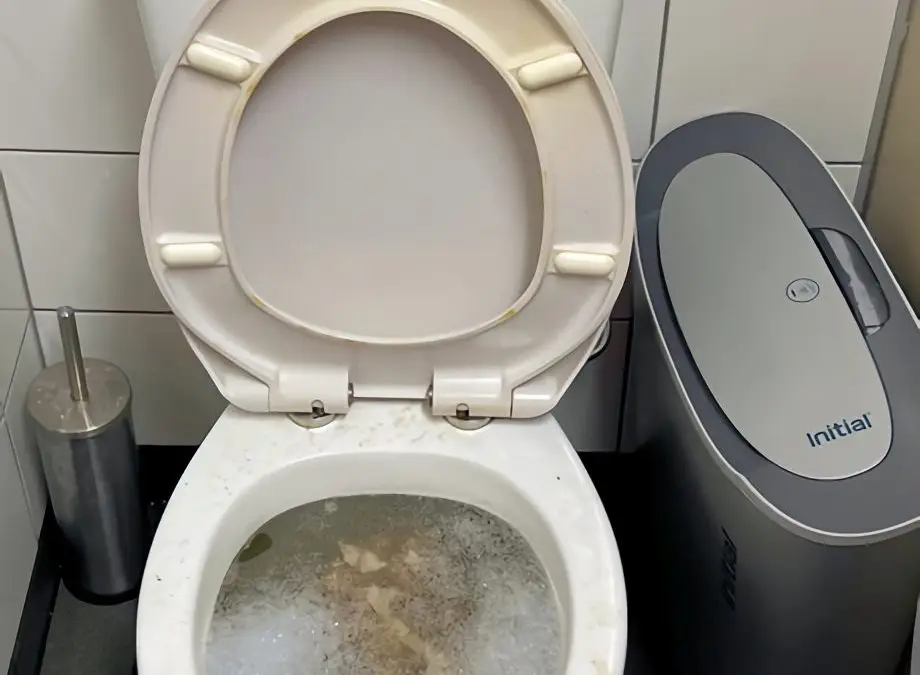
Toilet paper is blocking your drains, and we know it for a fact at Whywait Plumbing. Blocked drain incidences have been increasing every year since 2005.
Whywait Plumbing has noted the upward trend of annual increases in the number of blocked drain occurrences that require clearing with high-pressure water jetting equipment since 2005, with even sharper increases since 2008.
This has generally been attributed to the advent of low-flow dual flush toilets, especially the 4.5/3 litre toilet suites.
Your house drain that connects to the sewer was designed when water flows were much more substantial than they are now. Traditionally a toilet flush was 11 litres, and this flow was supplemented by inflows from the bathroom, kitchen and laundry. Prior to legislative changes in 2007, a shower deluged you with a flow of 25 litres per minute now that is 9 litres. Taps in the remainder of the house all had substantial flow rates of 20 – 25 litres per minute, but now that is 6 litres per minute.
Consequently, it made sense that the 70% reduction in water flows was the cause of this rapid increase in blocked drains. Naturally, this made complete sense in homes and business premises that were new or had upgraded their taps and toilets. But why were we seeing an increase where no such upgrades had occurred? Over the last year, Whywait Plumbing Services, like many other plumbing companies, began noticing, when undertaking a CCTV survey of a drain, large clumps of toilet paper that had not broken down in the water.
This issue with toilet paper has now reached a point where the National Plumbing Regulators have had a NATA laboratory undertaking research on the varying degrees of toilet paper quality and its influence on flow performance down a drain. Results to date are concerning as over 20 commercially available toilet paper brands were evaluated in full performance testing. There were an excessive number of these toilet papers whose performance in the poor break down in water can potentially cause more blockages than others.
It’s interesting to note that none of the toilet paper culprits that have an increased potential to cause blockages is locally manufactured. Its even more interesting that the Federal Government has a committee investigating the dumping of commodities by China into Australia and one of these commodities is toilet paper. It is doubtful whether Coles and Woolworths are too concerned about what happens to this cheap toilet they import once it passes through their checkouts. Who knows what these toilet papers are really manufactured from?
These cheap toilet papers dominate in commercial buildings where contract cleaning companies install the cheapest toilet paper they can purchase. This has resulted in alarming increases in blockages in commercial buildings.
So next time when you pick up that packet of toilet paper that is on special in the supermarket just have a look to see where it is manufactured or you may unknowingly be purchasing a blocked drain at the same time.


