by Gary Mays | Jan 18, 2014 | City of Gold Coast, Consumer Issues, DIY Plumbing, Gold Coast Plumbing, Insurance, Leaking Pipes, Plumbers, Plumbers Gold Coast, Plumbing Emergencies, Plumbing Maintenance, Water, Water Leaks
Badly installed or faulty plumbing installation will flood your home and is a risk you need to minimise. At Whywait Plumbing we have lost count of the amount of flooded homes we have attended. A flooding house caused by faulty plumbing leaves home owners angry, frustrated and often soaking wet.
Whywait staff frequently have to deal with distraught homeowners who are heartbroken by the loss of family heirlooms such as photos and documents. The problem with most plumbing is that it is hidden in the walls or the roof or the floor or is underground. While some plumbing problems are preventable it is impossible to deal with things you cannot see like pipes in walls or in the roof space.
There are steps every homeowner should take inside their home that ultimately can save you a lot of time, money and aggravation. At Whywait Plumbing we recommend you take the following steps to prevent your home being flooded from inside:
1. Know where to turn off your water – always know where the main water supply valve is to your home and practice turning it off to ensure you know how to do it. At regular intervals check that the valve is working. When going on holiday turn off the water supply to your home to ensure you do not return home to a flooded house.
2. Check washing machine & dishwasher hoses – the hoses to these essential household appliances are invariably manufactured from plastic or rubber. These machines are constantly left turned on to the water supply meaning the hoses become part of the plumbing system. In case of an emergency it pays to know where the valves are to isolate the machines plus check the valve is working at regular intervals. At regular intervals check the hoses for bubbles or soft spots or if there is moisture on the hose as these are signs of a potential problem looming.
3. Check hot water tanks – if you hot water tank is inside your home usually in a cupboard or occasionally in the ceiling it pays to check it at regular intervals. A hot water tank will generally last 7 – 15 years depending on location and water quality. Once the tank is over 10 years of age it is living on borrowed time. Always ensure you know where the isolation valve is for the tank and check it at regular intervals to ensure it is working.
4. Check toilets – your toilet cistern is connected permanently to the cold water supply and will either be connected to the cistern tap under the cistern by copper pipe or a stainless steel flexible connector. Leaks are common at the connections so it is wise to check the cistern tap is working and to check the copper pipe or flexible connector for kinks or signs of moisture as these are signs of a potential problem looming.
5. Check sinks and basins – your kitchen sink and your vanity basins are frequently connected to the hot and cold water supply with stainless steel flexible connectors. These connectors are one of the most frequent causes of flooded homes. Frequently there are no isolation valves under the sink or basin so you need to check these connectors at regular intervals for kinks or signs of moisture as these are signs of a potential problem looming.
You cannot prevent everything and unfortunately there are no warnings to tell you something is about to burst.
The most important thing though is to ensure every person living in your house knows where to isolate the main water supply and how to turn it off. If you are not sure of how to isolate your water supply call Whywait Plumbing now.
By Gary Mays
by Gary Mays | Dec 31, 2013 | City of Gold Coast, Cold Water, Consumer Issues, Gold Coast Plumbing, Insurance, Leaking Pipes, Plumbers, Plumbers Gold Coast, Plumbing Emergencies, Plumbing Legislation, Plumbing Maintenance, Water, Water Hammer, Water Leaks
Do you know the risks of living with high water pressure because I frequently listen to clients of Whywait Plumbing recollecting the days gone by when high water pressure was the norm. For many high water pressure had been a bonus, especially when water was virtually provided for free. High water pressure enabled many to stand in one spot and water the whole garden or to literally pressure clean the car or driveway.
Both Gold Coast and Logan council areas in the past had high water pressure delivery. Frequently in excess of 800kPa and often as high as 1100kPa. In reality high water pressures caused many problems with damage to pipes, appliances, taps, valves and fittings from water hammer which also reduced their operational life plus caused excessive noise in the water reticulation system.
Legally under Australian Standards, AS/NZS 3500.1:2003, Plumbing and Drainage – Water Services, the relevant clause is 3.3.4 which states, “Maximum pressure within buildings – Provision shall be made to ensure that the maximum operating pressure at any outlet, other than a fire service outlet, within a building does not exceed 500 kPa.” This was further reinforced with amendments in 2010 to clause 3.2.1 which states, “The maximum flow rate from a shower, basin and kitchen sink or laundry trough outlet shall not exceed 9 L/min.”
These very clear definitions within Australian Standards create a dangerous situation that many home and building owners are unaware of. This is because they have the incoming mains water pressure set above the maximum legislated operating pressure of 500kPa level for most connected plumbing fixtures. These plumbing fixtures include dishwashers, washing machines, ice makers, boiling water units, mixer taps, refrigerators with water dispensers and hot water systems.
Having excessive water pressure can cause you more problems than you may be aware of. Aside from damage to pipes, appliances, taps, valves and fittings from water hammer which also reduced their operational life plus caused excessive noise in the water reticulation system, you may also be voiding your property insurance and manufacturer’s warranty on any number of these expensive household appliances.
Most insurance policies and appliance warranties are void if your water pressure is above the recommended operational levels. This will always come back to the requirements of Australian Standards which is of course 500kPa.
Most hot water system warranties are void above 500kPa once again with the reference point being the requirements of Australian Standards. Many people are fooled into thinking they have a compliant system as they have pressure limiting valves installed. In reality the majority of these valves over 3 years old are faulty and in need of replacement.
As council water retailers will not guarantee supply pressures the onus is back on home and building owners to ensure they are compliant with Australian Standards. Most homes and buildings constructed since 2003 have pressure reduction valves installed after the water meter but these frequently require recalibration. Homes and buildings constructed before 2003 seldom have a pressure reduction valve installed which means they are susceptible to the fluctuations in water supply pressure.
The risks of high water pressure can be devastating on multiple fronts so if you are unsure of what your water pressure is and whether your system is compliant in regard to your insurance policies then contact Whywait Plumbing Services now to carry out a comprehensive analysis of your incoming water pressure to ensure you are aware of the risks of living with high water pressure..
By Gary Mays
by Gary Mays | Sep 25, 2013 | City of Gold Coast, Cold Water, Consumer Issues, DIY Plumbing, Emergency Plumber, Gold Coast Plumbing, Gold Coast Water, Leaking Pipes, Plumbers, Plumbers Gold Coast, Plumbing Emergencies, Plumbing Maintenance, Toilets, Water, Water Leaks, Water Meters
How to check if you have a water pipe leak
With a water pipe leak, it’s commonly said that prevention is the key. Positive preventive maintenance saves you thousands of dollars in hassles and water damage.
That’s why you want to follow the simple step by step check for a water pipe leak. This will prevent the hassles before they hit you where it hurts most – in your pocket!
Step by Step Instructions
Below we run through:
- Check your taps
- Check your toilets
- Turn the taps off
- Check your water meter
- Wait 15 minutes
- Compare water meter readings
- Turn the taps back on
- When to call a plumber
- When your good to go
At Whywait Plumbing, we have always preached that preventative maintenance policies and procedures will prevent many of the significant cost blowouts in plumbing maintenance.
As always, prevention on checking for a water leak is the best solution. An underground concealed water pipe leak is often impossible to see or hear. More so if your home is on sandy soil or has lots of garden vegetation.
The simplest way to check if you have a concealed water pipe leak is to follow the how-to steps below:
Step 1 – Check your taps
Check all taps both inside the house and outside the house are not dripping.
Step 2 – Check your toilets
Check the toilet cisterns are not overflowing or running into the toilet bowl by tipping a few drops of food dye into the cistern and if there is no colouring of the water in the toilet bowl you know there is no leak.
Step 3 – Turn the taps off
 Turn off all the taps that you normally leave turned on, such as the washing machine, dishwasher and the toilet cisterns.
Step 4 – Check your water meter
At the council water meter check the meter is not turning and write down the figures on the meter dial.
Step 5 – Wait 15 minutes
After 15 minutes recheck the water meter and write down the figures on the meter dial again.
Step 6 – Compare water meter readings
Compare the figures you have written down, and if the numbers have not changed at all, then you have no water pipe leak. If the numbers have changed very slightly repeat the test but do it for at least 1 hour.
Step 7 – Turn the taps back on
If you are satisfied there are no leaks remember to turn back on the taps you turned off at the washing machine, dishwasher and toilet cisterns.
Step 8 – When to call a plumber
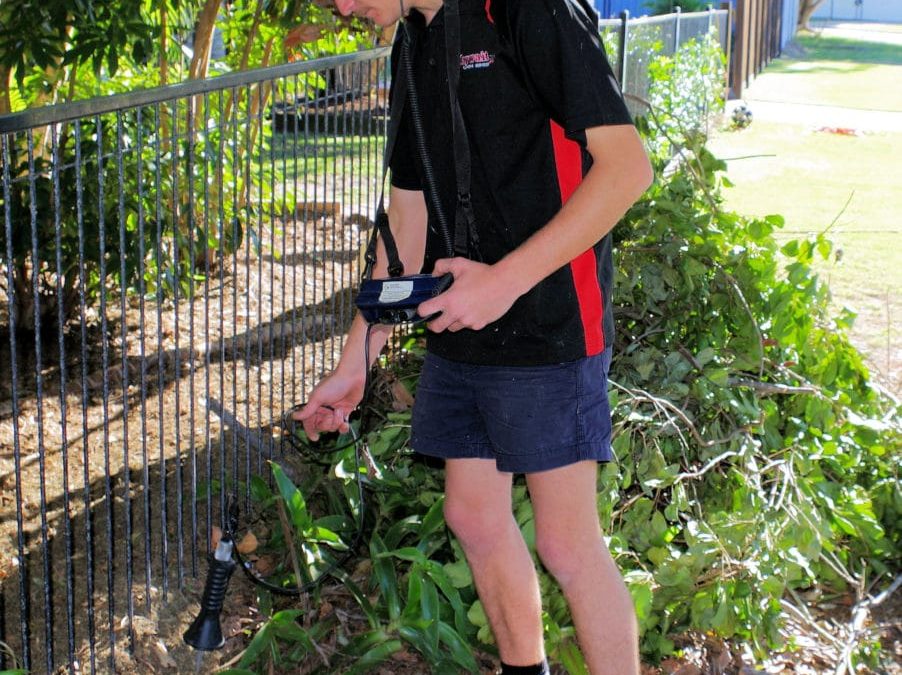
 If the meter dial reading on the water meter has changed after 1 hour then in all likelihood you have an underground concealed water pipe leak, and you need to give Whywait a call to organise leak detection.
Step 9 – When your good to go
If the meter dial reading has not changed, that means your underground water reticulation piping is in good condition.
Prevention is the key
No matter what your results in the above step by step preventative maintenance suggestions, we recommend you repeat it monthly. We also recommend you record your water meter readings every month as any change in water use patterns will quickly indicate a possible leak.
As a rule of thumb, YOU ARE RESPONSIBLE for any water leak after the council water meter that is on your property. Therefore we recommend that you at least check your water meter reading every month and seriously consider the installation of an AquaTrip water pipe leak detection and control system.
by Gary Mays | Aug 30, 2013 | City of Gold Coast, Cold Water, Consumer Issues, Water, Water Filtration, Water Leaks
Imagine opening your mail to find a water bill for $27154.83.
We all know water is the basis of all life and an absolute necessity of life, but I’m sure we all agree a $27154.83 water bill is not what anyone would want.
This property is a commercial property where the normal water bill for 6 months is around $4000 and as the exasperated owner said, “why has water got so bloody expensive?” The very simple answer to that question is that water costs are a direct reflection of appalling state government planning between 1990 and 2007.
Many of us remember when water was essentially free and the only time you got charged for it was if you used excess water over and above the very generous allowance that was paid for as part of your council rates.
However, cheap water is the past. The reality of today is that water is expensive if you use vast quantities for irrigation or have a concealed water leak as in the situation above. We all have to be vigilant in ensuring that the integrity of our household water pipes is maintained at all times. The only guarantee anyone can give you on the cost of water is that it will continually increase every year.
If you live on the Gold Coast or in Logan then water costs are comparable. Have a look at annual costs below:
| Water Service Charge |
$205.74 |
| Sewerage Service Charge |
$703.34 |
| Water Consumption Charge |
$3.5167 per k/L |
|
|
| Annual Cost to use 250 k/L of water |
$879.18 |
| Annual Service Charges |
$909.08 |
| Total Annual Cost |
$1788.26 |
| Water Service Charge |
$279.00 |
| Sewerage Service Charge |
$661.60 |
| Water Consumption Charge |
$3.5813 per k/L |
|
|
| Annual Cost to use 250 k/L of water |
$895.33 |
| Annual Service Charges |
$940.60 |
| Total Annual Cost |
$1835.93 |
As you can see Logan is marginally more expensive and if you used 250 kilolitres of water then you would pay $47.67 more for living in Logan.
However where a concealed leak has occurred and eligibility criteria have been met Logan is definitely more understanding and generous in their relief on payment over a 3 year period.
Logan City Council allows:
- a claim once every year
- provide a reduction of 50% of the difference between the consumption for the billing period and the average of the previous consumption history as recorded by council over the preceding four billing periods
City of Gold Coast allows:
- a claim once every three years
- provide a reduction of 60% of the estimated water loss attributed to the concealed leak
- the water loss through a concealed leak must be in excess of 50 kilolitres
- relief increases to 85% if you receive a pensioner water subsidy.
So for example if you normally used 250 kilolitres but had two concealed leaks resulting in an increase to 900 kilolitres in a 3 year period, which is not an unusual occurrence then you would receive relief from payment of $2327.84 at Logan but only$1377.51 on the Gold Coast.
As a rule of thumb YOU ARE RESPONSIBLE for any water leak after the council meter that is on your property. Therefore I recommend that you at least check your water meter reading every month and seriously consider the installation of an AquaTrip water leak detection and control system.
In reality the convenience of reliable, good quality drinking water from your tap is still inexpensive if you compare it to:
| Product |
Litre Cost |
Kilolitre Cost |
| Coca Cola |
$2.33 |
$2330.00 |
| Just Juice |
$1.17 |
$1170.00 |
| Nudie Juice |
$2.50 |
$2500.00 |
| Wolf Blass Yellow Label Shiraz |
$24.00 |
$24000.00 |
| Johnie Walker Black Label |
$71.43 |
$71430.00 |
| XXXX Gold |
$7.35 |
$7350.00 |
| Woolworths Milk |
$1.00 |
$1000.00 |
| Standard Petrol |
$1.52 |
$1520.00 |
| Mount Franklin Spring Water |
$4.65 |
$4650.00 |
| Logan Water |
$0.0036 |
$3.58 |
| Gold Coast Water |
$0.0035 |
$3.52 |
When you look at the real cost of water compared to other products you purchase to drink it not only puts it in perspective but makes you appreciate how fortunate we are to be able to turn on a tap and receive drinking water that is free of bacteria and virus’s so we are not forced to purchase bottled water at $4650.00 per kilolitre to drink.
Yours sincerely,
Gary Mays
by Gary Mays | Mar 22, 2013 | City of Gold Coast, Cold Water, Consumer Issues, Insurance, Leaking Pipes, Plumbing Emergencies, Plumbing Maintenance, Queensland Government, Water Leaks
At Whywait Plumbing the phones began to ring as soon as the water bills from Gold Coast Water arrived in late January. The most common issue was one of bill shock where residents received bills in the thousands of dollars when their normal bill was around $600.
This was brought home to us here at Whywait when our IT Manager, Brad Horrocks rang about the bill his pensioner father, Neal had received which was $4980 when his normal bill was never over $600. Unbeknown to Neale he had an underground leak in the polypipe watermain coming into his home in Coombabah. This unfortunately is common in the coastal areas such as Coombabah where the water basically soaks into the sandy soils rather than bubbling to the surface.
Neal was fortunate that Gold Coast Water gave him a rebate of $3658 but he was still left to pay a bill of $1322. The sting in the tail of this rebate is that Neale is not eligible for further rebates should he have further leaks in his watermain for 3 years. This puts Neale and all of those like him who are recipients of the 60% rebate from Gold Coast Water where the bill shock is caused by a broken pipe in a terrible dilemma. This is caused by water meters only being read every 3 months and bills being issued every 6 months.
Unless you read your water meter on a regular basis which we strongly recommend then you can suffer a major break in your watermain and not be aware of it for at least 90 days when you receive a letter from Gold Coast Water advising you that you have very high water use readings. If you have already used your once every three years rebate for broken pipes then you will pay for every litre of water that leaks into the ground.
However we do have a solution for everyone who has experienced the drama of water bill shock. Prevention is always the best solution. AquaTrip water leak detection and control systems are the solution. AquaTrip is a permanently installed leak detection protection system that quietly provides protection in the background and under normal conditions you will never know it’s there.
AquaTrip monitors the flow of water into your property, and will shut off the water automatically in the event of a tap left running, a burst pipe, or if a tap, fitting, pipe, toilet, cistern or appliance is leaking. This will save water, reduce wastage and most critically minimise property damage.
AquaTrip is an active water leak detection system that costs less than the excess charges from Gold Coast Water or the excess on one insurance claim and a fraction of the cost of most annual home insurance premiums. In most cases insurance companies do not cover the cost of watermain leaks or the resultant water costs. AquaTrip will provide your home with a lifetime of protection against such water leak events. AquaTrip is a one time insurance policy.
If Neal Horrocks had an AquaTrip installed he would not only have the peace of mind provided by AquaTrip but would be potentially $700 better off today as he would not have had to pay a water bill of $1322.
For more information on installing an AquaTrip “insurance policy” at your home or building Whywait Plumbing today for a lifetime of protection.

by Gary Mays | Jan 3, 2012 | Cold Water, Consumer Issues, Dehydration, Health Issues, Leaking Pipes, Rain Water Tanks, Water Leaks
Water is not only the essence of life. It is the basis of life, as water is the foundation of the human body. Like any structure, if the foundation is poor, strength and longevity are reduced.
In South East Queensland, the next two months of January and February are traditionally the hottest months of the year. With the hot weather comes the concerns of dehydration. More than 70% of the human body is water, so when the temperatures increase, it cools itself by sweating. If water intake is inadequate, dehydration can become a real danger. This is frequently worse with children if their fluid intake of water is insufficient.
It is all of our responsibility to ensure our intake of water is frequent and adequate. However, it is essential to realise that you can become dehydrated long before the symptoms appear, so prevention is critical, and prevention is simply drinking water. Prevention does not include drinking fruit juices or sugary soft drinks.
Dehydration will impair your normal daily performance and dramatically increase the risk of heat-related illnesses such as cramps, headaches, exhaustion or even heat stroke. Possible signs of dehydration may include:
-
extreme thirst
-
extreme fatigue
-
muscle and joint weakness
-
headache and or dizziness
-
dry or sticky mouth
-
cramping of muscles
-
irritability
-
decreased performance
If you notice yourself or anyone else with the above symptom, it is essential to find a cool place and cool the body with water. The water should be sipped, not gulped, and the rest should continue until the body returns to normal. Recognising the signs of dehydration and taking measures to prevent it will increase everyone’s overall health.
The carrying of water bottles should be standard before leaving home. There is no need to buy expensive water bottles at the supermarket or service station when you have them on tap at home.
Even if you do not like the taste of water from Allconnex, it is a comparatively simple job for Whywait Plumbing Services to install a good quality filtration system to remove the chemicals, such as chlorine, that create the poor taste many people associate with tap water. Once you have good quality filtered drinking water, purchasing reusable personal drinking bottles will ensure the entire family can be active, healthy and constantly hydrated in our hottest months by simply drinking regularly.


