
by Gary Mays | Jan 28, 2012 | Gold Coast Water
Currently receiving publicity is the Mayan calendar which predicts the world’s end in December 2012. The actual translation is “A time of great change.” Not so much the end but more the beginning of a new era. It is a time of significant change for Gold Coast ratepayers, who will receive what is possibly their last Allconnex water bill in the next week. Unless there is a change of government on 24 March, the ratepayers of the City of Gold Coast have been duped by misguided media and activists from Disconnex into reviving Gold Coast Water.
Gold Coast Water may come to life on 1 July but is only a water retailer. Therefore, it will not lead to reductions in the cost of water simply because the Queensland Government controls the price of water sold to retailers.
As a result, the wholesale cost of water is the bulk of a water bill because someone has to pay for the reckless spending by the Beattie-Bligh governments on projects that include the $7 billion water grid that may never be used and the troubled desalination plant at Tugun plus the $500 million for Traveston Dam, which wasn’t built despite costly planning and land resumptions.
Gold Coast City Council is not responsible for the originally highly respected water utility being taken over by the Queensland Government. It was legislated that way. The spin by Anna Bligh and Andrew Fraser into making Gold Coast ratepayers believe the high water bills are all the councils’ fault is bizarre because they control the wholesale cost price. The government spin campaign caused a misguided people-power revolt on the Gold Coast, with Allconnex Water workers even having their cars attacked. Allconnex has to collect rates to a prescribed formula set by the State Government.
Gold Coast ratepayers should direct their anger at the Queensland Labor MP’s who voted to destroy Gold Coast Water, not at the Gold Coast City Councillors who were forced to vote to disband Gold Coast Water in accordance with law changes enacted by the Queensland Government. The new Gold Coast Water will only be a shadow of its former self but will still have to generate income to fund more than $1 billion in new water and sewerage plants over the next decade. The Queensland Labor Government has removed all subsidies, so Gold Coast Water revived will be looking for new revenue. Unfortunately, it means ratepayers will pick up the tab in raised rates and water charges – or Gold Coast Water will go broke.
Current Gold Coast Mayor Ron Clark has consistently spoken against the Queensland Government takeover of water in South East Queensland. Even the Council of Mayors warned in 2007 that the proposed takeover of water was simply cost-shifting by the state. If the Gold Coast Water revival proceeds, we may not have to wait two years before understanding the negative impact of Labor’s reforms. In the meantime, Gold Coast ratepayers will continue to pay and pay and pay. Even the Queensland Government’s water commissioner, Elizabeth Nosworthy, in 2007 released the pricing for water in southeast Queensland, said that “by 2012-13, a typical household’s annual cost would increase from $355 to $876, an increase of 147 per cent”. This was ignored at the time, but she was on the money.
So when Gold Coast voters receive their Allconnex water bills next week, remember when you go to the polls on 24 March, it was local Labor MP’s Peta-Kaye Croft, Peter Lawler, Christine Smith and Margaret Keech who destroyed Gold Coast Water and drove water prices up 147% in 4 years.

by Gary Mays | Jan 23, 2012 | Bathrooms, City of Gold Coast, Consumer Issues, DIY Plumbing, Emergency Plumber, Form 4 notifiable work, handyman, Health Issues, Insurance, licensed plumber, Plumbers Gold Coast, Plumbing Legislation, Queensland Government
Cleaners are not plumbers.
A phone call I received last week from a cleaner asking me are cleaners able to legally undertake plumbing work alerted me to the pressures many cleaning contractors face from unscrupulous building owners and property managers. Increasingly there is a tendency by commercial building owners and their property managers to require their cleaning contractors to undertake work tasks that are legally plumbing. Cleaners undertaking plumbing tasks are quite merely breaking several laws as are their employers and supervisors.
 The most common plumbing tasks that cleaners who are untrained, unskilled and unlicensed appear to be being required to undertake as part of their cleaning duties are:
- unblocking of drains
- unblocking of toilets
- disconnecting and clearing of traps
- servicing of urinals
What plumbing work can a cleaner perform
The only plumbing-related tasks a cleaner or any other person can legally undertake are:
- cleaning or maintaining ground level grates to traps on sanitary drains
- replacing caps to ground level inspection openings on sanitary drains
- maintaining an above or below ground irrigation system for the disposal of effluent from an on-site sewerage facility
- installing or maintaining an irrigation or lawn watering system downstream from an isolating valve, tap or backflow prevention device on the supply pipe for the irrigation or lawn watering system
- replacing a jumper valve or washer in a tap
- changing a showerhead
- replacing, in a water closet (WC) cistern, a drop valve washer, float valve washer or suction cup rubber.
All other work must be undertaken by a licensed plumber and drainer – no ifs, no buts, no exceptions.
Laws that apply to who can do plumbing
Cleaners who are required and frequently forced by their supervisors and employers to undertake plumbing tasks usually at the behest of building owners and property managers are all breaking the following laws and regulations:
- Building Services Authority Act 1991
- Work Health and Safety Act 2011
- Queensland Plumbing and Wastewater Code
- Plumbing and Drainage Act 2002
- Plumbing and Drainage Regulation 2003
- Standard Plumbing and Drainage Regulation 2003
Plumbers and drainers, unlike cleaners, are trained to undertake tasks such as clearing of drains or working on toilets or urinals. All of these tasks require specialised training, diagnostic skills and an awareness of health and safety issues. Above all plumbers are licensed to undertake the work by the Queensland Government plumbing regulator, the Plumbing Industry Council. The latter are legally required to protect public health and safety through Queensland’s plumbing and drainage licensing system.
Standard Plumbing & Drainage Regulation 2003 requirements
Tasks such as unblocking of drains, unblocking of toilets, disconnecting and clearing of traps or servicing of urinals are covered explicitly by schedule 2 of Standard Plumbing & Drainage Regulation 2003 as detailed below:
- work necessary for maintaining, repairing or replacing a fitting or fixture
- work necessary for maintaining or repairing an apparatus other than a backflow prevention device or thermostatic mixing valve
- work necessary for replacing apparatus other than a backflow prevention device, thermostatic mixing valve, tempering valve, water heater, cistern, pump or water meter
- work necessary for maintaining, repairing or replacing fire hydrants or fire hose reels
- unblocking a pipe that is sanitary plumbing or sanitary drainage
- work necessary for maintaining or repairing a solar or heat pump hot water system in a building classified under BCA as a class 1, 2, 3 or 4 building
Work undertaken under schedule 2 does not require the lodgement of form 4 with the local government plumbing & drainage inspectors. Still, all work must be conducted by a licensed plumber or drainer.
A cleaner despite what they are told cannot undertake any of the above tasks. They and those that instruct them to do the work are breaking the law, and all are liable for fines plus leave themselves exposed to common law claims under the due diligence provisions of the new WHS Act 2011.
It is straightforward if there is general cleaning of a plumbing fixture then there is no issue its a cleaning task. Where a component part is replaced or disconnected from the plumbing or drainage system, fixture or fitting for maintenance or servicing it can only be legally undertaken by a licensed plumber.
I reiterate the answer to the question are cleaners able to legally undertake plumbing work is a resounding NO and if you are unsure call Whywait Plumbing any time of (07) 5580 4311 to get assistance.

by Gary Mays | Jan 3, 2012 | Cold Water, Consumer Issues, Dehydration, Health Issues, Leaking Pipes, Rain Water Tanks, Water Leaks
Water is not only the essence of life. It is the basis of life, as water is the foundation of the human body. Like any structure, if the foundation is poor, strength and longevity are reduced.
In South East Queensland, the next two months of January and February are traditionally the hottest months of the year. With the hot weather comes the concerns of dehydration. More than 70% of the human body is water, so when the temperatures increase, it cools itself by sweating. If water intake is inadequate, dehydration can become a real danger. This is frequently worse with children if their fluid intake of water is insufficient.
It is all of our responsibility to ensure our intake of water is frequent and adequate. However, it is essential to realise that you can become dehydrated long before the symptoms appear, so prevention is critical, and prevention is simply drinking water. Prevention does not include drinking fruit juices or sugary soft drinks.
Dehydration will impair your normal daily performance and dramatically increase the risk of heat-related illnesses such as cramps, headaches, exhaustion or even heat stroke. Possible signs of dehydration may include:
-
extreme thirst
-
extreme fatigue
-
muscle and joint weakness
-
headache and or dizziness
-
dry or sticky mouth
-
cramping of muscles
-
irritability
-
decreased performance
If you notice yourself or anyone else with the above symptom, it is essential to find a cool place and cool the body with water. The water should be sipped, not gulped, and the rest should continue until the body returns to normal. Recognising the signs of dehydration and taking measures to prevent it will increase everyone’s overall health.
The carrying of water bottles should be standard before leaving home. There is no need to buy expensive water bottles at the supermarket or service station when you have them on tap at home.
Even if you do not like the taste of water from Allconnex, it is a comparatively simple job for Whywait Plumbing Services to install a good quality filtration system to remove the chemicals, such as chlorine, that create the poor taste many people associate with tap water. Once you have good quality filtered drinking water, purchasing reusable personal drinking bottles will ensure the entire family can be active, healthy and constantly hydrated in our hottest months by simply drinking regularly.
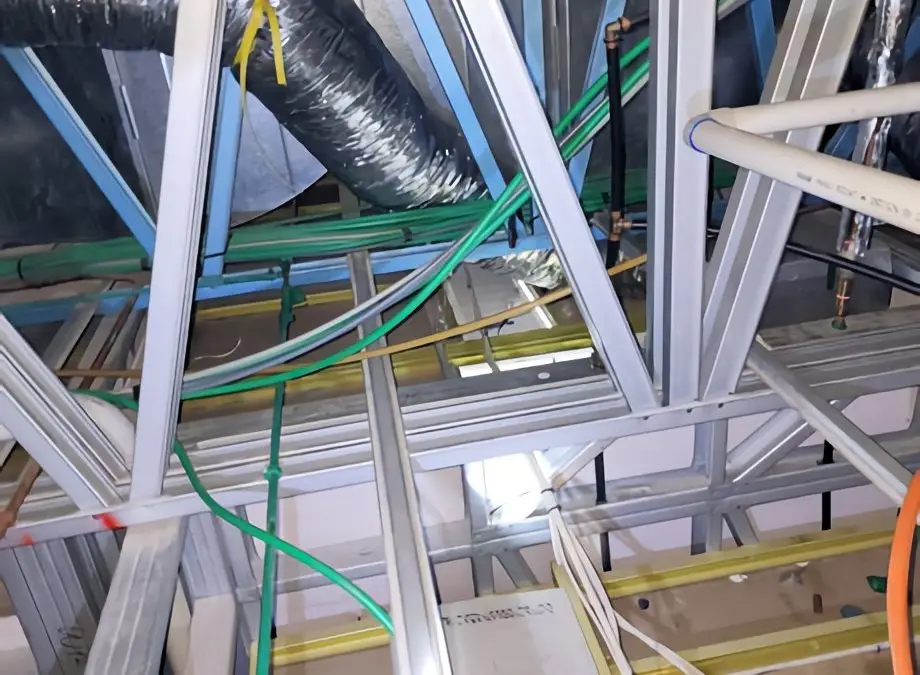
by Gary Mays | Nov 15, 2011 | banging pipes, Consumer Issues, erosion and corrosion in plumbing pipes, Gold Coast Plumber, Gold Coast plumbers, Gold Coast Plumbing, Health Issues, Insurance coverage of water leaks, Leaking Pipes, PEX pipes, Plumbers, Plumbers Gold Coast, Plumbing Maintenance, water damage insurance claims, Water Filtration, Water Hammer, Water Leaks, water pipe pressure
Traditionally most homes used copper pipes to circulate hot and cold water. Since the 1970’s plastic pipes have increasingly replaced traditional copper or galvanised steel pipes.
Over the last ten years, pipe-in-pipe systems have been commonly installed to circulate water in most newly constructed homes. The inner pipe for drinking water is made of a plastic called cross-linked polyethylene (PEX).
Since the advent of plastic plumbing systems, there have always been questions regarding the effects on health and do they affect the taste and odour of drinking water. International studies have shown that plastic pipes can release substances that give drinking water an unwanted taste and odour. It has also been suggested that some of these substances may be carcinogenic.
Several investigations worldwide on health issues have been conducted, and most are inconclusive or positive. The Norwegian Institute of Public Health has just released a new study on whether leaching or leakage products from these pipes harm health and if they affect the taste and odour of drinking water. The potential leakage products consist of residues of additives used during manufacture to give plastic pipes their desired properties and any subsequent breakdown products.
The Norwegian study results indicated:
- There are no health risks associated with drinking water from PEX pipes
- A few types of PEX-pipe may cause prolonged undesirable taste and odour if the water remains in pipes over time
- Although the taste and odour usually dissipate with use, water from two PEX types still had an unpleasant smell and taste after a year.
- The volatile organic compounds that leaked from new PEX pipes were generally low.
- The level was further reduced with the use.
- No correlation was found between manufacturing methods and leaking products.
This study was undertaken far more scientifically than many tests or studies in Australia. It is common in Australia for international products that have undergone extensive testing to fail AS4020 based on a highly subjective taste test from a panel of 5 – 7 people. The Norwegian study tested ten different PEX pipe types for leaching products in a standardised laboratory test. The water was in contact with the tubes for 72 hours.
Three different manufacturing methods produce pipes known as PEX-a, PEX-b or PEX-c. These methods use slightly different additives, but this study found no correlation between production methods and leakage products. Two of the most commonly occurring substances detected in the experiment’s water were 2.4-di-tert-butyl-phenol and methyl-tert-butyl ether (MTBE). For three new pipe types, MTBE was detected in higher concentrations than the US government’s recommended limits for the taste and odour of drinking water (USEPA). Still, the values were reduced to below this limit after the tubes were used for a while.
This study confirms what the plumbing technicians at Whywait Plumbing frequently observe: no matter what type of pipe, there can be a taste or odour in new piping systems or where a house has been unoccupied. The taste and odour soon disappear once the water is in use in the house and is in constant circulation.
by Gary Mays | Oct 31, 2011 | Uncategorized
For toilet connoisseurs there is a parallel-universe, luxury toilet market where the bathroom throne costs more than a large widescreen plasma television. At Whywait Plumbing a good quality toilet suite fully installed starts at $268.55 and even a top quality luxury toilet suite is fully installed at $791.96.
Although unavailable in Australia and legally unable to be installed as it does not have an Australian compliant WaterMark it is still state of the art luxury. Kohler a US company has launched the new $6,390 Numi toilet suite.
The Numi toilet suite is Kohler’s most advanced, combining unmatched design,
technology and engineering in personal comfort and cleansing. Its striking design and features mark a standard of excellence that truly is in a parallel universe.
So what do you get from a toilet suite that costs $6390 without tax and without the cost of installation. The features are amazing as you can see below:et
- A 4.85 litre flush for big jobs and a 2.27 litre flush for number-ones, an industry low that uses 25 percent less water than standard dual-flush toilets. (Think of how much money you’ll save!)
- A motion-detector automatically opens the lid and can tell when you’re standing, which triggers a low-water flush.
- The retractable self-cleaning bidet wand is fully controllable. Use the toilet’s remote to aim the stream, adjust water pressure and temperature, and switch on the air dryer.
- The heated seat can be adjusted to your preferred temp, and you can direct ground-level vents to blow warm air at your bare tootsies if you forget slippers.
- The 380mm x 660mm toilet bowl automatically cleans itself and has a charcoal air filter to eliminate offensive odours. Ambient lighting through translucent side panels helps set the mood.
- Plug in your MP3 player or switch on the FM radio using the touchscreen wireless remote. Then rock out (or drown out, um, sounds) with the 15-watt speakers built into the toilet’s behind.
So if you are in love with the latest and greatest gadgets standby because the luxury toilet market is coming your way.


