by Gary Mays | Sep 14, 2016 | Blocked drain, City of Gold Coast, Consumer Issues, Drain Odours, Gold Coast Plumbing, Health Issues, Insurance, Plumbers Gold Coast, Plumbing Emergencies, Plumbing Maintenance, Septic Tanks, Sustainable Plumbing, Toilets
Flushable wipes or wet wipes are creating havoc all over Australia with the cost of removing them from the main city sewer systems and sewer treatment plants now exceeding $15 million. This does not include the cost to individual property owner where the cost of repairs ranges from $500 up to $16000.
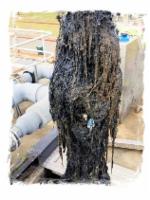
 As you can see in the photo to the right the flushable wipes travel all the way through the city sewer system. Along the way, they block sewer pipes, pump stations and manholes costing ratepayers money that could be better spent on other services. This photographically illustrates the huge “fatbergs” of flushable wipes that have to be physically removed from sewer treatment plants.
Commercial building owners, restaurants, apartment blocks and factories are all having to post signs warning people not to flush flushable wet wipes down toilets.
Flushable wipes come in many guises and are available for multiple cleaning and hygiene tasks in the home and in workplaces. Unfortunately for our sewer drains they are now being packaged in convenient carry cases that fit into handbags, glove boxes and even school bags. As a result of their convenience, their popularity has skyrocketed.
For many homeowners, the repeated flushing of wipes has resulted in costly and inconvenient consequences. A simple blockage may only cost around $500 to clear.
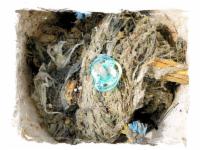 But there have been numerous reports of these flushable wet wipes “fatbergs” so badly blocking household sewer drains as can be seen in the photo on the left that the only way to remove them is to excavate and remove the damaged section of the drain. The cost to excavate drains quickly runs into $1000’s of dollars with reports of $16000 plumbing repair bills not being uncommon.
Gold Coast Water like all of the nation’s water utilities is battling to warn people not to flush the badly named flushable wet wipes down their toilets. Around 70% of blockages in Gold Coast Water pump stations are now caused by not-so-flushable wet wipes.
The repeated warnings come as the Australian Competition and Consumer Commission has launched an investigation into whether the marketing of wet wipes as “flushable” is misleading consumers.
Consumer advocacy group CHOICE has been raising the alarm bells for the last year over not-so-flushable wet wipes. Last year they particularly highlighted the very popular Kleenex Cottonelle Flushable Cleansing Cloths For Kids which still held together after 21 hours of agitation in their testing lab.
The CHOICE campaign was so successful that the Kleenex has now introduced a new “flushable” wipes and again CHOICE has tested the reformulated Kleenex CleanRipple Flushable Wipes. And despite all the claims by Kleenex, the CHOICE tests found the CleanRipple wipe failed to fully disintegrate after an hour in an agitator. In comparison, toilet paper continually dissolved in a few minutes as its designed to do.
 CHOICE state, “Although the new ones break down faster and are an improvement, we argue they are not entirely safe to flush and we still believe they pose a blockage threat.”
Giant multi-national Kimberly-Clark the manufacturer of Kleenex CleanRipple Flushable Wipes state that the claims made by CHOICE were disappointing as both its new paper-based and previous generation flushable wipes met “widely accepted industry guidelines”. Although no one can show approvals for these guidelines.
Even the Kleenex website puts up a smoke screen where it states Kleenex flushable wipes are “only suitable for use in properly maintained sewerage systems and commercial septic systems” and to “flush a maximum of two wipes at a time”.
Currently, the Water Services Association of Australia, (WSAA) is developing a standard for safe “flushable” wipes. However, until that standard has been completed there is no Australian Standard or industry guideline that could allow any manufacturer to market or endorse their flushable wet wipes as FLUSHABLE down your toilet.
I can only repeat what I have said many times and that is the only things that are flushable in your toilet are toilet paper, urine and faeces. If you wish to continue flushing wet wipes in all their forms down your toilet then I recommend you become a Whywait Plumbing Service Partner as you will need the benefits.

by Gary Mays | Jan 26, 2015 | City of Gold Coast, Consumer Issues, DIY Plumbing, Drain Odours, Gold Coast Plumbing, Health Issues, Insurance, Leaking Pipes, Plumber Brisbane, Plumbers, Plumbers Gold Coast, Plumbing Emergencies, Plumbing Maintenance, Sustainable Plumbing, Water, Water Hammer, Water Leaks, Whywait Plumbing
A combination of disposable wipes, paper towels and toilet paper blocking a drain because they were unable to break down in water.
Plumbing urban myths abound these days with social media and media sensationalism.
For the plumbing technicians at Whywait it’s frequently hard to get clients to understand factual information because they have Googled their problem and found what is, in reality, a plumbing urban myth that seems to fit.
Unfortunately, plumbing urban myths abound and below are a few popular myths and the real facts:
- Myth – disposable baby, kitchen or bathroom wipes and paper towels can be flushed down a toilet. Fact – The photo above is a pipe full of disposable wipes, paper towels and toilet paper that shows they don’t break down and degrade like toilet paper but pile up inside the drain and block your entire sewer drainage system.
- Myth – loud banging noises in a hot water service are a warning sign that it is about to burst and leak. Fact – unfortunately, there are no real warning signs that a hot water service is about to start leaking. If you do hear banging or rumbling noises coming from the actual storage tank it indicates that the loose minerals in the sediment in the bottom of the tank are causing air bubbles during the heating cycle and that in reality, your hot water service needs a 5 yearly service that includes flushing the tank of sediment.
- Myth – Thomas Crapper invented the toilet. Fact – No he did not invent it but made it work better with the flushing mechanism.
- Myth – Water flushes in a toilet clockwise in Australia in the southern hemisphere but anti-clockwise in Germany in the northern hemisphere. Fact – No the actual design of the toilet bowl dictates which direction water flushes as such a small amount of water is not affected by the Coriolis Effect.
Myths are often fun but the reality is plumbing urban myths can be dangerous if taken as factual which is why plumbing problems should always be diagnosed and repaired by a licensed plumbing contractor.

by Gary Mays | Jan 14, 2015 | Bathrooms, Blocked drain, blocked toilet, City of Gold Coast, Consumer Issues, Drain Odours, Emergency Plumber, Gold Coast Plumbing, gurgling drains, Health Issues, Insurance, Leaking Pipes, Plumbers, Plumbers Gold Coast, Plumbing Emergencies, Plumbing Maintenance, Plumbing Renovation, Septic Tanks, Toilets
Gurgling drains are a warning sign
Gurgling drains or gurgling toilets should never be ignored. A gurgling drain or gurgling toilet is giving you a friendly early warning sign that you are possibly about to experience blocked sewer drains.
Generally, the sounds of gurgling drains will be coming from your toilet or the bathroom floor waste drainage trap when you are using other plumbing fixtures. Simplistically, gurgling drains are similar to you experiencing an asthma attack because the drain is struggling to breathe.
Gurgling drains are trying to breath

Whywait Plumbing CCTV drain camera locating roots in a drain that were causing gurgling drains
When you experience gurgling drains or a gurgling toilet what has occurred in your underground sewer drains is that the drains are full of wastewater that is blocking or partially blocking the drains vent pipe that connects from your drain and extends up above your roof.
Therefore when you use any of your plumbing because the vent is not letting the drain breath, the drain creates a vacuum. The vacuum affects the trapping system in the toilet pan or floor waste trap or occasionally a laundry tub or overflow relief gully in an attempt to get air. Usually, only part of the water in the fixture trap is sucked out leaving the remainder of the water in the trap and it this water movement that causes the gurgling drains as air is sucked into the drain.
The interconnecting plumbing and sewer drainage system in your home is a straightforward system, but it must be able to breathe and get air into the system through your vent pipes. Many people believe that the vent pipe is a stink pipe to remove smelly sewer odours from the sewer drain. This is partially correct but the vent pipes other job is to equalise air pressures within your sewer drains and give you a balanced system that allows wastewater to flow.
Very simply whenever you flush the toilet or have a shower or turn your washing machine on the wastewater immediately runs into your sewer drains. Instantly in the drain, you get water and air displacement with a vacuum being created behind the flowing water that sucks air into the drain to equalise the pressure in your drain and allows the water to flow.
Gurgling drains should never ever be ignored as they seldom go away and should be investigated immediately by calling Whywait Plumbing now on (07) 5580 4311.

by Gary Mays | Jul 26, 2014 | City of Gold Coast, Consumer Issues, Drain Odours, Gold Coast Plumbing, Health Issues, Insurance, Plumbers, Plumbers Gold Coast, Plumbing Maintenance, Sustainable Plumbing
Aquatemp Odour Neutraliser used in the basement of Seabank Building created a safe environment for the plumbers from Whywait and building tenants.
The recent replacement of Seabank’s stormwater basement pumps resulted in our having to pump out the basement stormwater pit. Pumping out over 20 years of silt buildup along with inflows of storm water meant we had to utilise a small vacumm tanker from Power Pumping that could fit into the basement. However this meant we could only pump out 2000 litres at a time which resulted in multiple trips to the basement which created a buildup of diesel fumes in the basement.
As can be seen in the photo above the diesel exhaust fumes fogged up the lower basement which made it impossible for Whywait’s plumbers to work in an atmosphere that made them nauseous.
Exposure to diesel fumes in a confined area such as a basement are dangerous to everyone in the area and frequently basement extraction systems are not designed to remove the fumes as quickly as industrial vehicles discharge them.
Fortunately for both Whywait’s plumbers and Seabank’s tenants we were able to spray the basement area with our new Aquatemp Odour Neutraliser which changed the chemical structure of the odourous diesel fumes. The noxious diesel fumes were neutralised within 5 minutes of application allowing work on replacing the pumps to continue in a safe working environment.
Using the Odour Neutraliser the hydrogen in the diesel fumes were converted into a complex organic sodium salt that becomes a non volatile, non odourless and non poisonous compound.
From a safety perspective we had not used a masking agent but had actually neutralised and removed the fumes. Masking agents simply just create a perfume but still allow the insidious actions of the noxious gases to continue which have potential to cause health problems to everyone working in the area.
Aquatemp Odour Eliminator is a water based organic compound derived from betaines and amines that is 100% biodegradable and will be used by Whywait Plumbing in all situations where noxious fumes and odours can impact on everyones health.
By Gary Mays
by Gary Mays | Sep 5, 2013 | bathroom mould, Bathrooms, Consumer Issues, Drain Odours, Gold Coast Plumbing, Health Issues, Leaking Pipes, Plumbers, Plumbers Gold Coast, Sustainable Plumbing
Do you have mould around the tiles or on the walls in your bathroom or kitchen? If you do then you are not alone as it is a common problem particularly in bathrooms but also in kitchens in South East Queensland due to our sub-tropical climate. Like most problems prevention is vital and often very simple.
Because your bathroom and especially the shower area are the wettest areas in your home it is not uncommon to see mould growing in the grouting and silicon sealants. Bathroom Mould loves the perfect atmosphere to create the ideal conditions for mould growth in the cracks and gaps in the tiling. Consequently mould grows in behind and through the grout joints on the tiles. As can be seen on the photo on the right mould loves getting in behind the silicon seal on the internal corners whether it be the wall or the floor.
The most common area to find mould is in your shower where it is nourished by your body oils, shampoo and soap residue that are left behind every time the shower is used.
Poor air circulation actively assists mould growth as the warmth and moisture created in the enclosed area of a shower offer further ideal conditions for mould growth in the dark areas of the shower around the internal corners and the shower floor drain. Poor air circulation is easily resolved by ensuring you install a good quality bathroom extraction fan above the shower that turns on automatically to remove all of the steam and water particles while you are using the shower.
If you are suffering from mould growth in your bathroom and or kitchen then Whywait Plumbing recommend that you act now to remove it before permanent stains are created. To not only prevent but also treat mould you need to use what nature uses and that is enzymes rather than corrosive chemicals. Enzymes are a natural part of our world and play an important role in everyday life. They are found in every living organism and life is not possible without enzymes. Enzymes are catalysts – not living organisms.
The success Whywait Plumbing have enjoyed with utilising Enzyme Wizard products is incredible with every problem we have utilised it on exceeding not only our expectations but those of our clients. Enzyme Wizard products are a guaranteed supply of plant based enzymes and enzyme products that by their very nature eliminate odours and organic matter, from blood stains, to cleaning carpets and counter tops, removing wallpaper, and even used as a high quality cleaner/degreaser.
For preventing and treating bathroom mould in the bathroom or the kitchen you need to utilise Kitchen & Bathroom Mould & Mildew spray which is a spray and wipe product which is suitable for all surfaces in a bathroom or kitchen whether they are formica or stone bench tops, tiles, glass, timber or stainless steel as it will not only attack existing mould but prevent mould developing.
If you have surface mould in areas such as tiles grout simply spray the effected area with Mould & Mildew spray whilst cleaning the area with a stiff brush. Once you have finished brushing the area leave it 5 minutes then rinse it with clean water. If you have heavy infiltration of mould it maybe necessary to apply a couple of extra times to completely remove the mould.
Frequently you will find mould behind the silicon sealant on the internal corners in tile areas which will require more thorough work. You will need to use a utility knife such as a Stanley knife to scrape off all of the silicon plus ensure you use use a blade to scrape the remnants of silicon clear off the tiles. Once all of the silicon has been removed spray the mould with Mould & Mildew spray as above until it has all disappeared. Once the mould has gone rinse the area clean and dry it thoroughly with a hot air dryer to ensure there is no moisture trapped in the open joint. Finally you will need yo apply a good quality mould resistant silicon to the joint which is specifically designed for high moisture areas.
Once you have removed the kitchen or bathroom mould you need to ensure that you remove the chemical cleaners and bleaches from your cleaning regime and use Enzyme Wizard products in your bathroom and kitchen to prevent mould reoccurring and ensure you have a positive prevention program in place in your home that contain no harmful phosphates or caustic chemicals.
If you observe mould reappearing after a few days of removing then you may have problems with leaking pipes or fittings that require a thorough investigation by Whywait Plumbing to ensure you are not damaging internal frames and wall linings. If you have leaking pipes or fittings behind the wall then mould is only a sympton of a bigger problem and ignoring will not make it disappear. If in any doubt contact Whywait Plumbing for advice on how to deal with mould in your bathroom and or kitchen.
by Gary Mays | Mar 24, 2013 | Bathrooms, Blocked drain, Consumer Issues, drain fly, Drain Odours, Gold Coast Plumbing, Health Issues, Plumbing Maintenance
Recently here at Whywait Plumbing, we have had several calls from clients who are concerned they are about to be overrun by small drain flies in their bathroom. Generally, the concern is that they are in large numbers, and no matter what is done to kill them, every drain fly seems to multiply as there is always more the next day.
Cleaning Your Drains Doesn’t Get Rid Of A Drain Fly
Many clients had cleaned the bathroom until it could be cleaned no more. So by process of elimination, they had decided that they were coming out of one of the drains in the bathroom. Frustratingly no matter how often some clients sat and observed the drains, they never saw any of the drain flies emerging from the drain in the shower or basin or the floor waste. Many clients describe them as lazy flies, accumulating on the bathroom walls and seldom flying.
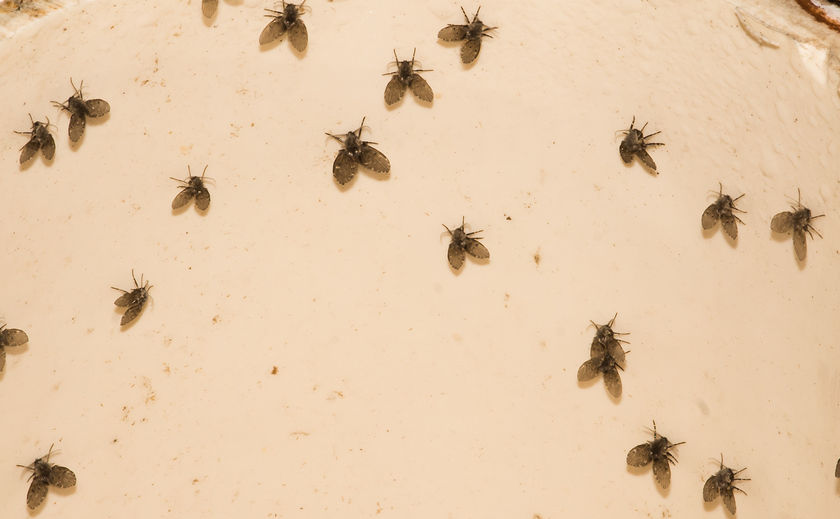
Most people observed that the flying drain flies were mainly sitting on the walls or ceiling in the bathroom. We can confirm that everyone was experiencing what is commonly known as drain flies or bathroom flies emerging from the floor waste drain where they breed.
What Do Drain Flies Look Like

A typical-looking drain fly on a bathroom wall
Drain flies are dark grey and 2mm – 4mm long with hairy moth-like wings. They have a jerky flight as they are weak fliers and usually are found close to the floor waste drain or other areas of origin, such as the shower or bath waste. This is why they seldom stray outside the bathroom. In most cases, they are breeding in the bathroom floor waste trap.
Drain flies do not bite and are not known to transmit diseases of any sort. They do not damage clothes or linen and are considered to be more of an unsightly nuisance value in your home.
The adult drain flies and larvae can be controlled by eliminating or reducing breeding sites. If the infestation is minor, pouring bleach into the floor trap will usually kill them. However, if that does not solve the problem, then you will need to kill them by thoroughly cleaning the drain lines and or sealing the floor trap.
They continually seem to be in large numbers despite always killing them because eggs hatch in 32 to 48 hours when the temperature is above 20 degrees. The larvae mature in 9 to12 days and feed on the decaying organic matter that accumulates in the floor waste trap. The life cycle of drain flies is 1-3 weeks. Adults drain flies live about two weeks, with old ones dying and new ones emerging. They feed on the wastewater in the floor waste trap. During the day, the adults rest in shaded areas under the basin or on walls near plumbing fixtures and showers and baths. Most activity occurs during the evening when the flies are seen hovering about.
Septic Tanks Breeders
If you are on acreage and have septic tanks or treatment plants, they may breed in large numbers in and around the tanks. Drain flies may be carried by prevailing wind to nearby homes up to 3 kilometres away. Adult drain flies are small enough to pass through ordinary window insect mesh screens.
Thorough Cleaning of Drains and Traps
It is the experience of Whywait Plumbing that cleaning the drains from the basin, shower and bath that discharge into the floor trap is only part of the answer. It is also beneficial to clean the floor waste trap and grate thoroughly. We recommend cleaning the whole area with No–Rinse Floor Cleaner, Sanitiser & Disinfectant, which will clean and disinfect the floor and drain. We don’t recommend the need to continually pour chemicals such as bleach down the drain as it is washed away as soon as you use any water in the basin or shower fixtures.
 Drain PRO™ – The Drain Fly Solution
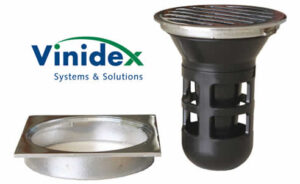
In 2010 Gary and Michele Mays, the owners of Whywait Plumbing Services, went through this entire experience of drain flies invading their ensuite bathroom. Gary Mays installed a Drain PRO™ unit into the floor waste, which prevents not only drain flies but also bacteria, odours and insects from exiting through the drain into the bathroom.
It is three years since the installation of the Drain PRO™ units in all of the bathroom floor traps in their home, and they have eliminated the reoccurrence of the annoying tiny lazy drain flies.
If you are experiencing the annoyance of drain flies that will not go away, call Whywait Plumbing at (07) 5580 4311 to book a service call so we can eliminate them once and for all.