by Gary Mays | Apr 27, 2013 | Consumer Issues, DIY Plumbing, Gold Coast Plumbing, Health Issues, Insurance, Plumbers, Plumbers Gold Coast, Plumbing Emergencies, Plumbing Legislation, Sustainable Plumbing
Plumbing is public health, now and in the future. Just as Vaccination Protects Individuals and the Community. Plumbing Protects the Whole Community, and Individually Plumbers Protect the Health of the Nation.

The plumbers at Whywait Plumbing every day protecting your health
Albert Einstein towards the end of his life in 1954 wrote “If I would be a young man again and had to decide how to make my living, I would not try to become a scientist or scholar or teacher. I would rather choose to be a plumber.”
Einstein, like many others, recognised that plumbing is public health, now, and in the future.
A survey of 11000 doctors by the British Medical Journal in 2007 voted hands down that the world’s greatest medical milestone since 1840 was sanitation. Despite all the tremendous medical breakthroughs and scientific advances, the seemingly mundane advance of reliable sewage and reliably clean water supply was judged the most significant medical advance.
The recognition of reliable sewage and water supply is a testament to the strength of plumbing laws, standards, and licensing in not only Australia but also in Europe and North America. This is because doctors recognised the best measure of medical advance is not its complexity, but what it does for the average person concerning the length and quality of our lives. The average life expectancy has increased 35 years since 1840, and roughly 30 of those years are attributable to the advances in sanitation and living conditions.
For most of us in Australia, plumbing is something we take for granted. We have never known what it is like not to have on-demand clean running water inside our homes or a fully functional sewer system to take away the used water. Close to 90% of us live in an urban environment, and for that, we can thank plumbing, that allows us to do so safely, without fear of contracting waterborne diseases. Yet even plumbers fail to understand the impact that they have on modern urban society and that their work is essential as plumbing is public health.
 Clean potable water is the basis for life and without it the risk to public health and the population as a whole increase. The cost to the community of plumbing failures are substantial and always have been. Plumbing is and always has been a significant part of the public health system. This was first learnt by the Romans, who were the first civilised society over 2000 years ago to realise the requirements to have an integrated plumbing system to pipe in clean water and dispose of used water.
In Asia alone, some 2 billion people, which is over 60% of the population of Asia, live without adequate access to sanitation such as toilets. In many places, open sewers are the norm. This would not be tolerated in Australia, and we are protected from it by our plumbing laws.
Recent natural disasters here in Australia and internationally are essential reminders of the role plumbing plays in modern life. Homes in Brisbane during the recent floods were made uninhabitable with the loss of plumbing. This is further reinforced by the earthquakes in Christchurch, the tsunami in Japan, cyclones in North Queensland, and the floods in Victoria where homes were not suitable to be lived in again until full plumbing services were reinstalled. In all of these natural disasters, the restoration of plumbing was a significant component of the recovery process.
As with everything in life, change is the constant and this is undoubtedly true of plumbing. As we solve one problem, another one arises. Diseases related to water always have required vigilance in preventing their spread. This is as true today as it has always been. As always, this is where the plumbing will once again prove to be a significant part of the solution.
The mosquito has always been a significant source of transmission of serious diseases such as malaria, ross river fever, dengue fever, to name a few. New arboviruses such as Chikungunya are increasingly a threat to Australia. These emerging infectious diseases are all spread by mosquito and are dependant on water. This intimate dependency on water increase risk without high plumbing standards of becoming endemic in Australia.
With the increasing threat to the community from the mosquito-spread of waterborne strong plumbing, practices are essential.
Plumbers have a continuing obligation to the community to use their knowledge and experience to demonstrate the impact that poor plumbing could have in the future because plumbing is public health.

by Gary Mays | Apr 17, 2013 | Consumer Issues, Insurance, Plumbing Legislation, QBCC, Queensland Government, Sustainable Plumbing
Here at Whywait Plumbing, it gets very frustrating at times when clients want us to install products they have purchased “cheaply” online or bought from non-specialist outlets who import cheap non-compliant product. All products we install are required by law to have a WaterMark certificate and a WELS water rating label certificate. It is illegal for licensed plumbers to install non-compliant products.
WELS Water Rating Label certificates are on every product plumbers install. Unfortunately, many of our clients are confused by the rating 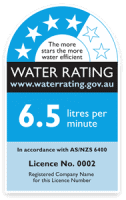 requirements, which is mainly because there has been little public education and therefore awareness.
In 2005, the Water Efficiency Labelling and Standards (WELS) scheme as a joint initiative of the Australian, State, and Territory governments became law. Under the WELS Water Rating Label scheme, products that use water must be tested under standardised conditions in a laboratory by a government regulator. Each product is given a comparative rating score of between one and six stars to indicate the product’s efficiency. The WELS Water Rating Label certificates or stickers are very similar in appearance to those used for energy rating labels for things like fridges, dishwashers, washing machines, heaters and air conditioning units.
The WELS Water Rating Label scheme was instituted to eliminate and educate on unnecessary water use. The WELS Water Rating Label scheme on current projections is expected to save 800,000 megalitres of water by the year 2021 across Australia. This equates to about a billion dollars of water bill savings. A further little-known benefit of the WELS Water Rating Label scheme is a reduction in greenhouse gases which is estimated to equal to the removal of 90,000 cars from Australian roads every year.
When the plumbers at Whywait raise the issue of WELS Water Rating Label certificates, many of our clients ask which products have to have WELS labels? Very simply under the WELS Water Rating Label scheme, the bathroom products that need to be rated in Australia are:
- shower heads
- tapware
- toilets pans, cisterns and urinals
 Installing water-efficient showerheads in your home’s bathrooms account for 25% of the water savings under the WELS Water Rating Label scheme. This is due to the significant difference in the amount of water used in showers with a standard showerhead using between 15-25 litres of water per minute. A 3-star rated showerhead only uses 6 or 7 litres per minute which means installing a water-efficient showerhead reduces your water consumption in the shower alone by 40%. Using less water in the shower has the added benefit of reducing your electricity or gas bill as you use about 40%-60% less hot water.
All taps used in kitchen sinks, bathroom basins, bathroom showers and laundry troughs must be WELS rated. However, a bath tap although in all likelihood WELS rated does not require to be flow reduced as you use the same amount of water to fill a bath no matter what. Flow restrictors mean the bath takes longer to fill. Most mixer taps and many combination tap spouts have an aerator that is combined with a flow restrictor, installed on the spout outlet that mixes the water with air, and in the process can cut the amount of water used from 15-22 litres per minute down to around 3 – 6 litres per minute.
Finally, the WELS Water Rating Label scheme requires flushing toilets and urinals to meet a basic level of water efficiency. Waterless urinals are not required to have any form of WELS certification. Concerning toilets, an average flush is calculated as one full flush and four half-flushes. Therefore a compliant toilet suite cannot exceed 5.5 litres per average flush. Water-efficient toilets make up a significant amount of the water savings under the WELS scheme with savings of 22% as a traditional toilet used 11 litres per flush compared to water-efficient dual flush toilets that use, on average less than 4 litres per flush. This adds up to savings of 52 litres of water per person, per day, and can add up to $800 less in your water bill over ten years.
When choosing plumbing products for your home, it is a good idea to take into consideration the information on the WELS Water Rating Label and the savings you can make over the long term on both water and electricity or gas bills.
For more information on the WELS scheme, go to waterrating.gov.au.

by Gary Mays | Mar 29, 2013 | Climate Change, Consumer Issues, Hot Water Heat Pump, Hot Water Solar, Hot Water Temperature, Plumbers Gold Coast, Plumbing Emergencies, Queensland Government, Sustainable Plumbing
The Easter long weekend is only surpassed by the Christmas and new year period as a time when families travel to be together. It is also the start of the hot water season when clients are reminded of the ever-increasing hot water electricity cost.
 For the plumbers at Whywait Plumbing, Easter is a busy period with blocked drains being the most common problem followed by hot water problems.
Unlike Christmas, there is always a spike over Easter in emergency callouts for faulty hot water units. That is because Easter is generally much cooler than Christmas. Around April, we all suddenly realise that cold weather is on the way. Every year we notice the signs with an increase in emergency service callouts with the problem being no hot water. Even in the relatively mild climate of South-East Queensland no-one willingly wants to have a cold shower.
Frequently we cannot help but shake our head’s at all the stress, the waste of time and money these emergency service calls represent to many homeowners. Sadly many of us do not pay too much attention to the myriad of household and mechanical systems that provide so much comfort and convenience in our modern lives. We take for granted our water heaters, toilets, mixer taps, and air conditioners that is until they stop working. Then come the panicked call and a repair job that always ends up costing more than we expect.
Showers are the activity where we use the most hot water. Generally, 40% of the water consumed in the shower is hot water. This is why there is a strong correlation between the length of a shower and the hot water electricity cost.
If your home is like many in South East Queensland you are producing hot water from an electric hot water service connected to tariff 11 with a shower rose you love because you get a deluge of water from it at 23 litres per minute. If your shower is being utilised four times a day for an average of 5 minutes per shower, then those showers are costing you $1125 a year in electricity costs and $107 in water usage costs.
Essentially 1 kilowatt-hour of electricity is used to produce 15 litres of hot water using an electric element hot water service. With electricity prices expected to increase 21% on 1 July and a further 40% over the next three years, there is considerable scope for reducing your hot water electricity cost.
One option is to change your electricity and water guzzling shower rose to a water efficient shower rose using only 9 litres per minute. Based on the standard example above this would immediately reduce your electricity costs to $440 and water cost to $42. If you are able to change your hot water service from tariff 11 to tariff 33, then you will save an additional 40% on electricity costs.
The best option and the one we recommend is the long-term sustainable option utilising heat pump technology. Heat pump technology involves replacing your old fashioned energy-hungry electric hot water service to the highly efficient Sanden “Eco®” Plus Heat Pump hot water system.
Electricity costs have become a political hot potato, with state and federal governments playing the blame game in blaming each other for the doubling of electricity prices in recent years.
Hot water electricity cost is one area you can reduce your electricity costs substantially by being smart about how you heat your hot water and use it. Hot water generated by electric elements is something we always took for granted. That is until surging electricity price increases made us all take another look at our increasingly energy-intensive lifestyles.
by Gary Mays | Mar 24, 2013 | Bathrooms, Blocked drain, Consumer Issues, drain fly, Drain Odours, Gold Coast Plumbing, Health Issues, Plumbing Maintenance
Recently here at Whywait Plumbing, we have had several calls from clients who are concerned they are about to be overrun by small drain flies in their bathroom. Generally, the concern is that they are in large numbers, and no matter what is done to kill them, every drain fly seems to multiply as there is always more the next day.
Cleaning Your Drains Doesn’t Get Rid Of A Drain Fly
Many clients had cleaned the bathroom until it could be cleaned no more. So by process of elimination, they had decided that they were coming out of one of the drains in the bathroom. Frustratingly no matter how often some clients sat and observed the drains, they never saw any of the drain flies emerging from the drain in the shower or basin or the floor waste. Many clients describe them as lazy flies, accumulating on the bathroom walls and seldom flying.
Most people observed that the flying drain flies were mainly sitting on the walls or ceiling in the bathroom. We can confirm that everyone was experiencing what is commonly known as drain flies or bathroom flies emerging from the floor waste drain where they breed.
What Do Drain Flies Look Like

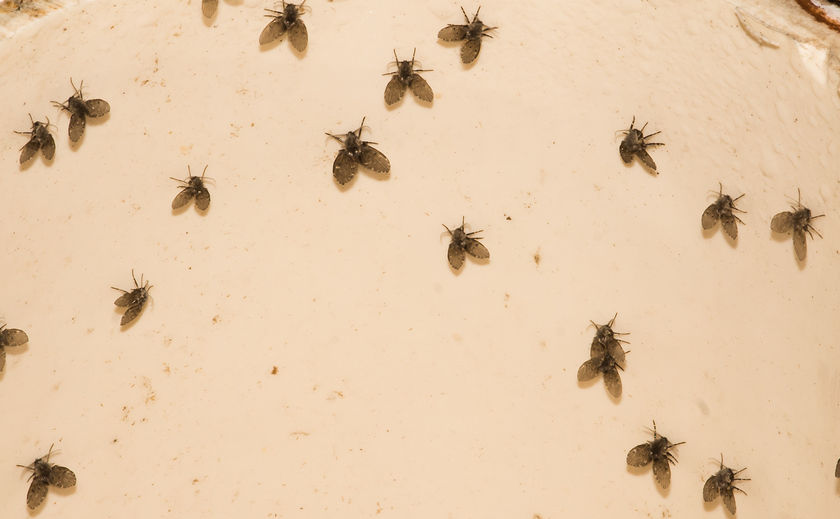
A typical-looking drain fly on a bathroom wall
Drain flies are dark grey and 2mm – 4mm long with hairy moth-like wings. They have a jerky flight as they are weak fliers and usually are found close to the floor waste drain or other areas of origin, such as the shower or bath waste. This is why they seldom stray outside the bathroom. In most cases, they are breeding in the bathroom floor waste trap.
Drain flies do not bite and are not known to transmit diseases of any sort. They do not damage clothes or linen and are considered to be more of an unsightly nuisance value in your home.
The adult drain flies and larvae can be controlled by eliminating or reducing breeding sites. If the infestation is minor, pouring bleach into the floor trap will usually kill them. However, if that does not solve the problem, then you will need to kill them by thoroughly cleaning the drain lines and or sealing the floor trap.
They continually seem to be in large numbers despite always killing them because eggs hatch in 32 to 48 hours when the temperature is above 20 degrees. The larvae mature in 9 to12 days and feed on the decaying organic matter that accumulates in the floor waste trap. The life cycle of drain flies is 1-3 weeks. Adults drain flies live about two weeks, with old ones dying and new ones emerging. They feed on the wastewater in the floor waste trap. During the day, the adults rest in shaded areas under the basin or on walls near plumbing fixtures and showers and baths. Most activity occurs during the evening when the flies are seen hovering about.
Septic Tanks Breeders
If you are on acreage and have septic tanks or treatment plants, they may breed in large numbers in and around the tanks. Drain flies may be carried by prevailing wind to nearby homes up to 3 kilometres away. Adult drain flies are small enough to pass through ordinary window insect mesh screens.
Thorough Cleaning of Drains and Traps
It is the experience of Whywait Plumbing that cleaning the drains from the basin, shower and bath that discharge into the floor trap is only part of the answer. It is also beneficial to clean the floor waste trap and grate thoroughly. We recommend cleaning the whole area with No–Rinse Floor Cleaner, Sanitiser & Disinfectant, which will clean and disinfect the floor and drain. We don’t recommend the need to continually pour chemicals such as bleach down the drain as it is washed away as soon as you use any water in the basin or shower fixtures.
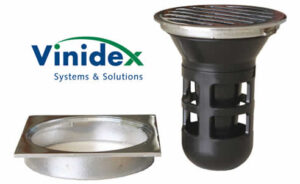 Drain PRO™ – The Drain Fly Solution
In 2010 Gary and Michele Mays, the owners of Whywait Plumbing Services, went through this entire experience of drain flies invading their ensuite bathroom. Gary Mays installed a Drain PRO™ unit into the floor waste, which prevents not only drain flies but also bacteria, odours and insects from exiting through the drain into the bathroom.
It is three years since the installation of the Drain PRO™ units in all of the bathroom floor traps in their home, and they have eliminated the reoccurrence of the annoying tiny lazy drain flies.
If you are experiencing the annoyance of drain flies that will not go away, call Whywait Plumbing at (07) 5580 4311 to book a service call so we can eliminate them once and for all.
by Gary Mays | Mar 22, 2013 | City of Gold Coast, Cold Water, Consumer Issues, Insurance, Leaking Pipes, Plumbing Emergencies, Plumbing Maintenance, Queensland Government, Water Leaks
At Whywait Plumbing the phones began to ring as soon as the water bills from Gold Coast Water arrived in late January. The most common issue was one of bill shock where residents received bills in the thousands of dollars when their normal bill was around $600.
This was brought home to us here at Whywait when our IT Manager, Brad Horrocks rang about the bill his pensioner father, Neal had received which was $4980 when his normal bill was never over $600. Unbeknown to Neale he had an underground leak in the polypipe watermain coming into his home in Coombabah. This unfortunately is common in the coastal areas such as Coombabah where the water basically soaks into the sandy soils rather than bubbling to the surface.
Neal was fortunate that Gold Coast Water gave him a rebate of $3658 but he was still left to pay a bill of $1322. The sting in the tail of this rebate is that Neale is not eligible for further rebates should he have further leaks in his watermain for 3 years. This puts Neale and all of those like him who are recipients of the 60% rebate from Gold Coast Water where the bill shock is caused by a broken pipe in a terrible dilemma. This is caused by water meters only being read every 3 months and bills being issued every 6 months.
Unless you read your water meter on a regular basis which we strongly recommend then you can suffer a major break in your watermain and not be aware of it for at least 90 days when you receive a letter from Gold Coast Water advising you that you have very high water use readings. If you have already used your once every three years rebate for broken pipes then you will pay for every litre of water that leaks into the ground.
However we do have a solution for everyone who has experienced the drama of water bill shock. Prevention is always the best solution. AquaTrip water leak detection and control systems are the solution. AquaTrip is a permanently installed leak detection protection system that quietly provides protection in the background and under normal conditions you will never know it’s there.
AquaTrip monitors the flow of water into your property, and will shut off the water automatically in the event of a tap left running, a burst pipe, or if a tap, fitting, pipe, toilet, cistern or appliance is leaking. This will save water, reduce wastage and most critically minimise property damage.
AquaTrip is an active water leak detection system that costs less than the excess charges from Gold Coast Water or the excess on one insurance claim and a fraction of the cost of most annual home insurance premiums. In most cases insurance companies do not cover the cost of watermain leaks or the resultant water costs. AquaTrip will provide your home with a lifetime of protection against such water leak events. AquaTrip is a one time insurance policy.
If Neal Horrocks had an AquaTrip installed he would not only have the peace of mind provided by AquaTrip but would be potentially $700 better off today as he would not have had to pay a water bill of $1322.
For more information on installing an AquaTrip “insurance policy” at your home or building Whywait Plumbing today for a lifetime of protection.
by Gary Mays | Mar 18, 2013 | Bathrooms, City of Gold Coast, Consumer Issues, DIY Plumbing, Gold Coast Plumbing, Health Issues, Insurance, Plumber Brisbane, Plumbers, Plumbers Gold Coast, Plumbing Emergencies, Plumbing Legislation, Plumbing Maintenance, Plumbing Renovation, Queensland Government, Sustainable Plumbing, Whywait Plumbing
Cheap plumbing fixtures on-line and the desire for a bargain has created an on-line love affair to compare prices of supposedly comparable products and services.
It is a guarantee no matter how much you pay for any product or service you will always find it cheaper on-line. This has given rise to an increasing belief by many consumers that they have paid over the odds and have been ripped off because they found allegedly the same product or service on-line “cheaper”.
It is worth remembering that “cheap” has two meanings. Where plumbing products and services are concerned “cheap” is responsible for some colossally expensive problems. In fact a large amount of work undertaken by Whywait Plumbing is because of consumers who took the “cheap” option. The old adage that you get what you pay for is certainly truer today than at any other time in our history.
Plumbing products that are sold in Australia are subject to stringent testing, designed to ensure that they meet Australian Standards. Once plumbing products meet the required Australian standards they are granted a WaterMark. The product whether its a tap or a toilet or a hot water service or a urinal must display the WaterMark logo as pictured to the right on the product by law.
If you are buying plumbing products on-line from overseas or if your builder or plumber is doing this to cut costs then it is a sure bet that it will end up costing you much more than the money saved in repairs and replacement.
Always make sure you understand what you are paying for and ensure that it has a compliant Australian WaterMark approval. Using a non compliant non WaterMark approved product will null and void your insurance policy if the product is defective and causes property damage.
When you are upgrading or replacing or renovating you will comes across a lot of great looking plumbing products to select from and ones that make great claims in terms of durability and long-life. Usually they are much “cheaper” and are tempting to purchase for the price being offered. Generally where mixer taps and toilet suites are concerned the cheaper the price means corners have been cut in their production. If you cannot see the WaterMark on the product then do not purchase it.
Unfortunately in Australia it is not illegal for non compliant products to be imported and sold. It is however illegal for plumbers to install them. Listening to unqualified salesman who tell you how wonderful the cheap plumbing product is have lead many people to have expensive repairs undertaken. It is always best especially if renovating to stipulate any product supplied for your job meets or exceeds the relevant Australian Standard and or WaterMark for plumbing products.
By Gary Mays


