by Gary Mays | Apr 6, 2013 | City of Gold Coast, DIY Plumbing, Health Issues, Insurance, Plumbing Emergencies, Plumbing Maintenance
Here at Whywait Plumbing we are often left wondering at the stupid things people do to their plumbing which ensures plumbers are never short of or will run out of work.
Essentially at Whywait Plumbing we are maintenance plumbing specialists and our primary work is to make house calls 24 hours a day, 7 days a week and 365 days a year. The basic reason plumbers never run out of work is based on two truths:
1) our clients will always need plumbing—or more specifically, plumbing that works—and,
2) some of our clients will always do stupid things that stop their plumbing from working.
Keeping in mind that the maintenance side of plumbing often requires a strong stomach and the need to suppress amusement with other peoples’ self-imposed misfortune. But rest assured that the two truths mentioned above will always ensure the plumbers at Whywait Plumbing will keep your plumbing working to keep your business. Listed below are samples of stupid things that some of our clients do to their plumbing that require Whywait staff to suppress their amusement or often bemusement.
- Leaving hoses connected and turned on at the tap and then going away on holiday. This is a classic plumbing error that one must assume is caused most often by extreme laziness with the only beneficiary being Gold Coast Water with all of the extra water this client ultimately had to pay for when the hose burst.
- Using the drain vent pipe for anything other than venting because there is plenty of room inside the pipe. This client was running TV aerial cables, pay TV cables and computer cables down the drainage vent pipe that come up through the roof. For this client it was the solution for getting all of the cabling into the house through a single 50mm pipe. But as he learnt vent pipes are not just there for their bad looks. Vent pipes not only provide air to drains inside the house and to prevent a suction effect that inhibits drainage but they also get rid of sewer gases that come up from the Gold Coast Water’s sewer main. If you cut a hole in your vent inside the house to run a cable through, you’re tapping into an endless supply of your neighborhood’s sewer gases. He had a nice picture on the TV in his lounge room with full access to the Internet but made the house almost uninhabitable with the fluctuating sewer gases entering the house.
- Using too much drain cleaner. When used judiciously and as directed on the right kind of blockage, drain cleaners can be effective and relatively safe for drains. When used with abandon, they can corrode some drain pipes such as copper which this client managed to achieve while making Bunnings very happy with all of his purchases. Plus so much was poured down the pipe it made the blockage worse.
- Pouring chemicals into a septic system. If you’re used to living with a septic system, you probably know how to take care of it. But this client was renting a house on acreage and did not think twice about using chemicals like drain cleaner, chlorine bleach, paint and even anti-bacterial soaps. These chemicals killed the essential bacteria in the septic tank, and caused it to stop working but of course waited until Christmas Day to finally block when he had a house full of family visiting.
- Screwing, nailing or cutting into a wall without checking for hidden plumbing pipes. The advent of multiple types of plastic water pipes have turned this into a nightmare for plumbers as they cannot be welded up like a copper pipe plus none of the systems are compatible. Doing this with a screw and you might hear a fine spray of water hitting the back of the wall. But this client did it with a chainsaw and got the ultimate gusher hitting not only the hot and cold pipes but also the hot water storage tank.
- Pouring cooking oil and fats down the kitchen drain. If you’re in the habit of pouring cooking oil and fats down the kitchen sink drain you are guaranteeing a drain blockage sooner rather than later. Cooking oil and fat is one of the best things for blocking drains as a recent client discovered managing to block up his entire unit and that of her neighbour in a duplex block on Australia Day when the neighbour was entertaining friends for a traditional barbecue.
- Putting everything down the kitchen waste disposal unit. Unfortunately this client was one of those people who thought a waste disposal unit was the equivalent of a space-fantasy laser gun. Unfortunately she found out it was not in the middle of a dinner party for important clients of her husbands business. A waste disposal unit is essentially a motor with a spinning wheel that has two metal blades, and it does very little to stop the following from blocking your drain even if you do run copious amounts of water into the kitchen sink: bulk flour, bulk rice, flower stems, prawn shells, oyster shells, filleted fish scales and skin and a couple of spoons. The smell was not great either.
- Using the toilet as a rubbish bin. We all know it is stupid to put a lot of solids or newspaper down the toilet but many people do it anyway. This client like many others we rescue believed that if she could just get it to flush away it would be magically out of her life forever. Like many people she had the mistaken belief that at the other end of the toilet there is nothing but a black hole which is a portal to a subterranean outer space that swallows up everything she could discard and it is then whisked off into oblivion. Unfortunately, that oblivion is a 100mm pipe that leads into another 100mm pipe, which was the drainage pipe to her entire house. In other words constantly flushing incorrect items down the toilet over an extended period ultimately caused the entire house to block up and the drain had to be dug up to remove all the solidified debris that had mounted up. The bottom line is if it is not toilet paper or faeces or urine it does not belong in the toilet pan.
And those are just a few of the stupid things we have rectified this year to date at Whywait Plumbing Services.

by Gary Mays | Mar 29, 2013 | Climate Change, Consumer Issues, Hot Water Heat Pump, Hot Water Solar, Hot Water Temperature, Plumbers Gold Coast, Plumbing Emergencies, Queensland Government, Sustainable Plumbing
The Easter long weekend is only surpassed by the Christmas and new year period as a time when families travel to be together. It is also the start of the hot water season when clients are reminded of the ever-increasing hot water electricity cost.
 For the plumbers at Whywait Plumbing, Easter is a busy period with blocked drains being the most common problem followed by hot water problems.
Unlike Christmas, there is always a spike over Easter in emergency callouts for faulty hot water units. That is because Easter is generally much cooler than Christmas. Around April, we all suddenly realise that cold weather is on the way. Every year we notice the signs with an increase in emergency service callouts with the problem being no hot water. Even in the relatively mild climate of South-East Queensland no-one willingly wants to have a cold shower.
Frequently we cannot help but shake our head’s at all the stress, the waste of time and money these emergency service calls represent to many homeowners. Sadly many of us do not pay too much attention to the myriad of household and mechanical systems that provide so much comfort and convenience in our modern lives. We take for granted our water heaters, toilets, mixer taps, and air conditioners that is until they stop working. Then come the panicked call and a repair job that always ends up costing more than we expect.
Showers are the activity where we use the most hot water. Generally, 40% of the water consumed in the shower is hot water. This is why there is a strong correlation between the length of a shower and the hot water electricity cost.
If your home is like many in South East Queensland you are producing hot water from an electric hot water service connected to tariff 11 with a shower rose you love because you get a deluge of water from it at 23 litres per minute. If your shower is being utilised four times a day for an average of 5 minutes per shower, then those showers are costing you $1125 a year in electricity costs and $107 in water usage costs.
Essentially 1 kilowatt-hour of electricity is used to produce 15 litres of hot water using an electric element hot water service. With electricity prices expected to increase 21% on 1 July and a further 40% over the next three years, there is considerable scope for reducing your hot water electricity cost.
One option is to change your electricity and water guzzling shower rose to a water efficient shower rose using only 9 litres per minute. Based on the standard example above this would immediately reduce your electricity costs to $440 and water cost to $42. If you are able to change your hot water service from tariff 11 to tariff 33, then you will save an additional 40% on electricity costs.
The best option and the one we recommend is the long-term sustainable option utilising heat pump technology. Heat pump technology involves replacing your old fashioned energy-hungry electric hot water service to the highly efficient Sanden “Eco®” Plus Heat Pump hot water system.
Electricity costs have become a political hot potato, with state and federal governments playing the blame game in blaming each other for the doubling of electricity prices in recent years.
Hot water electricity cost is one area you can reduce your electricity costs substantially by being smart about how you heat your hot water and use it. Hot water generated by electric elements is something we always took for granted. That is until surging electricity price increases made us all take another look at our increasingly energy-intensive lifestyles.
by Gary Mays | Mar 24, 2013 | Bathrooms, Blocked drain, Consumer Issues, drain fly, Drain Odours, Gold Coast Plumbing, Health Issues, Plumbing Maintenance
Recently here at Whywait Plumbing, we have had several calls from clients who are concerned they are about to be overrun by small drain flies in their bathroom. Generally, the concern is that they are in large numbers, and no matter what is done to kill them, every drain fly seems to multiply as there is always more the next day.
Cleaning Your Drains Doesn’t Get Rid Of A Drain Fly
Many clients had cleaned the bathroom until it could be cleaned no more. So by process of elimination, they had decided that they were coming out of one of the drains in the bathroom. Frustratingly no matter how often some clients sat and observed the drains, they never saw any of the drain flies emerging from the drain in the shower or basin or the floor waste. Many clients describe them as lazy flies, accumulating on the bathroom walls and seldom flying.
Most people observed that the flying drain flies were mainly sitting on the walls or ceiling in the bathroom. We can confirm that everyone was experiencing what is commonly known as drain flies or bathroom flies emerging from the floor waste drain where they breed.
What Do Drain Flies Look Like

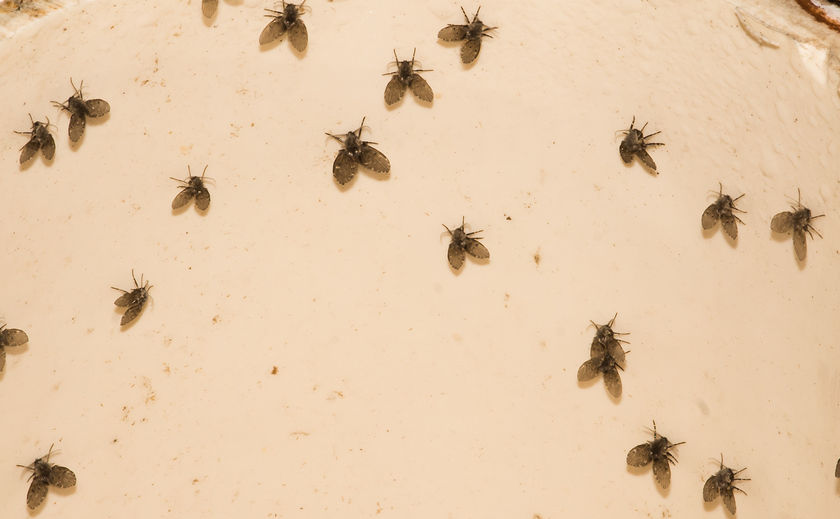
A typical-looking drain fly on a bathroom wall
Drain flies are dark grey and 2mm – 4mm long with hairy moth-like wings. They have a jerky flight as they are weak fliers and usually are found close to the floor waste drain or other areas of origin, such as the shower or bath waste. This is why they seldom stray outside the bathroom. In most cases, they are breeding in the bathroom floor waste trap.
Drain flies do not bite and are not known to transmit diseases of any sort. They do not damage clothes or linen and are considered to be more of an unsightly nuisance value in your home.
The adult drain flies and larvae can be controlled by eliminating or reducing breeding sites. If the infestation is minor, pouring bleach into the floor trap will usually kill them. However, if that does not solve the problem, then you will need to kill them by thoroughly cleaning the drain lines and or sealing the floor trap.
They continually seem to be in large numbers despite always killing them because eggs hatch in 32 to 48 hours when the temperature is above 20 degrees. The larvae mature in 9 to12 days and feed on the decaying organic matter that accumulates in the floor waste trap. The life cycle of drain flies is 1-3 weeks. Adults drain flies live about two weeks, with old ones dying and new ones emerging. They feed on the wastewater in the floor waste trap. During the day, the adults rest in shaded areas under the basin or on walls near plumbing fixtures and showers and baths. Most activity occurs during the evening when the flies are seen hovering about.
Septic Tanks Breeders
If you are on acreage and have septic tanks or treatment plants, they may breed in large numbers in and around the tanks. Drain flies may be carried by prevailing wind to nearby homes up to 3 kilometres away. Adult drain flies are small enough to pass through ordinary window insect mesh screens.
Thorough Cleaning of Drains and Traps
It is the experience of Whywait Plumbing that cleaning the drains from the basin, shower and bath that discharge into the floor trap is only part of the answer. It is also beneficial to clean the floor waste trap and grate thoroughly. We recommend cleaning the whole area with No–Rinse Floor Cleaner, Sanitiser & Disinfectant, which will clean and disinfect the floor and drain. We don’t recommend the need to continually pour chemicals such as bleach down the drain as it is washed away as soon as you use any water in the basin or shower fixtures.
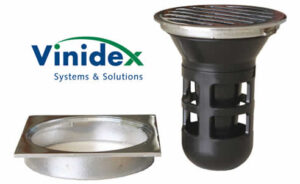 Drain PRO™ – The Drain Fly Solution
In 2010 Gary and Michele Mays, the owners of Whywait Plumbing Services, went through this entire experience of drain flies invading their ensuite bathroom. Gary Mays installed a Drain PRO™ unit into the floor waste, which prevents not only drain flies but also bacteria, odours and insects from exiting through the drain into the bathroom.
It is three years since the installation of the Drain PRO™ units in all of the bathroom floor traps in their home, and they have eliminated the reoccurrence of the annoying tiny lazy drain flies.
If you are experiencing the annoyance of drain flies that will not go away, call Whywait Plumbing at (07) 5580 4311 to book a service call so we can eliminate them once and for all.

by Gary Mays | Mar 22, 2013 | City of Gold Coast, Cold Water, Consumer Issues, Insurance, Leaking Pipes, Plumbing Emergencies, Plumbing Maintenance, Queensland Government, Water Leaks
At Whywait Plumbing the phones began to ring as soon as the water bills from Gold Coast Water arrived in late January. The most common issue was one of bill shock where residents received bills in the thousands of dollars when their normal bill was around $600.
This was brought home to us here at Whywait when our IT Manager, Brad Horrocks rang about the bill his pensioner father, Neal had received which was $4980 when his normal bill was never over $600. Unbeknown to Neale he had an underground leak in the polypipe watermain coming into his home in Coombabah. This unfortunately is common in the coastal areas such as Coombabah where the water basically soaks into the sandy soils rather than bubbling to the surface.
Neal was fortunate that Gold Coast Water gave him a rebate of $3658 but he was still left to pay a bill of $1322. The sting in the tail of this rebate is that Neale is not eligible for further rebates should he have further leaks in his watermain for 3 years. This puts Neale and all of those like him who are recipients of the 60% rebate from Gold Coast Water where the bill shock is caused by a broken pipe in a terrible dilemma. This is caused by water meters only being read every 3 months and bills being issued every 6 months.
Unless you read your water meter on a regular basis which we strongly recommend then you can suffer a major break in your watermain and not be aware of it for at least 90 days when you receive a letter from Gold Coast Water advising you that you have very high water use readings. If you have already used your once every three years rebate for broken pipes then you will pay for every litre of water that leaks into the ground.
However we do have a solution for everyone who has experienced the drama of water bill shock. Prevention is always the best solution. AquaTrip water leak detection and control systems are the solution. AquaTrip is a permanently installed leak detection protection system that quietly provides protection in the background and under normal conditions you will never know it’s there.
AquaTrip monitors the flow of water into your property, and will shut off the water automatically in the event of a tap left running, a burst pipe, or if a tap, fitting, pipe, toilet, cistern or appliance is leaking. This will save water, reduce wastage and most critically minimise property damage.
AquaTrip is an active water leak detection system that costs less than the excess charges from Gold Coast Water or the excess on one insurance claim and a fraction of the cost of most annual home insurance premiums. In most cases insurance companies do not cover the cost of watermain leaks or the resultant water costs. AquaTrip will provide your home with a lifetime of protection against such water leak events. AquaTrip is a one time insurance policy.
If Neal Horrocks had an AquaTrip installed he would not only have the peace of mind provided by AquaTrip but would be potentially $700 better off today as he would not have had to pay a water bill of $1322.
For more information on installing an AquaTrip “insurance policy” at your home or building Whywait Plumbing today for a lifetime of protection.
by Gary Mays | Mar 18, 2013 | Bathrooms, City of Gold Coast, Consumer Issues, DIY Plumbing, Gold Coast Plumbing, Health Issues, Insurance, Plumber Brisbane, Plumbers, Plumbers Gold Coast, Plumbing Emergencies, Plumbing Legislation, Plumbing Maintenance, Plumbing Renovation, Queensland Government, Sustainable Plumbing, Whywait Plumbing
Cheap plumbing fixtures on-line and the desire for a bargain has created an on-line love affair to compare prices of supposedly comparable products and services.
It is a guarantee no matter how much you pay for any product or service you will always find it cheaper on-line. This has given rise to an increasing belief by many consumers that they have paid over the odds and have been ripped off because they found allegedly the same product or service on-line “cheaper”.
It is worth remembering that “cheap” has two meanings. Where plumbing products and services are concerned “cheap” is responsible for some colossally expensive problems. In fact a large amount of work undertaken by Whywait Plumbing is because of consumers who took the “cheap” option. The old adage that you get what you pay for is certainly truer today than at any other time in our history.
Plumbing products that are sold in Australia are subject to stringent testing, designed to ensure that they meet Australian Standards. Once plumbing products meet the required Australian standards they are granted a WaterMark. The product whether its a tap or a toilet or a hot water service or a urinal must display the WaterMark logo as pictured to the right on the product by law.
If you are buying plumbing products on-line from overseas or if your builder or plumber is doing this to cut costs then it is a sure bet that it will end up costing you much more than the money saved in repairs and replacement.
Always make sure you understand what you are paying for and ensure that it has a compliant Australian WaterMark approval. Using a non compliant non WaterMark approved product will null and void your insurance policy if the product is defective and causes property damage.
When you are upgrading or replacing or renovating you will comes across a lot of great looking plumbing products to select from and ones that make great claims in terms of durability and long-life. Usually they are much “cheaper” and are tempting to purchase for the price being offered. Generally where mixer taps and toilet suites are concerned the cheaper the price means corners have been cut in their production. If you cannot see the WaterMark on the product then do not purchase it.
Unfortunately in Australia it is not illegal for non compliant products to be imported and sold. It is however illegal for plumbers to install them. Listening to unqualified salesman who tell you how wonderful the cheap plumbing product is have lead many people to have expensive repairs undertaken. It is always best especially if renovating to stipulate any product supplied for your job meets or exceeds the relevant Australian Standard and or WaterMark for plumbing products.
By Gary Mays


