by Gary Mays | Jun 25, 2013 | Consumer Issues, Health Issues, Hot Water Legionella, Hot Water Temperature, Plumbing Maintenance
The recent outbreaks of hot water Legionella in Queensland mainly in hospitals is of concern. These, for the most part, were warm water systems  which are not the same as your home hot water storage tank.
With hot or warm water systems there is always some risk but every system checked in recent weeks by Whywait Plumbing has had hot water temperatures that virtually eliminate all risk. However, there is almost no risk of you or your family contracting Legionella bacteria as a result of it breeding in your home hot water system.
Legionella Transmission Via Hot Water
Legionella transmission is airborne via respiratory droplets containing the bacteria. Warm water and domestic hot water systems that are contaminated will generally see the transmission of the bacteria in a shower that has not been used for a period of time.
Hot Water Preventative Measures For Legionella
Hot water systems should be maintained so that water at the point of use at any tap or outlet is 50°C or more after having been turned on for one minute.
Hot water systems should not be used until they have reached 50°C especially if they have been turned on for any period.
Generally, domestic hot water systems should have a temperature of 60°C or higher in water leaving the hot water storage tank.
DO NOT turn down the thermostat on an electric hot water storage tank to below 60C.
Hot Water Temperature For Preventative Of Legionella
Hot water systems should be maintained so that water at the point of use at any tap has a temperature that affects the survival of Legionella as follows:
- Above 70 °C – Legionella dies almost instantly
- At 60 °C – 90% die in 2 minutes
- At 50 °C – 90% die in 80-124 minutes, depending on strain
- 48 to 50 °C – Can survive but do not multiply
- 32 to 42 °C – Ideal growth range
- 25 to 45 °C – Growth range
- Below 20 °C – Can survive but are dormant, even below freezing
What Is Legionella Bacteria or Legionnaires Disease
What it is:
- Caused by the Legionella bacteria, commonly found in creeks, ponds and soil.
- Rare in people under 20 years, with those over 50 years old who smoke or have a weak immune system particularly susceptible.
Symptoms:
- Non-specific flu-like symptoms including fever, headache and muscle aches, developing within a week of breathing in the bacteria.
- Usually progresses rapidly with pneumonia symptoms, high fever, shortness of breath and chest pain typical.
Treatment:
- A person with the disease usually needs to be admitted to hospital for antibiotic treatment and care.
- Early diagnosis and antibiotic treatment important, and those treated usually begin to improve with three to five days.
Testing Your Storage Tank
For most homes, there is a very little risk of you having hot water legionella occur in your hot water storage tank unless you do really stupid things such as turn off your heating source.
An easy test of the storage temperature is to get a thermometer and test the temperature of your water from the overflow relief valve drain.
If you have any doubts about the temperature in your storage tank contact Whywait Plumbing to organise a service call to check your hot water system.

by Gary Mays | Jun 7, 2013 | Consumer Issues, Health Issues, Hot Water Legionella, Hot Water Temperature, Plumbing Maintenance
Judging by the number of phone calls in the last few days to Whywait Plumbing there is genuine concern amongst our clients over the threats posed to them from Legionella risk in their domestic hot water systems.
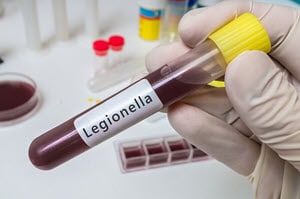 We can assure you whilst there is always some Legionella risk, there is almost no risk of you or your family contracting Legionella bacteria as a result of it breeding in your home hot water system.
The outbreak of Legionella bacteria in the hot water system at Wesley Hospital that killed a 60-year-old cancer patient and left a 46-year-old woman seriously ill has minor ramifications to be sure because all hot water systems can pose a risk.
That potential risk is why Whywait Plumbing is constantly advocating appropriate maintenance on your home hot water system to minimise that risk even further.
However, there is a huge difference between your home or domestic hot water system and the warm water recirculating system at Wesley Hospital. The Legionella outbreak in their warm water system has not been as a result of contamination in the hot water storage system or the hot water pipes but appears to be literally at the point of delivery from the shower where the water is cooler.
A warm water system is vastly different to your home hot water system with Wesley’s water temperature set between 42.5°C and 43°C. This is lower than the maximum 45°C legislated in the Plumbing and Drainage Act for hospitals. This low-temperature setting is a result of guidelines from Queensland Health that dictate hot water temperatures in hospitals be reduced to avoid the possibility of serious burns to young children and elderly patients. The downside of this requirement is that the possibility of Legionella bacteria surviving in reticulation pipes is increased. Water temperatures of around 46°C will kill legionella bacteria.
Warm water systems are typically found in care facilities, such as nursing homes, hospitals and child care centres, where water for purposes such as bathing and cleaning is provided at approximately 45°C to prevent scalding.
Your home hot water system if it is a storage tank is heating the hot water to between 60°C and 70°C. If you have a tempering valve or thermostatic mixing valve (TMV) installed then that has been set to deliver hot water at 50°C at each individual tap.
 If you have no tempering valve installed, you virtually have eliminated all risk. But you have increased the risk of someone suffering a scalding from hot water. As always it is about managing risk.
However, there is an urban myth prevalent that you can reduce electricity costs by turning the thermostat down on an electric storage unit to 50°C. This is not recommended for many reasons but it will not save you electricity and to physically get a thermostat down that low requires physically breaking the locking mechanism on it that allows the setting to be between 60°C – 70°C. If you want to lower the delivery temperature the only acceptable and compliant method is to install a tempering valve.
In 99.99% of cases, the temperature ranges your hot water system operates in is almost certainly killing any Legionella bacteria. The risk if any, is after the storage tank in the reticulation pipes. By turning your shower on and running the tap with hot water first then cooling down with cold water to your desired shower temperature you are virtually eliminating what risk there is.
What the outbreak at Wesley Hospital has confirmed is that there is a risk from warm water and that maintenance of your hot water systems will manage and eliminate that risk.
What Whywait Plumbing do recommend is that you take advantage of our ongoing reminders and offers to service your tempering valves. This not only ensures that water is being delivered at 50°C but eliminates any possibility of Legionella. It also ensures you are complying with the requirements of most insurance policies in ensuring that routine maintenance is undertaken plus we provide you with a written report and a form 4 compliance certificate that is further evidence of your hot water unit being compliant.

by Gary Mays | Apr 27, 2013 | Consumer Issues, DIY Plumbing, Gold Coast Plumbing, Health Issues, Insurance, Plumbers, Plumbers Gold Coast, Plumbing Emergencies, Plumbing Legislation, Sustainable Plumbing
Plumbing is public health, now and in the future. Just as Vaccination Protects Individuals and the Community. Plumbing Protects the Whole Community, and Individually Plumbers Protect the Health of the Nation.

The plumbers at Whywait Plumbing every day protecting your health
Albert Einstein towards the end of his life in 1954 wrote “If I would be a young man again and had to decide how to make my living, I would not try to become a scientist or scholar or teacher. I would rather choose to be a plumber.”
Einstein, like many others, recognised that plumbing is public health, now, and in the future.
A survey of 11000 doctors by the British Medical Journal in 2007 voted hands down that the world’s greatest medical milestone since 1840 was sanitation. Despite all the tremendous medical breakthroughs and scientific advances, the seemingly mundane advance of reliable sewage and reliably clean water supply was judged the most significant medical advance.
The recognition of reliable sewage and water supply is a testament to the strength of plumbing laws, standards, and licensing in not only Australia but also in Europe and North America. This is because doctors recognised the best measure of medical advance is not its complexity, but what it does for the average person concerning the length and quality of our lives. The average life expectancy has increased 35 years since 1840, and roughly 30 of those years are attributable to the advances in sanitation and living conditions.
For most of us in Australia, plumbing is something we take for granted. We have never known what it is like not to have on-demand clean running water inside our homes or a fully functional sewer system to take away the used water. Close to 90% of us live in an urban environment, and for that, we can thank plumbing, that allows us to do so safely, without fear of contracting waterborne diseases. Yet even plumbers fail to understand the impact that they have on modern urban society and that their work is essential as plumbing is public health.
 Clean potable water is the basis for life and without it the risk to public health and the population as a whole increase. The cost to the community of plumbing failures are substantial and always have been. Plumbing is and always has been a significant part of the public health system. This was first learnt by the Romans, who were the first civilised society over 2000 years ago to realise the requirements to have an integrated plumbing system to pipe in clean water and dispose of used water.
In Asia alone, some 2 billion people, which is over 60% of the population of Asia, live without adequate access to sanitation such as toilets. In many places, open sewers are the norm. This would not be tolerated in Australia, and we are protected from it by our plumbing laws.
Recent natural disasters here in Australia and internationally are essential reminders of the role plumbing plays in modern life. Homes in Brisbane during the recent floods were made uninhabitable with the loss of plumbing. This is further reinforced by the earthquakes in Christchurch, the tsunami in Japan, cyclones in North Queensland, and the floods in Victoria where homes were not suitable to be lived in again until full plumbing services were reinstalled. In all of these natural disasters, the restoration of plumbing was a significant component of the recovery process.
As with everything in life, change is the constant and this is undoubtedly true of plumbing. As we solve one problem, another one arises. Diseases related to water always have required vigilance in preventing their spread. This is as true today as it has always been. As always, this is where the plumbing will once again prove to be a significant part of the solution.
The mosquito has always been a significant source of transmission of serious diseases such as malaria, ross river fever, dengue fever, to name a few. New arboviruses such as Chikungunya are increasingly a threat to Australia. These emerging infectious diseases are all spread by mosquito and are dependant on water. This intimate dependency on water increase risk without high plumbing standards of becoming endemic in Australia.
With the increasing threat to the community from the mosquito-spread of waterborne strong plumbing, practices are essential.
Plumbers have a continuing obligation to the community to use their knowledge and experience to demonstrate the impact that poor plumbing could have in the future because plumbing is public health.
by Gary Mays | Apr 19, 2013 | Plumbers Gold Coast, Water
Chlorinated Water – Great for Your Pool – Not in Your Stomach!
And That’s WHY You Want to Consider De-Chlorinating Water for Drinking.
Whywait Plumbing Services recommends filters be installed in your home for de-chlorinating water before it enters your home. There’s Chlorine in the Water Distribution Pipe Lines…Here’s Why.
Understandably Chlorine is necessity for use within your swimming pool. This will eliminate bacteria and the possibility of any harmful side effects. The odour and stinging eyes may not be something you enjoy, but to swim in a pool that doesn’t have chlorinated water would be putting yourself at risk of major water born infections.
Chlorines Harmful Effects
Distribution pipe line systems of potable drinking water also contain bacteria killing chlorine so drinking or ingesting chlorine is an unfortunate additive when drinking any tap water. Similarly each time you shower or take a bath you ingest the free chlorine gas contained within the water supply. A side effect and sure sign of unacceptably high levels of chlorine is Dry flaky skin and an odour in your shower, bath or drinking water.
Chlorine is a chemical and a poison which, once ingested, randomly kills bacteria within your body – good and bad, including the natural flora within your stomach, which will negatively affect your digestion. It can build up in fat deposits. It can settle in your arteries leading to heart disease and can cause bladder cancer. The human body is not designed to filter out chlorine and yet it will remain in the potable water pipe line systems for the foreseeable future,.
Whywait Plumbing Gold Coast is passionate about this situation and we’ll continue to rally against the use of chlorine within our water supply and the negative affects chlorine has on our bodies. We’ve researched the finest water de-chlorinating filtration systems and now install, maintain and repair these and all types and models – whole house or single source, you can trust Whywait to provide the right solution for you and your family.
By Gary Mays
Whywait Plumbing Services.

by Gary Mays | Apr 17, 2013 | Consumer Issues, Insurance, Plumbing Legislation, QBCC, Queensland Government, Sustainable Plumbing
Here at Whywait Plumbing, it gets very frustrating at times when clients want us to install products they have purchased “cheaply” online or bought from non-specialist outlets who import cheap non-compliant product. All products we install are required by law to have a WaterMark certificate and a WELS water rating label certificate. It is illegal for licensed plumbers to install non-compliant products.
WELS Water Rating Label certificates are on every product plumbers install. Unfortunately, many of our clients are confused by the rating 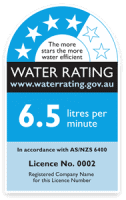 requirements, which is mainly because there has been little public education and therefore awareness.
In 2005, the Water Efficiency Labelling and Standards (WELS) scheme as a joint initiative of the Australian, State, and Territory governments became law. Under the WELS Water Rating Label scheme, products that use water must be tested under standardised conditions in a laboratory by a government regulator. Each product is given a comparative rating score of between one and six stars to indicate the product’s efficiency. The WELS Water Rating Label certificates or stickers are very similar in appearance to those used for energy rating labels for things like fridges, dishwashers, washing machines, heaters and air conditioning units.
The WELS Water Rating Label scheme was instituted to eliminate and educate on unnecessary water use. The WELS Water Rating Label scheme on current projections is expected to save 800,000 megalitres of water by the year 2021 across Australia. This equates to about a billion dollars of water bill savings. A further little-known benefit of the WELS Water Rating Label scheme is a reduction in greenhouse gases which is estimated to equal to the removal of 90,000 cars from Australian roads every year.
When the plumbers at Whywait raise the issue of WELS Water Rating Label certificates, many of our clients ask which products have to have WELS labels? Very simply under the WELS Water Rating Label scheme, the bathroom products that need to be rated in Australia are:
- shower heads
- tapware
- toilets pans, cisterns and urinals
 Installing water-efficient showerheads in your home’s bathrooms account for 25% of the water savings under the WELS Water Rating Label scheme. This is due to the significant difference in the amount of water used in showers with a standard showerhead using between 15-25 litres of water per minute. A 3-star rated showerhead only uses 6 or 7 litres per minute which means installing a water-efficient showerhead reduces your water consumption in the shower alone by 40%. Using less water in the shower has the added benefit of reducing your electricity or gas bill as you use about 40%-60% less hot water.
All taps used in kitchen sinks, bathroom basins, bathroom showers and laundry troughs must be WELS rated. However, a bath tap although in all likelihood WELS rated does not require to be flow reduced as you use the same amount of water to fill a bath no matter what. Flow restrictors mean the bath takes longer to fill. Most mixer taps and many combination tap spouts have an aerator that is combined with a flow restrictor, installed on the spout outlet that mixes the water with air, and in the process can cut the amount of water used from 15-22 litres per minute down to around 3 – 6 litres per minute.
Finally, the WELS Water Rating Label scheme requires flushing toilets and urinals to meet a basic level of water efficiency. Waterless urinals are not required to have any form of WELS certification. Concerning toilets, an average flush is calculated as one full flush and four half-flushes. Therefore a compliant toilet suite cannot exceed 5.5 litres per average flush. Water-efficient toilets make up a significant amount of the water savings under the WELS scheme with savings of 22% as a traditional toilet used 11 litres per flush compared to water-efficient dual flush toilets that use, on average less than 4 litres per flush. This adds up to savings of 52 litres of water per person, per day, and can add up to $800 less in your water bill over ten years.
When choosing plumbing products for your home, it is a good idea to take into consideration the information on the WELS Water Rating Label and the savings you can make over the long term on both water and electricity or gas bills.
For more information on the WELS scheme, go to waterrating.gov.au.