
by mays2018! | Oct 11, 2016 | bathroom renovation, Bathrooms, Consumer Issues, DIY Plumbing, Gold Coast Plumbing, Insurance, Plumbers Gold Coast, Plumbing Legislation, Plumbing Maintenance, Plumbing Renovation
DIY Plumbing Renovations & Repairs May Void Your Insurance Coverage
 DIY plumbing renovations are illegal. As fully licensed Plumbers, Drainers and Gas Fitters for over 40 years, we know how critical it is that you know your legal limitations and legal responsibilities. This applies in particular if you are planning on undertaking to do, DIY plumbing renovations and repairs.
Unfortunately sitting in front of a television watching home renovation shows such as “The Block”, “Grand Designs”, or “Selling Houses Australia” doesn’t make you an instant plumber, electrician or builder!
Home renovations shows are hugely popular and purely entertainment – they make it look so, so easy and so cheap.
Unfortunately, none of these shows looks behind the scenes or reflects the reality of renovations or DIY by ignoring the two most critical factors which are time and budget.
The reality of renovating and maintaining your home is that:
- delays are always inevitable due to unforeseen pre-existing problems
- delays in delivery of products and materials
- budget blowouts are unavoidable due to the unknown factors
- be clear in your requirements and realistic in your expectations
Can YOU Legally Undertake YOUR DIY Plumbing Renovations & Repairs?
NO for installation work and YES for some very, very limited maintenance work. Legal DIY plumbing renovations & repairs in Queensland is limited to:
- Replacing a showerhead or shower rose
- Replacing a tap washer or jumper valve
- Replacing a domestic water filter cartridge
- Replacing a washer in a toilet cistern inlet or outlet valve
- Installing, repairing or maintaining garden irrigation system
- Cleaning or repairing the grate to a drainage gully trap
- Replacing a cap on inspection opening to a drain
And that is all the plumbing and drainage work that can legally be undertaken by anyone who is not a licensed plumber and drainer.
Illegal & Dangerous DIY plumbing renovations and repairs could kill someone plus null & void all your insurance coverage.
 Most DIY plumbing renovations and repairs are illegal and frequently can be hazardous that when we discover them, you wonder how no one has been killed.
It’s often overlooked by weekend warriors and handymen that illegal DIY plumbing renovations & repairs usually makes your home and contents insurance null and void.
Worst of all, some DIY plumbing installations are dangerous as with this hot water installation in the photo on the right. Luck is the only reason this installation killed no-one as it had:
- exposed live electrical connections and wires
- overflow valves dripping onto the floor inside the house
- plastic pipes that were being melted by the hot water
- flexible connectors used instead of copper
You should avoid DIY plumbing renovations as frequently you end up costing yourself more with the problems never being repaired. There is no better repair than that undertaken by a licensed, professional plumbing company where the plumbers are experienced, trained, and knowledgeable so call Whywait Plumbing now.

by Gary Mays | May 7, 2016 | DIY Plumbing, Health Issues, Insurance, Leaking Pipes, Plumbing Emergencies, Plumbing Maintenance
A recent phone call I received regarding suspected illegal plumbing from an insurance company assessor was a timely reminder of why property owners and property managers must ensure the following where any plumbing work is concerned:
- that all plumbing work on your property is undertaken by a licensed plumbing contractor
- that all legislated council inspections are undertaken and all fees paid
- get a copy of the Queensland Governments, Queensland Building and Construction Commission (QBCC) Form 4 compliance certificate that the plumber must lodge and pay the $29.70 fee
- and that all products such as taps and toilets are WaterMark and WELS approved products
In this particular incident, the assessor was verifying with us what the property owner had claimed after a child had undertaken some experimental work with a pull out kitchen spray hose. We were able to supply the documentation he was seeking and all was well.
But this is not always the case. We had a situation we had to rectify last year where the owner of a hairdressing salon broken every rule in the book and paid dearly for it when her salon was flooded.
Like us all, she was extremely busy. Needing to replace her taps on the hair washing basins she did a Google search and found the perfect taps online at half the price she was expecting to pay.
A week later the taps arrived with instructions on how to install them so she decided her husband could do the installation as he was a bit of a handyman. The following Sunday when the salon was shut her husband removed the faulty taps and after a few minor mishaps had the taps up and working by that evening all ready for the next days trading.
The taps were a huge improvement on the old ones because they actually worked with the water mixing beautifully to the right temperature at the touch of the handle. Everyone was happy – clients, employees and owners.
The salon owner and staff talked with their clients whilst doing their hair how great the new taps. A major topic of conversation was what a bargain they had been to buy online plus they had saved a fortune on employing a plumber by doing all the installation themselves.
 Three months after the taps were installed the salon owner got a call at home on a Saturday morning just as she was leaving for work to say there was water coming out of the front door to her salon.
When she arrived at the salon the water was indeed pouring out of the door and everywhere else. Water was flowing continuously from a burst connection hose on one of the new taps. Luckily she knew where to turn the water off on the street. Unfortunately, the taps did not have individual control valves under the hot and cold connections despite it being a required installation of the taps instructions.
A flooded salon meant that she had to get her staff to cancel client appointments despite it being the busiest day of the week. Instead of it being a cash flow positive trading day it became cash-flow negative with staff cleaning up the salon in conjunction with a multitude of tradesman beginning rectification.
 On Monday with the rectification work already underway the insurance companies assessor arrived to inspect the damage. As expected he was a model of empathy with her plight taking a number of photos of the damage to the salon.
The Salon owner showed the assessor the faulty tap which he checked over and agreed it was indeed the cause of her flooded salon.
The assessor then asked her where she had brought the mixer taps and who was the plumber who installed them. Proudly she explained how she had saved a fortune purchasing the taps online and that her husband had installed them so they had saved the cost of the plumber as well.
She also told the assessor she had emailed the online store where she had purchased them as they had no phone number demanding that they supply a replacement tap.
On Friday she received a letter from her insurance company not only declining to cover the damage to the salon but also declining coverage on her business interruption insurance. Their reasons were she had through her own negligence directly caused the damage which also caused her business to have to temporarily cease trading. The negligence was:
- the installation of non-compliant taps with no Australian WaterMark or WELS certification in the salon’s basins
- the said taps were installed by a non-licensed person with no compliant contractor registration in contravention of the Plumbing and Drainage Act 2002 and Queensland Building Services Authority Act 1991.
So the bargain taps and the do it yourself plumbing installation turned into a financial nightmare for the salon owner. The repairs and rectification cost in excess of $30000. In addition, there was the loss of eight days trading plus the loss of clients who went and found a new salon.
You get what you pay for is an old cliche but with plumbing its definitely true. If the salon owner had complied with the law and done what she ultimately had to do, in employing a licensed plumber to install compliant mixer taps with individual control valves at the connection point she would have had not a single problem. Even if she had still had a burst connector flexihose to the tap her insurance coverage would have covered all of her costs as would have the public liability insurance policy of the plumber.
Ultimately its always to your advantage to:
- employ a licensed plumber and
- make sure the products he installs are WaterMark and WELS compliant and
- ensure you get a copy of the Queensland Governments, Queensland Building and Construction Commission (QBCC) Form 4 compliance certificate that the plumber must lodge and pay the $29.70 fee.
If you do all of the above you will never have a problem with an insurance claim being rejected because you have a paper trail for the assessor to follow. And I’m sure you will be surprised but our salon owner never received a new tap or any reply from the online store.

by Gary Mays | Apr 27, 2013 | Consumer Issues, DIY Plumbing, Gold Coast Plumbing, Health Issues, Insurance, Plumbers, Plumbers Gold Coast, Plumbing Emergencies, Plumbing Legislation, Sustainable Plumbing
Plumbing is public health, now and in the future. Just as Vaccination Protects Individuals and the Community. Plumbing Protects the Whole Community, and Individually Plumbers Protect the Health of the Nation.

The plumbers at Whywait Plumbing every day protecting your health
Albert Einstein towards the end of his life in 1954 wrote “If I would be a young man again and had to decide how to make my living, I would not try to become a scientist or scholar or teacher. I would rather choose to be a plumber.”
Einstein, like many others, recognised that plumbing is public health, now, and in the future.
A survey of 11000 doctors by the British Medical Journal in 2007 voted hands down that the world’s greatest medical milestone since 1840 was sanitation. Despite all the tremendous medical breakthroughs and scientific advances, the seemingly mundane advance of reliable sewage and reliably clean water supply was judged the most significant medical advance.
The recognition of reliable sewage and water supply is a testament to the strength of plumbing laws, standards, and licensing in not only Australia but also in Europe and North America. This is because doctors recognised the best measure of medical advance is not its complexity, but what it does for the average person concerning the length and quality of our lives. The average life expectancy has increased 35 years since 1840, and roughly 30 of those years are attributable to the advances in sanitation and living conditions.
For most of us in Australia, plumbing is something we take for granted. We have never known what it is like not to have on-demand clean running water inside our homes or a fully functional sewer system to take away the used water. Close to 90% of us live in an urban environment, and for that, we can thank plumbing, that allows us to do so safely, without fear of contracting waterborne diseases. Yet even plumbers fail to understand the impact that they have on modern urban society and that their work is essential as plumbing is public health.
 Clean potable water is the basis for life and without it the risk to public health and the population as a whole increase. The cost to the community of plumbing failures are substantial and always have been. Plumbing is and always has been a significant part of the public health system. This was first learnt by the Romans, who were the first civilised society over 2000 years ago to realise the requirements to have an integrated plumbing system to pipe in clean water and dispose of used water.
In Asia alone, some 2 billion people, which is over 60% of the population of Asia, live without adequate access to sanitation such as toilets. In many places, open sewers are the norm. This would not be tolerated in Australia, and we are protected from it by our plumbing laws.
Recent natural disasters here in Australia and internationally are essential reminders of the role plumbing plays in modern life. Homes in Brisbane during the recent floods were made uninhabitable with the loss of plumbing. This is further reinforced by the earthquakes in Christchurch, the tsunami in Japan, cyclones in North Queensland, and the floods in Victoria where homes were not suitable to be lived in again until full plumbing services were reinstalled. In all of these natural disasters, the restoration of plumbing was a significant component of the recovery process.
As with everything in life, change is the constant and this is undoubtedly true of plumbing. As we solve one problem, another one arises. Diseases related to water always have required vigilance in preventing their spread. This is as true today as it has always been. As always, this is where the plumbing will once again prove to be a significant part of the solution.
The mosquito has always been a significant source of transmission of serious diseases such as malaria, ross river fever, dengue fever, to name a few. New arboviruses such as Chikungunya are increasingly a threat to Australia. These emerging infectious diseases are all spread by mosquito and are dependant on water. This intimate dependency on water increase risk without high plumbing standards of becoming endemic in Australia.
With the increasing threat to the community from the mosquito-spread of waterborne strong plumbing, practices are essential.
Plumbers have a continuing obligation to the community to use their knowledge and experience to demonstrate the impact that poor plumbing could have in the future because plumbing is public health.

by Gary Mays | Apr 17, 2013 | Consumer Issues, Insurance, Plumbing Legislation, QBCC, Queensland Government, Sustainable Plumbing
Here at Whywait Plumbing, it gets very frustrating at times when clients want us to install products they have purchased “cheaply” online or bought from non-specialist outlets who import cheap non-compliant product. All products we install are required by law to have a WaterMark certificate and a WELS water rating label certificate. It is illegal for licensed plumbers to install non-compliant products.
WELS Water Rating Label certificates are on every product plumbers install. Unfortunately, many of our clients are confused by the rating 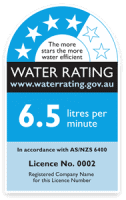 requirements, which is mainly because there has been little public education and therefore awareness.
In 2005, the Water Efficiency Labelling and Standards (WELS) scheme as a joint initiative of the Australian, State, and Territory governments became law. Under the WELS Water Rating Label scheme, products that use water must be tested under standardised conditions in a laboratory by a government regulator. Each product is given a comparative rating score of between one and six stars to indicate the product’s efficiency. The WELS Water Rating Label certificates or stickers are very similar in appearance to those used for energy rating labels for things like fridges, dishwashers, washing machines, heaters and air conditioning units.
The WELS Water Rating Label scheme was instituted to eliminate and educate on unnecessary water use. The WELS Water Rating Label scheme on current projections is expected to save 800,000 megalitres of water by the year 2021 across Australia. This equates to about a billion dollars of water bill savings. A further little-known benefit of the WELS Water Rating Label scheme is a reduction in greenhouse gases which is estimated to equal to the removal of 90,000 cars from Australian roads every year.
When the plumbers at Whywait raise the issue of WELS Water Rating Label certificates, many of our clients ask which products have to have WELS labels? Very simply under the WELS Water Rating Label scheme, the bathroom products that need to be rated in Australia are:
- shower heads
- tapware
- toilets pans, cisterns and urinals
 Installing water-efficient showerheads in your home’s bathrooms account for 25% of the water savings under the WELS Water Rating Label scheme. This is due to the significant difference in the amount of water used in showers with a standard showerhead using between 15-25 litres of water per minute. A 3-star rated showerhead only uses 6 or 7 litres per minute which means installing a water-efficient showerhead reduces your water consumption in the shower alone by 40%. Using less water in the shower has the added benefit of reducing your electricity or gas bill as you use about 40%-60% less hot water.
All taps used in kitchen sinks, bathroom basins, bathroom showers and laundry troughs must be WELS rated. However, a bath tap although in all likelihood WELS rated does not require to be flow reduced as you use the same amount of water to fill a bath no matter what. Flow restrictors mean the bath takes longer to fill. Most mixer taps and many combination tap spouts have an aerator that is combined with a flow restrictor, installed on the spout outlet that mixes the water with air, and in the process can cut the amount of water used from 15-22 litres per minute down to around 3 – 6 litres per minute.
Finally, the WELS Water Rating Label scheme requires flushing toilets and urinals to meet a basic level of water efficiency. Waterless urinals are not required to have any form of WELS certification. Concerning toilets, an average flush is calculated as one full flush and four half-flushes. Therefore a compliant toilet suite cannot exceed 5.5 litres per average flush. Water-efficient toilets make up a significant amount of the water savings under the WELS scheme with savings of 22% as a traditional toilet used 11 litres per flush compared to water-efficient dual flush toilets that use, on average less than 4 litres per flush. This adds up to savings of 52 litres of water per person, per day, and can add up to $800 less in your water bill over ten years.
When choosing plumbing products for your home, it is a good idea to take into consideration the information on the WELS Water Rating Label and the savings you can make over the long term on both water and electricity or gas bills.
For more information on the WELS scheme, go to waterrating.gov.au.
by Gary Mays | Apr 6, 2013 | City of Gold Coast, DIY Plumbing, Health Issues, Insurance, Plumbing Emergencies, Plumbing Maintenance
Here at Whywait Plumbing we are often left wondering at the stupid things people do to their plumbing which ensures plumbers are never short of or will run out of work.
Essentially at Whywait Plumbing we are maintenance plumbing specialists and our primary work is to make house calls 24 hours a day, 7 days a week and 365 days a year. The basic reason plumbers never run out of work is based on two truths:
1) our clients will always need plumbing—or more specifically, plumbing that works—and,
2) some of our clients will always do stupid things that stop their plumbing from working.
Keeping in mind that the maintenance side of plumbing often requires a strong stomach and the need to suppress amusement with other peoples’ self-imposed misfortune. But rest assured that the two truths mentioned above will always ensure the plumbers at Whywait Plumbing will keep your plumbing working to keep your business. Listed below are samples of stupid things that some of our clients do to their plumbing that require Whywait staff to suppress their amusement or often bemusement.
- Leaving hoses connected and turned on at the tap and then going away on holiday. This is a classic plumbing error that one must assume is caused most often by extreme laziness with the only beneficiary being Gold Coast Water with all of the extra water this client ultimately had to pay for when the hose burst.
- Using the drain vent pipe for anything other than venting because there is plenty of room inside the pipe. This client was running TV aerial cables, pay TV cables and computer cables down the drainage vent pipe that come up through the roof. For this client it was the solution for getting all of the cabling into the house through a single 50mm pipe. But as he learnt vent pipes are not just there for their bad looks. Vent pipes not only provide air to drains inside the house and to prevent a suction effect that inhibits drainage but they also get rid of sewer gases that come up from the Gold Coast Water’s sewer main. If you cut a hole in your vent inside the house to run a cable through, you’re tapping into an endless supply of your neighborhood’s sewer gases. He had a nice picture on the TV in his lounge room with full access to the Internet but made the house almost uninhabitable with the fluctuating sewer gases entering the house.
- Using too much drain cleaner. When used judiciously and as directed on the right kind of blockage, drain cleaners can be effective and relatively safe for drains. When used with abandon, they can corrode some drain pipes such as copper which this client managed to achieve while making Bunnings very happy with all of his purchases. Plus so much was poured down the pipe it made the blockage worse.
- Pouring chemicals into a septic system. If you’re used to living with a septic system, you probably know how to take care of it. But this client was renting a house on acreage and did not think twice about using chemicals like drain cleaner, chlorine bleach, paint and even anti-bacterial soaps. These chemicals killed the essential bacteria in the septic tank, and caused it to stop working but of course waited until Christmas Day to finally block when he had a house full of family visiting.
- Screwing, nailing or cutting into a wall without checking for hidden plumbing pipes. The advent of multiple types of plastic water pipes have turned this into a nightmare for plumbers as they cannot be welded up like a copper pipe plus none of the systems are compatible. Doing this with a screw and you might hear a fine spray of water hitting the back of the wall. But this client did it with a chainsaw and got the ultimate gusher hitting not only the hot and cold pipes but also the hot water storage tank.
- Pouring cooking oil and fats down the kitchen drain. If you’re in the habit of pouring cooking oil and fats down the kitchen sink drain you are guaranteeing a drain blockage sooner rather than later. Cooking oil and fat is one of the best things for blocking drains as a recent client discovered managing to block up his entire unit and that of her neighbour in a duplex block on Australia Day when the neighbour was entertaining friends for a traditional barbecue.
- Putting everything down the kitchen waste disposal unit. Unfortunately this client was one of those people who thought a waste disposal unit was the equivalent of a space-fantasy laser gun. Unfortunately she found out it was not in the middle of a dinner party for important clients of her husbands business. A waste disposal unit is essentially a motor with a spinning wheel that has two metal blades, and it does very little to stop the following from blocking your drain even if you do run copious amounts of water into the kitchen sink: bulk flour, bulk rice, flower stems, prawn shells, oyster shells, filleted fish scales and skin and a couple of spoons. The smell was not great either.
- Using the toilet as a rubbish bin. We all know it is stupid to put a lot of solids or newspaper down the toilet but many people do it anyway. This client like many others we rescue believed that if she could just get it to flush away it would be magically out of her life forever. Like many people she had the mistaken belief that at the other end of the toilet there is nothing but a black hole which is a portal to a subterranean outer space that swallows up everything she could discard and it is then whisked off into oblivion. Unfortunately, that oblivion is a 100mm pipe that leads into another 100mm pipe, which was the drainage pipe to her entire house. In other words constantly flushing incorrect items down the toilet over an extended period ultimately caused the entire house to block up and the drain had to be dug up to remove all the solidified debris that had mounted up. The bottom line is if it is not toilet paper or faeces or urine it does not belong in the toilet pan.
And those are just a few of the stupid things we have rectified this year to date at Whywait Plumbing Services.


