Whywait Plumbing Services Logo

OFFICE HOURS

Mon to Fri 7.30am – 4pm
24-Hour EMERGENCY SERVICE

CALL 7 DAYS FOR SERVICE!

YOUR TRUSTED GOLD COAST PLUMBERS & GAS FITTERS

OFFICE HOURS
Mon – Sun 7.30am – 4pm
24 Hr Emergency Service

Asbestos In Your Bathroom

Asbestos In Your Bathroom

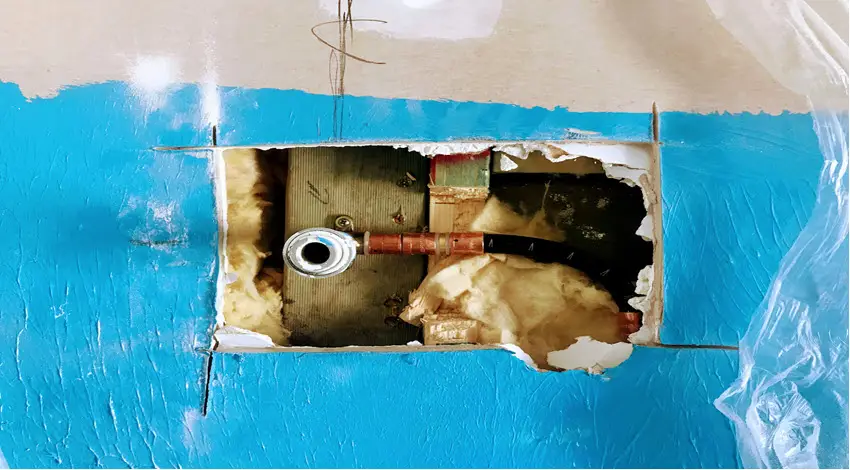
Asbestos in your bathroom is just one of the many issues that can confront you when undertaking a bathroom renovation. Until the early 1980’s the use of asbestos sheets in bathrooms was the norm and can be sitting beneath your bathroom tiles with potential deadly consequences.

Asbestos removal by specialist licensed contractors is only one of the issues you must be aware of when undertaking a DIY bathroom renovation. Despite what you get told in big box hardware outlets such as Bunnings or Masters there are a number of areas that must be undertaken by fully licensed and insured professional contractors being:

  • electrical
  • plumbing and gas fitting
  • asbestos removal
  • water proofing
  • pest control

In all of the above DIY is not an option to reduce costs as doing so has consequences because it is:

  • illegal
  • dangerous to the point of being life threatening
  • usually results in non compliant and sub standard installation
  • non insurable with it creating a situation where any future insurance claims will be denied and the policy null and void
  • removes all warranty protection from products that are defective

If you are confident and capable Whywait Plumbing fully endorse undertaking labouring work yourself, purchasing materials and running the project but remember short cuts and cheap non compliant products will always come back to haunt you.

By Gary Mays
Fear of Bunnings and Masters

Fear of Bunnings and Masters

Monopoly Menace: The Unchecked Expansion of Bunnings and Masters – Its Impact on Local Communities

Fear of Bunnings and Masters getting too strong was brought home to me when attending the World Plumbing Council meetings and Singapore International Water Week in Singapore in July 2014. So many Australians are starting to ask whether we should fear Bunnings and Masters getting too stronger a monopoly.

This was the first time I had attended a World Plumbing Council meeting. I was doing so as an individual member plus an observer from the Master Plumbers & Mechanical Services Association of Australia (MPMSAA).

For me personally, the overwhelming impression after two days was the commonality of issues worldwide. Countries such as India and China admire and would love to have:

  • our professional plumbing standards and laws

  • our training regime inclusive of apprenticeships

  • our licensing of not only plumbing companies but individual plumbers

  • our regulation of all things regarding plumbing, drainage and gas fitting

  • our product regulation and safety, whereas all plumbing products must be Watermark-certified

In an equally perverse way, countries such as Australia, the UK, the USA and Canada are deeply concerned about a trend in all jurisdictions that are essentially dumbing down the plumbing industry, with the common thread being:

  • reducing training standards

  • deregulating or removing licensing

  • reducing downward regulation standards

  • tolerating more and more DIY plumbing

  • reducing or eliminating product regulation

The Safety Paradox: Australia’s Remarkable Record in Preventing Plumbing Disasters Despite Bunnings’ Dominance

Unfortunately, in Australia, we take plumbing for granted because our high standards, training, regulations and enforcement of laws mean that, unlike many other developing countries, people do not die from poorly installed plumbing in Australia.

Strong plumbing regulations have made the world much safer in many countries. But with that safe environment that plumbing has created has come complacency to the degree that we only appreciate plumbing when we don’t have it.

In the USA, this complacency has been capitalised on by large corporations that have built large hardware box store warehouses importing products worldwide. In addition, they have led the charge to dumb down plumbing standards to sell more plumbing products to the public at a much higher profit.

In Australia, we see the emergence of this same pattern led by Bunnings (Coles) and Masters (Woolworths).

In Australia, much of the reduction in standards is trumpeted by politicians as a reduction in red tape. Still, it’s removing public health standards that have protected the general population for 150 years.

Acutely merely reducing public health standards is not a reduction in red tape but the caving in of bureaucrats and politicians to lobbyists who convince them our laws and regulations are too strong and restrictive.

The Big Squeeze: Bunnings Embraces American-Style Supply and Installation, Pushing Manufacturers and Plumbers to the Edge

Already you see Bunnings adopting the American models of offering total supply and installation of products squeezing the margins of manufacturers and plumbers to the absolute limit, and advertising the following ….” gas and electric hot water systems. From just $249*, we will arrange your standard installation for you, and if you need an emergency replacement system, we will also organise that to be installed.”

It is utterly impossible to legally and compliantly replace an existing hot water system for $249 (or what is, in reality, $226 exclusive of GST), and Bunnings know it, which is why they have the asterisk after the price, which states…. “*Additional costs do apply beyond standard installation. For information on licensing, please view details here.”

If you click on those links, it leads you to download a three-page document full of exclusions. So very simply, the $249 price is entirely false but is designed to get you to buy from Bunnings without checking the details.

A Dangerous Duo: The Risks of Allowing Bunnings and Masters to Gain Excessive Market Power

After listening to the issues raised by delegates from USA and Canada, we have much to fear if we let Bunnings and Masters get too strong. Already we have seen the effects of supermarkets’ continuous limit of choice, and now we are on the verge of seeing it in the hardware industry. Imagine an Australia where Bunnings and Masters control the plumbing industry:

  • DIY is rampant, leading to lower house prices and higher insurance policy costs

  • fewer skilled jobs leading to fewer apprenticeships

  • licensed plumbers working at subsistence levels based on rates decided by Bunnings or Masters as occurs in the USA where a journeyman plumber in LA is paid $20000 a year

  • limited choice of product

  • no Australian manufacturing further decreasing career choice and leading to increasing unemployment

We need to ensure politicians understand the implications of dumbing down plumbing because the SARS outbreak and the current Ebola virus are a warning of what faulty plumbing can create. Viruses are ever-changing and ever-mutating, and India and China are only too well aware that strong plumbing regulations guard your health.

Bunnings Are Not And Never Will Be Plumbers

Bunnings Are Not And Never Will Be Plumbers

Understanding the Difference Bunnings Are Not Licensed Plumbers

Let’s be clear from the outset: Bunnings is not, nor will ever be, a plumber, electrician, carpenter, painter, garden centre, or any of the other numerous trade specialties they purport to cover.

In truth, they are not a traditional hardware store. Bunnings operates as a massive warehouse, employing supermarket strategies and pricing techniques to market a wide range of hardware-related products. They are far from the friendly, locally-owned hardware shops that once dotted our neighbourhoods.

The majority of Bunnings employees work on a casual, part-time basis and receive relatively low pay. They lack the specialised expertise or skills typically found in the traditional hardware sector.

Many trades and service businesses are irked by Bunnings claims of affordability. More importantly, they are annoyed by their staff who lack trade experience. These employees often lack the qualifications to provide informed advice, yet they routinely do so to unsuspecting DIY enthusiasts to make a sale.

In essence, Bunnings staff are akin to Coles supermarket employees – they are retail shop sales assistants.

Don’t Confuse Bunnings with Professional Plumbing Services

From a plumbing standpoint, Bunnings offers the public a range of plumbing pipes, fittings, and fixtures. Some of them are of such low quality that professional companies like Whywait Plumbing refuse to install them. Bunnings also provides informal DIY courses that teach homeowners and handymen basic plumbing maintenance tasks.

While replacing a tap mixer might be seen as “low risk,” it is still illegal. It may encourage individuals to undertake more dangerous or unlawful plumbing work based on advice from Bunnings staff. There is a need for better education on the consequences of DIY plumbing or hiring a “handyman.” Neither DIY enthusiasts nor handymen possess the comprehensive knowledge and experience needed to adhere to industry standards and Queensland plumbing laws and regulations.

The risks to your health, home, neighbours, family, and potential invalidation of insurance coverage far outweigh any perceived financial benefit of attempting plumbing work yourself or hiring a cheaper, unqualified handyman instead of a licensed and insured professional plumber. Moreover, DIY or “handyman” plumbing can often result in higher costs in the long run when you need to hire professionals to correct expensive mistakes or non-compliant work as per the Plumbing and Drainage Act 2002 and related regulations.

So, while Bunnings staff may be friendly and tell you what you want to hear, they are not qualified to provide expert advice. Moreover, in most cases, they do not hold contractor or trade licenses.

Understanding the Necessity of On-Site Evaluations by Professional Tradesmen

In conclusion, it is crucial to understand that professional plumbers, electricians, and carpenters cannot offer valuable advice without conducting an on-site inspection. Each situation is unique, and an in-depth assessment by a qualified expert is required to determine the best possible solution tailored to your specific needs.

While DIY projects may appear cost-effective, they often come with considerable risks, especially in plumbing and electrical work. There is a good reason why these trades are licensed in most developed countries: they demand specialised knowledge, expertise, and strict adherence to safety standards and regulations.

However, engaging in DIY work or hiring an unqualified handyman may inadvertently put you and others at risk due to hazards such as water damage, electrical fires, and health risks resulting from improper installations or repairs.

Furthermore, non-compliant work can lead to invalidated insurance policies, substantial fines, and expensive repairs. Over time, the perceived savings from DIY projects or employing unlicensed tradespeople can be quickly eclipsed by the potential dangers and costs they may incur.

Given these risks, it is vital to prioritise safety and compliance by enlisting the help of licensed professionals for all your plumbing, electrical, and carpentry needs. Unfortunately, while Bunnings’ friendly staff can provide basic guidance and sell you the tools and supplies required for various home improvement projects, they cannot replace licensed tradesmen with specialised knowledge and experience.

Always remember that investing in professional services is the best way to ensure your home’s essential systems’ safety, durability, and compliance.

Owning A Plumbing Business Is Easy. Isn’t It?

Owning A Plumbing Business Is Easy. Isn’t It?

The Challenges of Plumbing Business Ownership

Owning a plumbing business is easy, or so many people think. The reality is a plumbing business is a business, not a hobby or a charity. Owning any business is a challenge.

Owning a maintenance plumbing business has always been challenging, as so much of what we repair is a grudge purchase. For most experienced master plumbers, the biggest challenge is other plumbers.

“You have overcharged us because I rang three other plumbers and told them what you charged us for that job, and they all agree you have overcharged us and ripped us off.” This was a phone call we received at Whywait Plumbing last week.

The Issues with Unprofessional Quotations

A call like this always makes us wonder about the competence and integrity of the three so-called licensed plumbers who said we overcharged.

For a start, no professional plumber can or should or could give a price over the phone without thoroughly inspecting the job onsite and undertaking a complete diagnosis of the plumbing problem.

The Joe Bum-Crack Plumbing Business Phenomenon

Generally, the plumbers who indulge in giving prices over the phone use it to gain entry to the client’s home. Invariably, their final price always ends up being much more expensive because they find all these additional problems after they start the job.

These “Joe Bum-Crack Plumbers” seldom last in business beyond two years. But in the short time they exist, they cause legitimate plumbing businesses countless problems with their shoddy business ethics and lack of business acumen. Sadly, another generation of Joe Bum-Crack Plumbers emerges with their brand-new QBCC plumbing licenses every few years.

Every day at Whywait Plumbing, we receive phone calls or emails from plumbers looking for a job. A significant number of these plumbers fit the category of Joe Bum-Crack plumbers who have been running their own plumbing business and discover it is much more complex than they thought it would be.

Joe’s Story: The Dream and The Reality

We have in the past employed such people, always to our detriment. The last person we employed, who could be described as a Joe Bum-Crack plumber, was a perfect textbook example.

In fact, let us call him Joe as he came into the interview perfectly dressed in answer to our advertisement for an experienced maintenance plumber. Joe was in his 50s and had done everything from working in construction to being an inspector to running his own business. When asked why he was giving up running his plumbing business, he replied that his wife had told him to go and get a real job.

Joe then described what it was like running his own plumbing business, which he had started with high hopes after 27 years as an employee of various large companies and a water authority. Joe described how he wanted to be his own boss as he knew there was a fortune to be made running his own business. Plus, he was in control of everything for the first time and could work when he chose and be at home when he decided.

Facing the Harsh Truths

The reality was much different from Joe’s perception of being the boss. Joe soon discovered that being the boss is much more complicated than it looks. Joe had found that running a business was more than being an excellent technical plumber.

Now, he was the boss. Joe was in charge of marketing, employee relations, customer relations, credit management, bookkeeping, answering the phone, dealing with plumbers merchants, and so on.

All Joe wanted to be was a wealthy plumber.

Joe knew running a plumbing business was not a path to instant wealth, as he had initially believed.

The opposite was the truth, with every minute of his time being spent on running the business. Joe was shocked at the reaction of Reeces Plumbing Supplies when his account was late being paid. Joe, as an employee, had used Reeces for years and the people behind the counter he considered as mates. He was shocked when his credit was suspended because, after all, these were his longtime mates, and he was sure they would understand that a client had not paid him, so he could not pay them.

Learning the Hard Way

Joe was well aware of Whywait Plumbing and confided that he had always believed we were ripoff merchants.

Joe was aware of our sign-written Utes, websites, Yellow Pages advertising, radio advertising, broadcast email, diagnostic charges and letterbox drops, which he had always regarded as a waste of money because everyone knows word of mouth gives you plenty of work, or so he once thought. He was astounded when word of mouth did not provide much work.

He was astounded to learn that to get his phone ringing, he would need to spend what he believed was a “shitload of money” on advertising and marketing to get his name out there.

A Change in Perspective

After 18 months of being the boss, Joe now understood why Whywait Plumbing spends what he called a “shitload of money” on advertising and was astounded when he was informed it was only 4% of our turnover.

Joe couldn’t believe the extensive safeguard measures we had implemented, spanning numerous insurance policies, WorkCover, and even trademark protection for our business name and logos. The trademark protection particularly caught his interest, a facet he had not considered previously. He was astonished to realise that, without a trademark, any entity could potentially use your business name, as technically, it isn’t owned by anyone.

His interest piqued even further when we introduced him to Squadhelp, a free online platform where you can conduct trademark searches to check for both exact and closely matching names. Joe appreciated the initiative, recognising the immense value in securing a unique and protected business identity.

Now Joe wanted us to give him a job because his wife had told him after 18 months of struggling to make ends meet to get a real job.

Joe’s Stint at Whywait Plumbing

Joe worked for Whywait Plumbing for three months but, in the end, was unable to adapt to a plumbing business that was upfront about the cost of the work before undertaking the work. Joe just wanted to turn on the taximeter, keep charging the client until the job was complete, and then let someone else worry about who was paying.

Ultimately Joe had the wrong attitude toward small business, and this was why:

  • Joe, the boss, had his credit stopped at Reeces.
  • Joe, the boss, had constant arguments with clients.
  • Joe, the boss, is just Joe, the disgruntled employee who still thinks he knows more than the boss.

Through Joe’s story, it’s evident that understanding your business’s costs and your potential clients, plus setting fair and transparent prices, are crucial.

The Fundamental Rule of a Plumbing Business

Very simply, there is only one rule in business: “To make a profit, you must first know your costs.” That is why at Whywait Plumbing, we price every job in advance, whether with a fixed quote or an estimated budget price….no ifs, no buts.

To experience reliable and professional plumbing service, contact Whywait Plumbing anytime because, as we always say, “Choose Whywait and consider it done.”

Why Do Showers Leak?

Why Do Showers Leak?

The Silent Peril of Leaking Showers: Know, Repair, Prevent

Leaking showers are one of those stealthy home invaders that operate undercover, leaving devastation in its wake.

Often, the damage is already done when homeowners discover them. But fret not! In this comprehensive guide, we at Whywait Plumbing will walk you through the intricacies of this issue and, more importantly, how to tackle leaking showers.

The Iceberg Effect: What You See vs. What You Don’t

Like an iceberg, what’s visible with a leaking shower is just the tip.

Underneath, there could be extensive damage to floor coverings, wall linings, framing timber, and tile beds.

And if that wasn’t dire enough, these leaks also provide a five-star invitation to unwanted guests: termites. Drawn to the blend of water and timber, these pests can infest your home faster than you can say ‘leaking showers’.

Insurance Woes: When Coverage Isn’t Coverage

Delving into the details of insurance policies can be like navigating a maze. Often, these leaks, seen as wear and tear, don’t get coverage.

Some policies might cover exploratory processes to identify the leak source, but the real kicker? The shower replacement, which is often the priciest part, isn’t covered.

The Detective Work: Tracking Down the Culprit

Here’s where our team at Whywait Plumbing puts on its detective hat. Identifying the source of a leaking shower isn’t straightforward.

It’s not a simple case of ‘whodunit’. Instead, it’s a systematic, sometimes trial-and-error approach involving pressure testing of various components, from water pipes to shower roses.

The Usual Suspects: Common Causes of Leaks

Based on our extensive work on the Gold Coast, we’ve identified a few repeat offenders:

  1. Failed Waterproofing: The most common villain is the failure of the shower tray’s waterproofing, which lies beneath the floor tiles. Its job? To stop water from invading the primary structure of your house.
  2. Vintage Homes: Homes from yesteryears come with their own set of challenges. For instance, houses from the ’70s and ’80s might have recessed showers, often lacking waterproofing. It’s a ticking time bomb.
  3. Rigid Fibreglass: Homes from the late ’80s and ’90s often used fibreglass for waterproofing. But here’s the catch – fibreglass, being too rigid, often failed to stick to concrete or timber. Cue water leaks!
  4. The Modern Solution: The good news? Today’s epoxy waterproofing is leagues ahead. Flexible and durable, it moves with the settling house, ensuring a waterproof seal.

Procrastination: The Real Enemy

Suspect you have a leaking shower? Don’t dilly-dally! While the temptation to delay action is strong, especially if the leak seems minor, remember: small leaks grow up to be big problems.

With the advances in repair techniques, many showers can now be fixed without removing tiles. But waiting? That only sets you up for more significant headaches in the future, including structural damages or termite infestations.

Conclusion: The Road Ahead

In the battle against leaking showers, knowledge is power. Being proactive, understanding the warning signs, and ensuring prompt repairs are your best weapons.

At Whywait Plumbing, we’re here to partner with you in this journey, ensuring your home remains leak-free and safe. Call us today, and let’s ensure your shower stays watertight!

CALL NOW
CALL NOW