by Gary Mays | Feb 11, 2019 | lead free taps
Dissolved lead in your drinking water is a reality
In Australia, the presence of dissolved lead in our drinking water isn’t just a tale from a far-off land; it’s a stark reality we face right here. Lead, a metal we’ve long used in a myriad of plumbing products nestled within the walls of our homes and buildings, lurks unseen. The usual suspects? Brass fittings and taps are found in most kitchens and bathroom.
It’s a peculiar thing about some brass plumbing fittings; they’ve got a bit of a nefarious side. Leave your water sitting in those pipes for too long, especially in the hot water system, and lead decides it’s time to take a swim. This unwanted guest is far more likely to drop by your tap water when it’s been heated up to around 70 degrees. Why? Because heating the water isn’t just about getting it hot. It increases the levels of all dissolved metals, with lead being one of the most unwelcome.
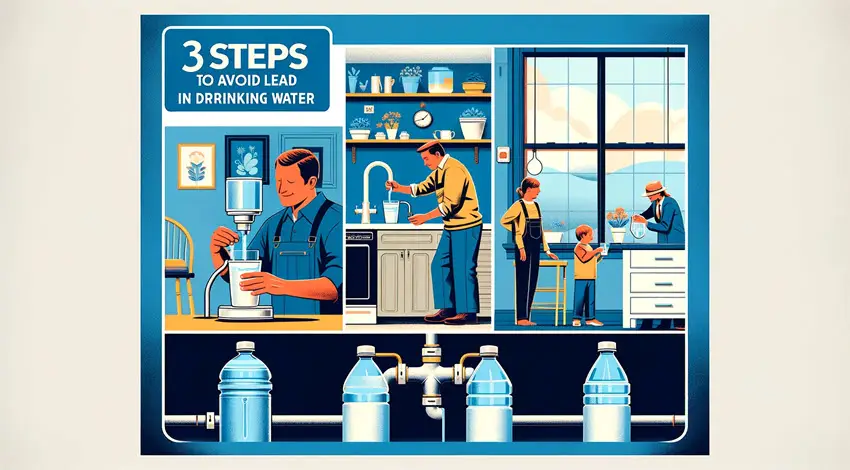
This little factoid brings us to a golden rule for Aussie households: always, and I mean always, opt for cold water when you’re filling up for a drink or cooking. It’s a simple step that can make a big difference in keeping lead out of your diet.
And for those of you collecting rainwater in rainwater tanks, there’s another wrinkle to consider. The increased acidity in rainwater isn’t just tough on your gutters; it also plays a role in leaching more of those dissolved metals and lead from your brass plumbing fittings.
So, what’s the takeaway? It’s about being aware and taking those small but significant steps to protect your health and that of your family. Keep an eye on your water use, and let’s keep our water safe and lead-free.

Practical Steps to Minimise Lead Exposure in Your Home’s Drinking Water
In our sunburnt country, the notion of lead piping as a common conduit for our drinking water is almost a non-issue – a nod to the proactive steps taken many years ago in Australian home and building construction standards. Consequently, it’s a rare occurrence for Aussies to find themselves grappling with elevated blood lead levels due to their drinking water.
However, complacency has never been our style, especially when it comes to safeguarding our health and that of our families. Here are some straightforward, no-nonsense strategies to keep the spectre of lead in your drinking water at bay:
-
Cold Tap Wisdom: Make it a steadfast rule in your household to use only water from the cold tap for drinking and cooking. It’s a simple yet effective first line of defence against lead.
-
Morning Rituals: Kick off your day with a good deed for your health. Flush the cold water taps destined for drinking and cooking for about 30 seconds every morning. This practice ensures that the water you’re using is fresh, having not stagnated in the pipes overnight.
-
Coming Home to Freshness: If your home has been left unoccupied for a while, a thorough welcome home for your plumbing is in order. Give all cold water taps a good three-minute flush to bid farewell to any dissolved metals that have taken up residence in your absence. This tip is particularly handy for those returning from a holiday or extended leave.
-
Public Park Pro Tip: Enjoying the great outdoors and need a sip from a water bubbler or tap in a public park? Give it a quick 30-second flush, especially if it looks like it hasn’t seen much action. It’s a small step that can make a big difference in reducing exposure to lead.
-
Testing? Not Necessary: Before you think about testing your water for lead, take a breath and relax. By following the above suggestions, you’re already taking proactive steps to flush out dissolved metals like lead, copper, and nickel from your drinking water.
Embracing these practices doesn’t just contribute to your peace of mind; it actively enhances the quality of water you and your loved ones consume daily. So, here’s to taking control with simple actions that make a significant impact on our well-being. Cheers to clean, safe drinking water in every Aussie home!

by Gary Mays | Sep 23, 2018 | Bathrooms, Cold Water, Consumer Issues, DIY Plumbing, Gold Coast Plumbing, Hot Water, Insurance, Leaking Pipes, Plumbers Gold Coast, Plumbing Emergencies, Plumbing Maintenance, Queensland Government
 A burst flexi hose is a job we attend to almost every day. In all likelihood, you will have multiple flexi hoses in your home. They will exist commonly in both residential and commercial buildings under the kitchen sink, under the bathroom vanity basins, under the toilet cistern and under the laundry tub. Invariably when we attend to a burst flexi hose it has been damaged during installation causing kinking and has further experienced corrosion. Almost always the burst flexi hose was a time bomb waiting to happen. The braided stainless steel “simple to install” flexi hose has over the last 10 years replaced copper pipe connections to taps and toilet cisterns. Unfortunately, the braided stainless steel flexi hose has not lived up to expectations and delivered on the rust protection anticipated. In our experience, a burst flexi hose is caused by:
- incorrect installation with multiple kinks in the braided stainless steel
- stretching of the flexi hose to make the connection fit
- chemical attack from household cleaners
All of the above can create the perfect storm scenario in causing the braided stainless steel to corrode and rust. It then is just a matter of time until the stainless steel braiding fails which allows for the inner liner to burst. Here at Whywait Plumbing, we are now installing a polyamide hi class water hooker from Abey Australia which is the most technologically advanced flexi hose we have seen come onto the market. The  Abey polyamide hi class water hooker cannot rust or corrode as it uses polyamide braiding that is similar to the Kevlar used in bulletproof vests. The connectors are manufactured from brass alloy so the entire flexihose will never rust even if its continually in contact with chemicals such as chlorine.
We are confident you will never experience a burst flexi hose once we install the Abey polyamide hi class water hooker as they literally cannot rust and cannot kink but best of all they come with a 15-year rust resistant warranty. Kinking is often the cause of a burst flexi hose but cannot occur with the Abey polyamide hi class water hooker. Kinking is simply poor installation as a result of over tightening the connector which twists the stainless steel braided hose. This over tightening creates  pressure and tension in the braiding which frequently results in the inner liner bursting through the braiding and rupturing. The Abey polyamide hi class water hooker has a simple design to ensure that it is anti-kink. When we install the Abey polyamide hi class water hooker we are able to use two spanners to counteract any twisting that results in kinking.
Most of the flexi hoses currently used have an inner lining manufactured from EPDM which has the potential to absorb and release harmful chemicals such as  chlorine into your drinking water. This ability to absorb chemicals also results in a potential burst flexi hose. With the Abey polyamide hi class water hooker the inner lining is manufactured from Softpex Core. The Softpex Core inner liner gives a superior mechanical performance to EPDM guaranteeing a longer life due to its higher tensile strength, higher abrasion resistance, higher working water pressure and non-corrosiveness. The extensive age/stress testing undertaken resulted in an amazing 0% failure rate.
We strongly recommend that you get us to check your flexi hoses every year for rust and/or corrosion and that they are replaced every five years. This will give you the peace of mind in knowing that the flexi hose in your home or business is not rusting and about to explode releasing water at 25 litres every minute that it flows. Rust is the #1 enemy of a braided stainless flexi hose.
When we replace your existing stainless steel flexi hoses with the Abey polyamide hi class water hooker we guarantee you will get:
- superior strength and corrosion resistance
- tested and WaterMark approved for use in Australia
- superior tensile strength
- superior working water pressure
- a superior mechanical performance with the Softpex core inner liner
- a 15-year rust resistant warranty from the manufacturer
As always we must caution you that installing or replacing a flexi hose is not a legally compliant DIY installation and under Queensland law must be done by a licensed plumber. You need to be aware that undertaking a DIY installation has the likelihood of making your insurance coverage null and void and the manufacturer’s warranty null and void if the flexi hose bursts and causes damage. Don’t wait for the ticking time bomb of your existing stainless steel braided flexi hoses to strike! Call us now to get us to upgrade you to the Abey polyamide hi class water hooker.

by Gary Mays | Jul 30, 2018 | Water Leaks
Wondering why your water bill is so high?
With the Gold Coast City Council recently posting out the quarterly Water and Sewerage Rate Notices we have noticed a spike in the number of calls for leaking water pipes.
A common theme is that the owners have been completely unaware that they have had a hidden water leak and only discovered the problem when they opened their bill, which unfortunately for some, contained a nasty shock.
Pipes Can Leak Without Any Outward Signs
The pure nature of plumbing, with pipes hidden underground or in walls, it often means that pipes can leak with no outward signs, especially in areas with sandy soil. Couple this with the fact that the bills issued in early July are for water consumed between January and April, it is easy to see how charges can accumulate as a pipe could potentially leak undetected for a period of three months between billing cycles.
A pipe could potentially leak undetected for 3 months or more, between water rate billing cycles
How Well Was Your House Constructed
Unfortunately, as a home owner, there is little you can do to prevent leaks from the water meter to the house. Basically it gets down to how well it was installed when the house was built.
In our forty plus years of experience we have found that if a pipe is well protected in a bed of sand there are few problems. However if there are items such as pieces of tiles, small rocks or other building debris then the chances are you will have problems over time and in some instances repeated leaks.
Interesting Fact
An interesting fact is the incidents of water leaks increase when we have cycles of rain followed by dry spells and is likely caused by ground movement allowing any sharp or rough objects adjacent to the pipes to rub against its side with the potential to create a split or hole in the pipe.
Monitor Your Water Usage
As a home owner the most effective way of detecting a concealed leak is to monitor your water usage, this is especially important if you have experienced a previous leak.
Your bill will have a daily average usage calculated for you so by reading the meter you should be able to pick up any increase.
At Whywait Plumbing we recommend reading your water meter monthly.
Set a reminder for the first of each month, however if you have had previous leaks you may wish to do this more frequently.
If you suspect you may have a leak then doing an overnight meter check is a good way to confirm, however it is best to turn the water off to the cisterns in case someone gets up during the night and flushes the toilet and remember not to turn the dishwasher on before going to bed. Not sure how to read your water meter? We tell you exactly what to do! Click here for instructions.
Consider A Leak Detection System
If you would prefer not to have the hassle of monitoring your households water usage then it is worth considering purchasing one of the Leak Detection Systems available on the market. We recommend Aquatrip a programmable Leak Detection System with an automatic shutoff valve.
Aquatrip is easily fitted on your main incoming water pipe, and acts as a Water Safety Trip Switch. It is designed to detect the difference between your normal water use and a leak and will shut off the water if a leak is detected or a tap, hose or appliance is left running.
If you suspect you have a leak or to find out more about the Aquatrip give our office a call to speak with one of our friendly staff.

by Gary Mays | Jul 13, 2018 | Water Saving Tips
With the start of a new financial year we have the inevitable price rises, the cost of water being one of them. Whilst it isn’t a large rise it still impacts the family budget, so now is a good time to review the top ten tips for saving water at home.
Identify and fix water leaks
Dripping taps or toilet cisterns not shutting off after flushing are the most obvious cause of water wastage and should be repaired promptly to minimise waste.
A less obvious problem is a concealed leak either underground or behind a wall. These types of leaks are often not identified until after your water rates arrive which can result in a nasty shock. Here at Whywait Plumbing we recommend monitoring your water use so any increase is picked up quickly and can be investigated further. This is especially important if you have had a previous leak as most local authorities will only allow you to claim relief on your water rates once every three years.
Water saving showers and taps
If you have an older home your fixtures and fittings are likely to use more water than product available today, so when the time comes to replace them compare products for water efficiency.
WELS water efficiency ratings indicate how much water they use – the more stars on the label the less water the product uses, a great way to reduce your in-home water usage.
Another option is to install aerators or flow controllers to existing tapware.
Consider water-efficient appliances
WELS ratings also apply to appliances so compare ratings when shopping for dishwashers and washing machines. All new washing machines must comply with a minimum water efficiency standard, and some dishwasher models on the market today can use as little as half the water of older models and you no longer need to rinse your dishes, in fact with the sensors in today’s machines you get a better wash if the dishes are dirty.
Only run full washing machine loads
Avoid using your washing machine or dishwasher when it’s half full. Only running these appliances when you have a full load not only saves on water but also is more energy efficient. If you must wash before you have a full- load then ensure you adjust the water level settings.
Water efficient toilets
All new toilets come with a half flush water saving option. If your property is not fitted with dual flush toilet cisterns then we would recommend having these installed as they can save thousands of litres of water per year.
Minimise running water
Always turn the tap off when cleaning your teeth and use the plug when shaving and washing vegetables rather than under running water.
Reduce your time in the shower
Encourage the whole family to take shorter showers and turn the shower off when shampooing your hair. A timer is a good way to keep everyone on track.
Catch the cold water
When showering when you first turn the taps on collect the cold water and use it to water plants or even flush the toilet. Just tip it down the pan instead of flushing.
Install a water tank
Collecting and reusing rainwater for watering lawns and gardens is an effective way to reduce water bills.
Get the family involved
Discuss your water saving tips with the family and remember it’s never to soon to teach young children water saving habits. If you teach them when they are young you may avoid the long showers once they become teenagers.

by Gary Mays | Jun 28, 2018 | Plumbing Emergencies
With owning and operating a 24/7 plumbing company answering after hours calls about a plumbing emergency is something we are used to.
In the many plumbing emergency calls we have taken over the years, the two most common reasons for calling after hours are either a burst water pipe causing flooding inside the house or a blocked drain causing waste to back up and spill over, usually outside but on occasions within the home.
Not only are these situations distressing but they have the potential to cause substantial damage to the home in a short period of time. Knowing what to do in a plumbing emergency not only allows the situation to be handled calmly but enables you to quickly make it safe and minimise damage to the property.
Here at Whywait Plumbing we recommend that all adults residing in a household should at a bare minimum know:
- Where the main water isolation valve for the property is located.
- How to turn off the water at the water meter or isolation valve (usually located in a turf box on the property boundary).
- How to turn off the water at the hot water service.
- How to isolate the power to the house at the meter board.
Let’s take a closer look at some plumbing emergencies
Burst Pipes
In our 40 plus years as local Gold Coast plumbers, we have found that burst pipes are likely to cause the most damage to a property especially if they happen at night or when you are away from the property. We have seen a marked increase in the number of these incidences since braided hoses have replaced copper pipes on tapware and toilets.
Our Recommendations
When installing new tapware have isolation valves fitted at the fixture so you can quickly isolate the water should a pipe burst.
Have one of the automatic water shut off device available on the market installed.
Know where and how to turn the water of at the water meter.
Keep a wrench or shifter inside so it is handy should you need to turn the water off in a hurry.
Before going away turn off the water at the meter. If you need to leave the water on for any reason then make sure you turn off the taps to the washing machine, dishwasher, toilet cisterns and any other isolation valves to water filters, fridges or mixer taps.
Tap Won’t Turn Off
A tap that won’t turn off isn’t technically an emergency as in most instances the water can be isolated at the meter and be attended to the next day. If it’s a hot water tap that won’t turn off then it is best to isolate the water at the hot water service so that you still have cold water to the house. It is a common misconception that you can’t leave a tap running because water is expensive but in real terms with the cost of water being $3.90 per thousand litres you would need to use 42,000 litres of water overnight just to cover the fee to call out our plumber after hours.
Our Recommendations
When installing new tapware have isolation valves fitted at the fixture so you can quickly isolate the water at the fixture should a pipe burst.
Know how to turn water off to your hot water service.
Know where and how to turn the water of at the water meter.
Keep a wrench or shifter inside so it is handy should you need to turn the water off in a hurry.
Blocked & Overflowing Drains
In this day and age having fully functioning drains is something we take for granted and so when drains block it is not only inconvenient but interrupts your normal household routine.
If the drains are overflowing outside although unpleasant they are not really causing any harm to the property and is best left to be attended to in daylight. A much more distressing scenario is if they are backing up and overflowing inside which fortunately is much less common. Whilst we are always happy to come out after hours with workplace health and safety regulations we are somewhat restricted as to what equipment we can operate after hours.
Our Recommendations
Know the location on your property of the overflow relief gully to your drainage system.
If the drains are backing up inside check that the grate to the overflow relief gully is not obstructed. Remove the grate if necessary to allow waste to overflow here.
Limit the use of your plumbing.
Do not run the washing machine or dishwasher.
If necessary use the toilet but avoid flushing where possible.
Here at Whywait Plumbing we understand that not everyone wishes to or is able to deal with a plumbing emergency so our Number 1 recommendation is to have our number handy so you can contact us quickly when the need arises.


