

Image

(07) 5580 4311

Trusted Since 1976

Being a Plumber Is Confusing. Everyone’s Already Worked Out the Price.

Being a Plumber Is Confusing. Everyone’s Already Worked Out the Price.

There’s a plumbing joke that goes something like this: the customer has no idea how to fix the problem, but somehow knows exactly what it should cost.

Tell that one to a group of plumbers and watch the heads nod. Someone will put down their coffee and say, “Funny you should mention that…”

But let’s be fair to the customer. Nobody wakes up one morning hoping their holiday savings will pay for a replacement sewer pipe in the backyard. They’d pictured cocktails beside a pool. Instead, they’re standing beside a toilet that fills up when flushed, watching the water rise with the concentration of an air traffic controller.

It’s hardly an exciting purchase, either. A new kitchen gets compliments. A new car gets admiring looks. A replacement sewer pipe gets buried beneath the lawn. Try gathering the neighbours around to admire it, and suddenly everyone remembers they’ve left something in the oven.

So yes, we understand why people question plumbing prices. It’s their money, their home and an expense they never invited. The comedy begins when nobody knows what’s wrong, but everyone agrees it should be cheap.

"It's Only a Five-Minute Job"

These are six words guaranteed to make a plumber pause. They usually arrive before anyone has opened the cupboard or worked out where the water is coming from.

Sometimes, it really is a quick repair. Other times, the leaking fitting sits behind the sink, beside the dishwasher and underneath a shelf installed by someone with a personal grudge against plumbers. Reaching it requires three tools, two elbows and a skeleton with optional joints.

Before starting, we need to turn off the water. Unfortunately, the isolation valve has chosen this moment to announce its retirement. It hasn’t moved since John Howard was prime minister, and it sees no reason to start taking instructions now.

Then the old fitting refuses to budge. The adjoining pipe looks delicate, and something behind the cupboard makes an expensive-sounding noise. Our five-minute job has developed a plot, a supporting cast and enough complications for a second season.

"But the Part's Only Twenty Dollars"

It might be. Sometimes the replacement component costs very little, making it a natural focus when discussing the bill. You can hold it between two fingers, after all. How much trouble could something that small possibly cause?

Ask anyone who has swallowed a chilli.

The challenge is identifying the correct part, understanding why it failed and replacing it without upsetting everything connected to it. A plumbing ute contains hundreds of fittings. Sadly, the right one doesn’t wave when we open the door.

Then comes the work beneath the basin. One shoulder presses against a hinge, your neck bends somewhere it wasn’t designed to go, and a cleaning bottle drips down your sleeve. Beside your head sits a supermarket bag containing forty-seven other supermarket bags, apparently being kept for a national emergency.

The part may be twenty dollars. Getting it into the right place can involve a surprisingly intimate relationship with your kitchen cabinetry.

A Qualification from YouTube University

We understand the appeal of a repair video. A cheerful person fixes a leak in four minutes, using spotless tools beneath an empty sink. Their fittings unscrew politely. Their pipes remain perfectly still. Even the lighting is encouraging.

Then you open your own cupboard and discover corrosion, a mystery adapter and something held together by what appears to be optimism. The only familiar feature is the water, and there’s considerably more of it.

The presenter says, “Simply remove the old fitting,” before the video cuts to the fitting sitting neatly on a bench. Those missing seconds deserve investigation. They may contain forty minutes of struggling, a trip to the supplier and a brief reconsideration of career choices.

By the end of the video, their repair is complete. At your house, the cupboard doors are off, every towel is wet, and someone is asking whether the water will be back on before dinner.

"I've Got a Mate Who's a Plumber, but He's Too Busy to Come"

Every plumber knows this conversation. We’ve inspected the problem, discussed the work and provided a quote. The customer sends the price to their plumber mate, who replies immediately.

“How much? That’s expensive! No way should it cost that much. What are they doing, gold-plating the pipes?”

It’s an impressive assessment. We’re at the property, looking at the fault. The mate is somewhere else, studying a photograph taken with a phone balanced behind the toilet. Somehow, he’s already completed the investigation and the estimate.

Asking a plumber you know makes sense. We’d expect you to ask questions about a substantial repair. The difficulty arises when the price is discussed before the work is. Access, excavation, pipe depth and putting everything back can make a considerable difference.

Unfortunately, the mate is still too busy to come. This week is impossible. Next week is looking ordinary. Saturday’s out because he’s going fishing, which is awkward when you’ve just discovered your own backyard water feature.

His opinion is available around the clock. His next appointment appears to be a closely guarded secret.

Meanwhile, the toilet still won’t flush. The family has developed a working knowledge of every public toilet within driving distance, and the service station attendant is starting to recognise the car.

We’re happy to explain what our quote includes. If your mate has a useful question, let’s discuss it. Preferably before another family member announces, “We need to go. Now.”

The Suspiciously Efficient Plumber

Here’s another curious feature of the job. Take too long, and someone wonders whether you know what you’re doing. Finish quickly, and someone wonders how you can charge that much.

There’s apparently an acceptable repair time between those two points. Nobody has told us what it is, but we suspect it changes once the invoice appears.

An experienced plumber may recognise a fault quickly because they’ve spent years learning what to check. The customer sees a short repair. The plumber remembers the earlier job that taught them that lesson, including the wet socks and the three hours they’ll never get back.

Experience can save a lot of disruption. Ideally, we find the problem, complete the repair and leave you to get on with your day. We could stand beside the ute looking thoughtful for another hour, but that seems a poor use of everyone’s afternoon.

Customers Deserve Answers, Too

Behind all the jokes sits a fair concern. An unexpected plumbing repair can make a serious dent in the household budget. Nobody wants to approve work they don’t understand, especially while mentally cancelling their holiday accommodation.

You should feel comfortable asking what caused the problem, what the repair includes and whether there are other practical options. You should also understand what might affect the cost and what could happen if the work is delayed.

The explanation needs to make sense. Pointing into a hole and saying something technical doesn’t automatically help. From where you’re standing, it still looks like a hole, only now it has a frightening name.

Clear answers help you make a decision. You don’t need to become a plumber first. Given the cupboard situation, you may prefer to keep your current occupation.

A Small Drip with Big Plans

Some plumbing faults arrive with all the subtlety of a burst pipe. Others begin quietly, with a gurgle, a slow drain or a cupboard that smells like a beach towel left in the car.

It’s tempting to leave them until later. Unfortunately, a leak has no respect for your calendar, and a struggling drain rarely improves because you’ve booked a holiday.

Getting a change checked helps establish what’s happening. You don’t need a diagnosis before calling us, either. “It goes glug-glug, then makes a noise like my mother-in-law when she falls asleep on the couch” gives us somewhere to start. Sound effects are welcome, although we may ask you to repeat them for accuracy, as we have never witnessed your mother-in-law asleep on your couch.

If the toilet fills instead of emptying, stop testing it with another flush and arrange help. That rising water is providing feedback. It isn’t asking for encouragement.

Whywait? Your Cupboard Has Suffered Enough

At Whywait Plumbing, we know you’d rather spend your money on something enjoyable. We also understand that a plumbing problem usually arrives when you already have enough to deal with.

If you leak, a blocked drain, or a plumbing mystery on the Gold Coast, contact Whywait Plumbing. Tell us what’s happening, explain your concerns and ask the questions you need answered.

You can tell us what your mate reckons, too. And if he finally finds time to come over, ask him to bring a shovel.

There’s a holiday fund buried in the backyard.

Plumbing joke about a customer knowing the repair price without knowing how to fix the problem.
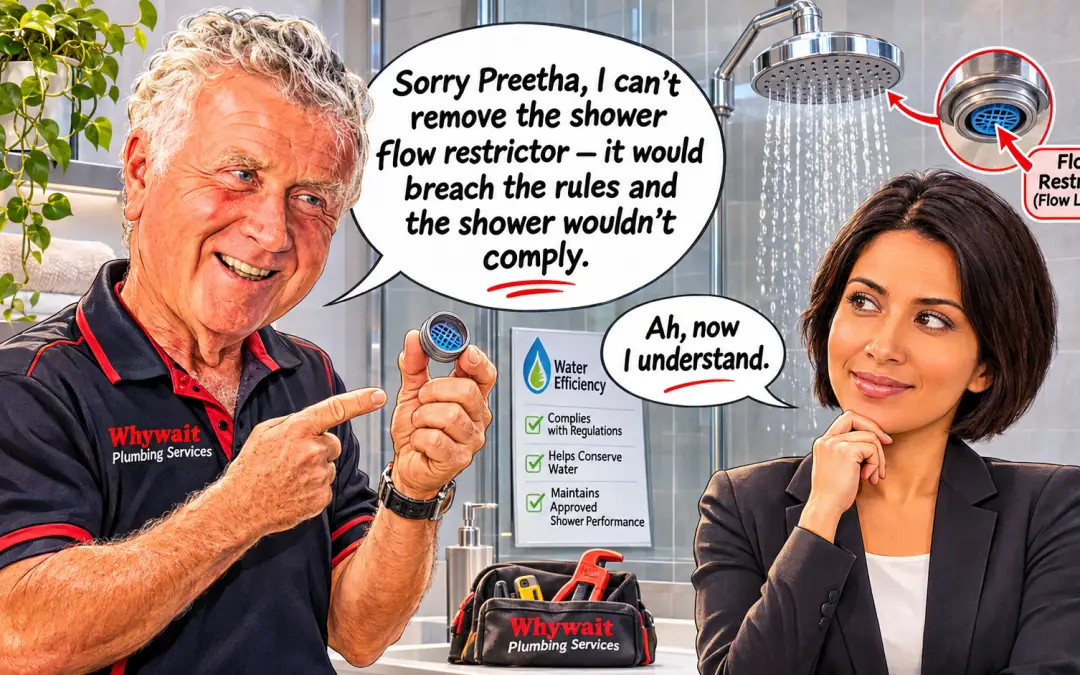
Why We Won’t Remove Shower Flow Restrictors

Why We Won’t Remove Shower Flow Restrictors

Why a quick fix for poor water flow could compromise your plumbing, cost you money and create problems you never expected.

Your shower isn’t delivering enough water, and someone suggests removing the flow restrictor to increase the flow. It’s only a small plastic component inside the shower head, so removing it seems like a simple solution. Unfortunately, that apparently harmless modification can affect the fixture’s performance, reliability, warranty and compliance with Australian plumbing requirements.

At Whywait Plumbing, we’ve been solving plumbing problems on the Gold Coast since 1976, and we’ve learnt that the quickest fix isn’t necessarily the right one. We understand how frustrating a poorly performing shower can be, but removing a flow controller isn’t something we’ll do if it compromises the product’s certification or plumbing compliance.

Our responsibility is to identify why your shower isn’t working properly and recommend a solution that fixes the problem without creating another one.

💧 Flow Restrictors Do More Than Save Water

Most modern taps and shower heads contain a flow restrictor, flow controller or flow regulator designed to control the amount of water passing through the fixture. These components are often mistaken for simple water-saving devices, but they can play a much more important role in the engineering and operation of the product.

Manufacturers design shower heads, hoses, internal waterways and spray mechanisms to operate under particular flow and pressure conditions. In some designs, the flow controller helps maintain consistent water delivery and the intended spray pattern, while also protecting certain downstream components from excessive operating pressure.

Removing or modifying the controller changes the conditions under which the product was designed and tested. Depending on the fixture, that can reduce performance, affect reliability and potentially shorten its service life.

The important point is that the controller isn’t necessarily an unnecessary restriction that can simply be discarded. It may be a critical part of a carefully engineered plumbing product, and altering it can have consequences beyond simply increasing the amount of water that comes out.

⚖️ What Australian Plumbing Legislation Says About Flow Restrictors

Australia operates the national Water Efficiency Labelling and Standards (WELS) scheme, established under the Water Efficiency Labelling and Standards Act 2005. It regulates water-efficiency information and product registration for taps, shower heads, toilets, urinals and other specified products.

The familiar blue WELS labels identify the water efficiency of products tested and registered in particular configurations. If a shower head was registered with a specific flow controller, removing or modifying that component can mean the product no longer performs in accordance with its registered configuration.

The Australian Government’s WELS guidance makes it clear that taps and showers registered with flow controllers must be supplied and installed with those components in place. It also warns that removing them can compromise WaterMark compliance and breach plumbing regulations.

Here in Queensland, plumbing installations must also satisfy the applicable requirements of the Plumbing and Drainage Act 2018, Plumbing and Drainage Regulation 2019 and the Plumbing Code of Australia. Under the Plumbing Code’s standard Deemed-to-Satisfy requirements, ordinary shower, basin, kitchen sink and laundry trough outlets generally require a minimum 3-star WELS rating and must discharge no more than 9 litres per minute, subject to applicable exceptions.

There is a distinction between national product registration requirements and the legislation governing plumbing installations. However, both are important, and licensed plumbers have a responsibility to ensure the products they install and the work they undertake remain compliant.

A customer asking us to remove a flow restrictor doesn’t remove our professional responsibility to do the job correctly.

For more information on the importance of registered plumbing products, read our earlier article, What Are WELS Water Rating Labels on Taps and Toilets?.

🚿 Removing a Flow Restrictor Can Actually Damage Your Shower

One of the less understood consequences of removing a flow controller is the damage it can cause to the shower assembly itself. Manufacturers engineer shower heads, flexible hoses and internal components to operate within particular conditions, and increasing the flow beyond those conditions doesn’t necessarily improve performance.

An article published by Plumbing Connection, titled Go With the Flow: The Callback Risk of Tampering With Plumbing Fixtures, explains why this can become a problem.

PROVE Engineering director Terry Nguyen discusses how some manufacturers position flow controllers at the inlet of shower hoses to reduce the pressure experienced by components further downstream. Removing these controllers can expose components to conditions they were never designed to withstand, increasing the possibility of premature deterioration or failure.

The potential consequences include damaged shower hoses, leaking internal components, altered spray patterns and a shortened service life. In some cases, increasing the water flow can actually make the shower perform worse because its internal design relies on a particular flow rate to produce the intended spray.

This creates another problem for plumbers who remove restrictors merely to satisfy a customer. The customer might initially be pleased with the increased flow, only to experience a failed shower hose or handpiece later, resulting in an avoidable callback and additional expense.

What appeared to be a simple improvement can become an entirely unnecessary plumbing problem.

🔧 Poor Water Flow Doesn't Always Mean Poor Water Pressure

One of the most common misunderstandings surrounding shower performance is the difference between water pressure and water flow. Water pressure is the force available to move water through the plumbing system, while water flow is the actual volume delivered over a particular period.

Although pressure and flow are related, they aren’t interchangeable. A shower can have adequate supply pressure and still deliver disappointing flow because of blocked outlets, accumulated sediment, partially closed valves or restrictions elsewhere in the plumbing system.

Problems can also arise from faulty pressure-limiting valves, hot water equipment, mixer cartridges or shower heads that aren’t suited to the available pressure conditions. Removing the flow controller doesn’t identify which of these problems is responsible and may simply disguise the original fault.

Our article Water Pressure Gold Coast: Low and High Pressure Made Clear explains why pressure and flow vary between properties and how proper testing helps identify the cause of poor plumbing performance.

🔍 How Whywait Plumbing Investigates Poor Shower Performance

When customers complain about poor shower performance, our first priority is to identify the actual cause. Depending on the installation, that may involve measuring the available water pressure and flow, inspecting the shower head and tapware, and investigating restrictions within the hot and cold water supplies.

We also consider whether the problem affects one fixture or several, whether performance changes between hot and cold water, and whether the installed shower head is appropriate for the plumbing system. These details help us determine whether the problem is caused by a faulty component, restricted pipework or a product that’s simply unsuitable for the installation.

Sometimes the solution is straightforward, such as cleaning a blocked outlet, replacing a deteriorated shower head or repairing a faulty valve. In other cases, selecting a different WELS-registered shower head designed to perform effectively at the available pressure may provide a considerably better result.

Modern water-efficient shower heads can provide excellent performance without excessive water consumption. The important thing is choosing a suitable product and making sure the complete installation is operating as intended.

If your taps or shower fittings aren’t performing properly, our Gold Coast tap repair and replacement service explains how we diagnose and rectify these problems.

💰 More Water Doesn't Necessarily Mean a Better Shower

Removing a flow controller can significantly increase water consumption, particularly in households where several people use the shower every day. A shower delivering 9 litres per minute uses approximately 90 litres during a ten-minute shower, while increasing the flow to 15 litres per minute raises consumption to 150 litres over the same period.

That’s an additional 60 litres every shower, or approximately 21,900 extra litres annually for someone taking one ten-minute shower every day. When that additional water must be heated, the household also faces increased energy consumption and potentially higher utility bills.

However, water efficiency isn’t simply about restricting water to the lowest possible flow rate. A shower using less water per minute may not achieve genuine savings if someone needs considerably longer to shower satisfactorily, which is why manufacturers put so much effort into designing products that deliver an effective spray while using less water.

The objective should be a satisfying shower experience without wasting water or compromising the fixture’s performance. A properly selected 4-star or 5-star WELS-registered shower head can often provide an excellent balance of comfort and efficiency.

🛡️ Can Removing a Flow Restrictor Affect Your Warranty or Insurance?

Plumbing fixtures are designed, tested and certified to operate in particular configurations, and manufacturers provide warranties based on the product being installed and used appropriately. Removing or modifying a critical flow controller can affect the manufacturer’s warranty obligations, particularly when a subsequent failure is connected to that alteration.

There may also be insurance implications if a modified fixture fails and causes water damage. This doesn’t mean removing a flow controller automatically invalidates a household insurance policy, because coverage depends on the policy wording and circumstances of the claim. However, an insurer investigating significant water damage may consider whether the fixture was installed, modified or maintained in accordance with the manufacturer’s instructions and applicable requirements.

Our view is that these are unnecessary risks when better solutions are available. Customers should be confident their plumbing fixtures are installed correctly and operating as intended, without worrying that an unnecessary modification has compromised their reliability or certification.

👨‍🔧 Whywait Plumbing's Position: Fix the Problem, Don't Create Another One

There’s always a temptation in the service industry to give customers exactly what they ask for, even when the requested solution isn’t technically appropriate. In plumbing, that might mean removing a flow controller because someone wants more water from their shower, even though doing so could compromise the fixture.

The immediate result may appear satisfactory, but that doesn’t mean the underlying problem has been identified or corrected. If the shower subsequently fails, the customer is left with another problem, and the plumber may be responsible for returning to repair a failure that could have been avoided.

After fifty years in the plumbing industry, we believe professional responsibility involves more than simply carrying out instructions. Customers engage licensed plumbers because they expect us to understand the products we work with, recognise the applicable regulations, and recommend solutions based on sound technical judgement.

Sometimes that means explaining why a particular request isn’t appropriate and offering a better alternative. We believe that’s part of providing a professional service, rather than being difficult or unnecessarily restrictive.

Where an existing fixture can be repaired, cleaned or adjusted without compromising compliance, we’ll explain the options. If a different approved fixture will provide better performance, we’ll recommend one suitable for the installation, including appropriately registered, manufacturer-approved alternative flow-controller configurations where available.

What we won’t do is knowingly alter a certified fixture outside its approved configuration simply to achieve a temporary increase in water flow.

✅ What Should You Do If Your Shower Has Poor Water Flow?

If your shower isn’t performing satisfactorily, don’t automatically assume that removing the flow restrictor is the answer. Online videos and advice sometimes make these modifications appear harmless, but they rarely explain the product’s engineering, certification requirements or the consequences for components elsewhere in the assembly.

A licensed plumber can investigate the available pressure and flow, identify restrictions or faulty components, and determine whether the existing shower head is suitable for the installation. In many cases, the solution may be relatively straightforward, while in others a better-designed and properly registered replacement can provide the performance you’re looking for.

The important thing is to address the cause rather than modify the fixture and hope for the best.

💙 Fifty Years of Plumbing Has Taught Us Something Important

After fifty years in the plumbing industry, we’ve learnt that customers don’t really want flow restrictors removed. What they actually want is a shower that works properly, delivers a satisfying experience and doesn’t create problems later.

That’s a perfectly reasonable expectation, and it’s our responsibility to help achieve it. We believe customers deserve practical advice, technically sound workmanship and plumbing installations that comply with the applicable Australian requirements.

Doing the right thing sometimes means explaining why a shortcut isn’t the answer, particularly when it could compromise the performance or reliability of a product. That’s why Whywait Plumbing will always favour identifying the actual problem and recommending an appropriate solution rather than making modifications that could create unnecessary risks.

Choose Whywait and consider it done.

🚿 Need Better Shower Performance?

If your taps or shower heads aren’t delivering satisfactory performance, Whywait Plumbing can investigate the cause and recommend a practical, compliant solution. We’ve been looking after Gold Coast plumbing since 1976, and we still believe doing the job properly is the best way to provide lasting value for our customers.

Contact Whywait Plumbing to arrange a plumbing diagnosis.

❓ Frequently Asked Questions About Shower Flow Restrictors

Removing a flow controller can cause a shower head to no longer comply with its registered WELS configuration and applicable plumbing requirements. Whether a particular alteration constitutes an offence depends on the circumstances and legislation involved, but licensed plumbers must not knowingly undertake non-compliant plumbing work.

Removing a flow controller may increase the amount of water passing through the shower, but it doesn't increase the available water supply pressure. It may also change the spray pattern or expose internal components to operating conditions beyond those intended by the manufacturer, so a proper diagnosis is generally the better approach.

Yes, depending on the design of the shower assembly. Some manufacturers use flow controllers to protect hoses, handpieces and internal components from excessive pressure, while others rely on controlled flow to produce the intended spray pattern. Removing the controller can reduce performance, shorten the fixture's service life or contribute to premature failure.

The Plumbing Code of Australia's standard Deemed-to-Satisfy provisions generally require ordinary shower outlets to achieve a minimum 3-star WELS rating and discharge no more than 9 litres per minute. Specific exceptions and alternative compliance arrangements may apply, so a licensed plumber should assess the circumstances and determine what products and configurations are permitted.

Poor shower flow can result from blocked shower outlets, accumulated sediment, faulty mixer cartridges, restrictive valves or problems with the hot water supply. The shower's location, pipe sizing and suitability for the available water pressure can also influence performance, which is why testing is preferable to guessing.

Yes, in many cases satisfactory shower performance can be restored without compromising the fixture's design or certification. We can investigate water pressure and flow, check for restrictions, repair faulty components and recommend appropriate WELS-registered replacement fixtures when necessary. Our priority is to provide a shower that works properly while maintaining the applicable plumbing standards.

What COVID Taught Australia About Public Bathrooms
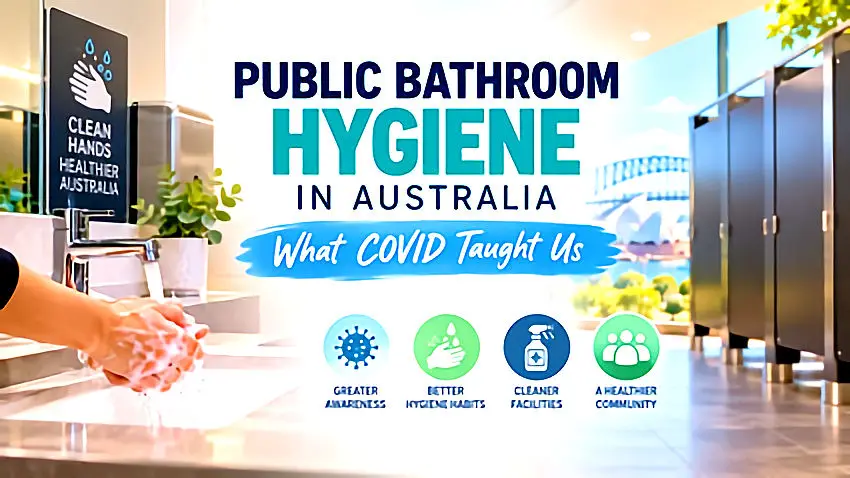
Public Bathroom Hygiene in Australia: What COVID Taught Us

Public Bathroom Hygiene in Australia: What COVID Taught Us

COVID changed the way Australians looked at public bathrooms. Before 2020, most people expected them to be reasonably clean and working properly. Since the pandemic, people are far more conscious of what they touch, how clean a bathroom appears, whether it smells, and whether the fixtures look well-maintained.

That change in expectation has not disappeared.

For businesses, shopping centres, restaurants, schools and public facilities, bathrooms are no longer just a necessary room hidden down the corridor. They have become part of the overall customer experience. A clean, well-maintained bathroom creates confidence. A neglected one can undo a lot of the good work being done elsewhere in the building.

At Whywait Plumbing, we believe that is one of the most important lessons to come from the pandemic.

We became much more aware of what we touch.

Think about a traditional public bathroom. A person may touch a door handle, toilet flush button, tap, soap dispenser, hand dryer and another door on the way out. Before the pandemic, very few people consciously thought about that sequence.

COVID changed that almost overnight.

Touch-free taps, soap dispensers and automatic doors suddenly became much more attractive because people became aware of shared surfaces. The same principle applies to urinals. A properly designed waterless urinal has no flush button, flush valve or electronic sensor for the user to touch. The person simply uses the fixture and walks away.

That simplicity is one of the reasons we have worked with waterless urinals for many years. It removes unnecessary contact and components that can fail or require ongoing servicing.

Sometimes the most hygienic fixture is also the simplest

One of the things the plumbing industry has learned repeatedly is that more technology does not always create a better bathroom. Sensors fail, solenoid valves fail, batteries go flat, and flush valves leak. Automatic systems can also activate unnecessarily, wasting water without improving hygiene.

Good design should remove unnecessary complications wherever possible.

This is particularly relevant with urinals. A ZeroFlush waterless urinal does not require water to be flushed, a flush button, or an automatic flush valve. That means fewer components and fewer things that can go wrong.

Of course, simple does not mean maintenance-free. Every urinal still needs correct cleaning and servicing. The difference is that a well-designed waterless urinal can achieve that without continually using drinking-quality water every time somebody uses it.

The pandemic made us think differently about flushing

Another issue that received much more attention during the pandemic was what actually happens when toilets and urinals are flushed.

Research has shown that flushing toilets can create aerosols containing microscopic particles. That does not mean people should be frightened of using public bathrooms, but it does reinforce something fairly obvious: moving water rapidly around human waste can create droplets and aerosols.

A waterless urinal removes the flushing process entirely.

That gives facility managers another reason to consider waterless technology beyond water savings alone. Whywait Plumbing discusses this in more detail in our article on the ZeroFlush hygiene advantage in public toilets.

Clean does not mean using more chemicals

The pandemic also encouraged an understandable obsession with disinfecting surfaces. Unfortunately, this sometimes created the belief that if a little cleaning chemical was good, then more must be better.

That is not always true, particularly with plumbing fixtures.

Public bathrooms need proper cleaning procedures, but stronger chemicals and excessive use of cleaning products do not automatically yield better results. In some cases, the wrong chemicals can damage fixtures, seals and drainage systems or interfere with the operation of waterless urinals.

Cleaning staff need to understand the fixtures they are maintaining. The plumber, cleaners and facility manager should ideally all be working from the same maintenance procedure.

The cleaner should not have to guess what products to use, and the plumber should not arrive six months later, wondering what has been poured down the fixture. Our urinal maintenance guide explains why correct cleaning and servicing are essential for both flushing and waterless urinals.

Australia cannot afford to forget about water efficiency

COVID dominated the headlines for several years, but another Australian problem never disappeared. Water remains a resource we cannot afford to waste.

Australians understand drought. South East Queensland certainly does. We have experienced severe water restrictions, watched dam levels fall and been repeatedly reminded that our water supply is not unlimited. Then the rain returns and, far too often, water conservation drops down the priority list.

That cycle makes little sense.

Water efficiency should not depend on whether it rained last week. Traditional urinals use drinking-quality water simply to transport urine into a drain. A waterless urinal eliminates the need to flush water.

The saving happens automatically. It does not rely on the customer changing their behaviour or remembering to do anything differently.

This is the important difference between water conservation and water efficiency. Conservation often relies on people changing what they do. Efficiency comes from designing the system to use less water in the first place.

A good public bathroom should be almost uneventful

It may sound strange, but the best public bathrooms are often the ones nobody talks about.

A person walks in, everything works, the room is clean, there is no unpleasant smell, they wash their hands and walk out. Nobody complains. Nobody rings the facility manager, and nobody calls the plumber.

That is success.

Good public bathroom design is not about making the room complicated. It is about making it reliable, easy to clean and easy to maintain. Fixtures should be selected with real-world operation in mind, not simply because they look good in an architectural drawing.

This is something we discuss further in the ZeroFlush article: Public toilet design that reduces callouts and complaints.

Odour is still one of the biggest complaints

People naturally associate bathroom odour with poor hygiene, and understandably so. Nobody wants to walk into a public bathroom that smells unpleasant.

The problem is that covering an odour with fragrance does not solve anything. It simply creates two smells.

Persistent urinary odours require proper investigation. Possible causes include incorrect cleaning, drainage problems, dry floor wastes, poor servicing or fixture problems. Waterless urinals are sometimes blamed automatically, but our experience has often been the opposite.

When correctly installed, cleaned, and maintained, ZeroFlush urinals can create a cleaner, drier urinal environment, and keeping areas dry matters. Constantly wet surfaces around urinals can contribute to staining, cleaning problems and odour.

The goal should never be to disguise a smell. The goal should be to identify and remove the cause.

The bathroom has become part of the customer experience

This is probably the biggest lesson businesses should remember.

Imagine a restaurant with excellent food, friendly staff and beautiful surroundings. Then a customer walks into a filthy bathroom. What do they remember?

Quite often, the bathroom.

The same applies to hotels, clubs, shopping centres, entertainment venues, schools and public facilities. Customers cannot see your maintenance records or inspect your plumbing system. They may have no idea how much effort goes into managing the building.

But they can see the bathroom.

In many ways, the bathroom serves as evidence of how the entire property is managed. A clean, functioning bathroom quietly tells the customer that somebody is paying attention.

A neglected bathroom tells them something else entirely.

What should Australian facility managers be looking at now?

The pandemic is behind us, but the lessons should not disappear with it.

When reviewing a public bathroom, facility managers should look beyond appearance alone. Consider whether unnecessary touchpoints can be removed, whether fixtures are reliable, whether cleaning procedures are clearly documented and whether maintenance staff have been involved in selecting the equipment.

It is also worth asking whether drinking-quality water is being used unnecessarily, whether persistent smells are being properly investigated and whether the bathroom has been designed around whole-of-life maintenance rather than the initial purchase price.

For men’s bathrooms in particular, waterless urinals can be worth considering as part of that assessment.

Where ZeroFlush fits

Whywait Plumbing has been involved with waterless urinals on the Gold Coast since the 1990s. That experience has taught us something important: not all waterless urinals are the same.

We have seen products that performed extremely well and others that created ongoing maintenance problems. We began using ZeroFlush after experiencing issues with earlier cartridge-style systems, and that experience has shaped how we assess these installations today.

Trap systems differ. Cleaning requirements differ. Maintenance procedures differ. The drainage arrangement and the way the bathroom is used also matter.

That is why we do not simply tell every client to install a particular product.

We look at the building first. We consider usage levels, existing drainage, cleaning procedures and maintenance arrangements. Only then should the fixture be selected.

Sometimes ZeroFlush is the right answer. Sometimes the existing system simply needs better servicing. The important thing is understanding the problem before spending money trying to fix it.

The lasting lesson is better bathroom design.

The pandemic forced everyone to look more closely at hygiene, but the real opportunity goes far beyond that.

We can design public bathrooms that are cleaner, simpler, easier to maintain, more reliable, and far more water-efficient. Achieving that does not necessarily mean adding more technology. In many cases, it means removing unnecessary complexity.

One less touchpoint. One less sensor. One less flush valve. And, with a ZeroFlush urinal, potentially thousands of litres of unnecessary flushing water are removed from the building’s water consumption.

For Australian businesses and facility managers, that is the lesson worth keeping.

Frequently Asked Questions

Yes, provided they are correctly installed, cleaned and maintained. A waterless urinal removes the flushing process and has no flush button or sensor for the user to touch. Hygiene still depends on proper cleaning, proper servicing, and a drainage system that works as designed.

They should not smell when they are operating correctly. Persistent odour usually indicates a problem that needs investigation, such as incorrect cleaning, poor maintenance, drainage issues or a failed trap or seal. Simply adding fragrance rarely solves the real cause of the problem.

Yes. ZeroFlush urinals are designed to be simple, but they are not maintenance-free. They still require the correct cleaning products, routine inspection and servicing. The advantage is that there are fewer mechanical components, such as flush valves, solenoids and sensors that can fail.

The amount depends on how often the urinal is used and the type of flushing system it replaces. The important point is that a waterless urinal uses no water for flushing, so every flush that would otherwise have occurred is eliminated. In a busy commercial bathroom, this can add up to a significant reduction in water consumption over time.

Not necessarily. The existing drainage, usage levels, cleaning procedures and maintenance arrangements all need to be considered. Whywait Plumbing prefers to assess the bathroom first rather than assume that one product suits every site.

Touch-free fixtures can reduce the number of shared surfaces people need to touch. However, they still need correct cleaning and maintenance. Sensors, batteries, solenoid valves, and other components can also fail, so touch-free technology should be selected for its ability to improve the bathroom experience, not simply because it adds more technology.

Cleaning alone does not fix every odour problem. Smells can come from drainage faults, dry floor wastes, poorly maintained urinals, damaged seals or incorrect cleaning chemicals. A persistent smell should be investigated rather than continually covered with deodoriser.

It depends on the building. Waterless urinals can reduce water use, eliminate flush valves and remove a user touchpoint. However, the right choice depends on drainage, cleaning, maintenance and how heavily the bathroom is used. A proper site assessment should come before the product decision.

Whywait Plumbing can assess your existing urinals, drainage, cleaning practices and maintenance history before recommending what should happen next.

We will explain the options and the trade-offs honestly. Sometimes the answer will be ZeroFlush. Sometimes it will be improving what you already have.

Either way, you should understand what is causing the problem before spending money trying to solve it.

What COVID Taught Australia About Public Bathrooms
Burst Pipe in Your Apartment? Who’s Legally Responsible

Burst Pipe in Your Apartment? Who’s Legally Responsible

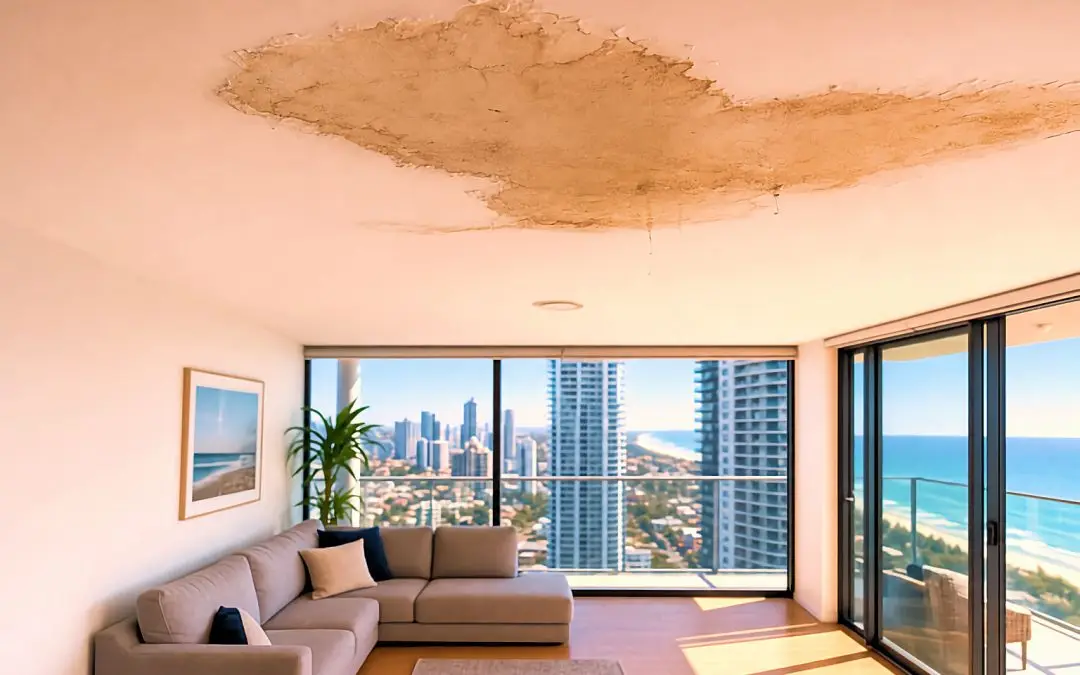
Water is coming through your ceiling, and you need two answers fast:

✅  How do I stop it?

✅  Who pays?

If you lived in a house, both answers would be simple. You’d turn off the main, call a plumber, and the bill would land on your kitchen bench.

In a Queensland apartment, it’s rarely that clean. We’ve attended jobs where a single burst pipe pulled in three owners, a body corporate committee, a building manager and two insurers. All before anyone had even found the leak.

Responsibility depends on where the pipe is located, who it serves, and what the building’s registered survey plan says. And the source of the leak is often nowhere near the damage. Water dripping into your bathroom might be coming from a failed flexi hose two floors up, a shared riser, or a body corporate pipe buried in the slab.

The Gold Coast is full of owners going through this for the first time. Plenty of people are moving out of standalone homes into apartments, and suddenly they’re dealing with common property, exclusive-use areas, bylaws, and access rules they’ve never heard of. Nobody explains any of it at the settlement. The first lesson usually arrives with the first leak.

Speed matters because water damage compounds by the hour. But access and repair approvals still have to follow Queensland body corporate law and the scheme’s registered documents. Even in a genuine emergency.

This blog walks through who pays, who gets access and what happens next, so you know the process before you’re standing in a wet hallway trying to work it out.

**Important:** This is general information, not legal or insurance advice. Every community title scheme is different. Check your community management statement, by-laws, survey plan and insurance arrangements.

Why apartment plumbing becomes complicated

Water doesn’t respect lot boundaries. A leak can show up in your bathroom after starting several floors above, and a blocked drain that affects one unit today can back up into three units by the weekend.

The damage you can see rarely tells you who’s responsible for fixing it. Depending on the building, a single leak can involve the apartment owner, a tenant, a property manager, the body corporate, the neighbours, the building manager, a licensed plumber, and one or more insurers. With that many parties in the mix, arguments about who pays can drag on while the water keeps moving.

That’s the trap. The smartest first move is almost always the same: 

✅ control the water, 

✅ document everything, 

✅ identify exactly which pipework failed. 

Sort out the money afterwards.

Is this a strata problem or a body corporate problem?

Most people say ‘strata’. It’s the term used in New South Wales and Victoria, and it’s stuck. In Queensland, the legal structure is actually called a “community titles scheme”, and a body corporate manages its shared affairs.

The building’s survey plan and community management statement define each lot and the common property. In many multi-storey buildings, the lot boundary runs through the centre of the floors, walls and ceilings that separate the units.

That boundary matters, but on its own, it won’t answer your plumbing question. You also need to know who the pipe serves and where it physically sits. Those two things trip people up constantly.

Who is responsible for apartment plumbing in Queensland?

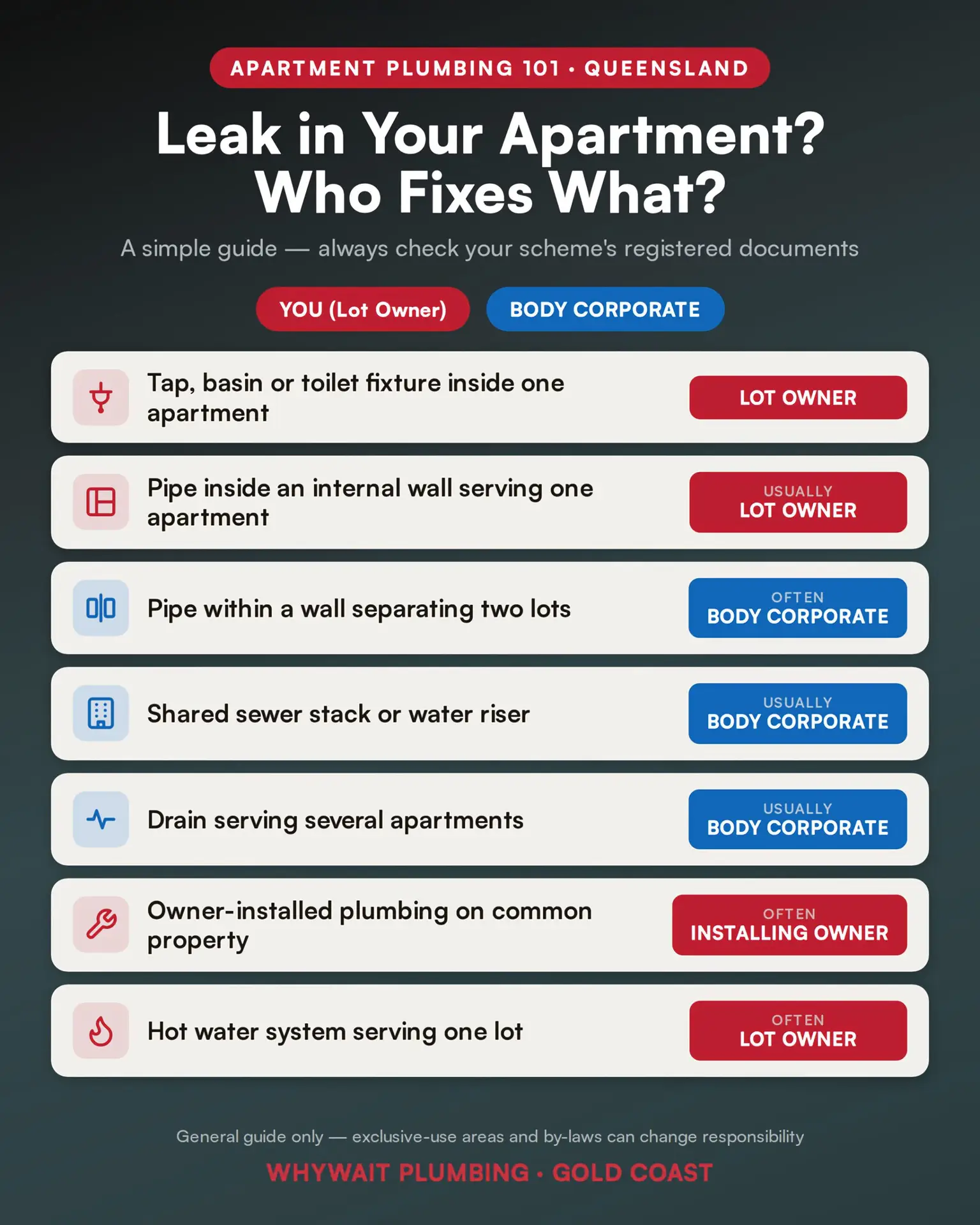
The body corporate is usually responsible for plumbing that forms part of the common property.

In practice, that tends to mean pipes, drains, or sewers that serve more than one apartment, sit within a boundary wall, floor, or ceiling, or form part of the building’s shared system.

A lot owner is generally responsible for the pipework that serves only their apartment, sits within their lot, and isn’t inside a boundary structure. A failed flexi hose under your vanity? That’s yours, and for what it’s worth, braided flexi hoses are one of the most common causes of flooding we see in apartments.

The shared sewer stack behind your bathroom wall? Almost certainly the body corporate’s.

burst pipe apartment, who is responsible

Treat these as starting points, not rulings. Queensland law contains exceptions:

✅ exclusive-use areas,

✅ owner-installed improvements,

✅ older building arrangements that can shift responsibility.

The scheme’s registered documents are what count.

The location of the water damage may mislead you

Picture water coming through the ceiling of a Broadbeach apartment. The wet ceiling belongs to one unit, but the leak could be coming from the apartment above, a shared water riser, a failed shower connection, a body corporate pipe inside the slab, or simply an overflowing bath caused by an occupant who got distracted.

Each of those causes creates distinct repair and insurance pathways. We’ve seen owners spend weeks blaming the wrong neighbour before anyone put a camera in the wall.

So resist the urge to argue about payment before you’ve found the source. A licensed plumber can isolate the likely cause and record what they find.

Photos, moisture readings and camera inspection footage feel like overkill on the day. They become the most valuable documents in the building once insurance claims begin.

Can a plumber enter another apartment?

Not just because a pipe crosses into it, no. But Queensland law does give the body corporate specific access powers.

The body corporate may authorise someone, including an external plumber, to enter a lot when it’s necessary to inspect or carry out work the body corporate is authorised or required to do. That authority can come through a committee resolution or an ordinary resolution.

For non-emergency access, the body corporate generally has to give the owner or occupier at least “seven days’ written notice”, and entry must happen at a reasonable time.

A decent notice spells out who needs access, the proposed date and time, how long the work should take, why entry is required, and who the resident can contact with questions.

In our experience, most access disputes never happen when that notice is clear, and someone actually picks up the phone beforehand.

What happens during a plumbing emergency?

Emergencies run under different rules. An authorised person may enter at any time during an emergency, with or without written notice. But the body corporate must still authorise that person. The authorisation requirement doesn’t disappear just because water is moving.

The legislation doesn’t define every emergency, so urgency depends on the facts. A burst shared pipe flooding several apartments obviously justifies rapid entry. A slowly dripping tap doesn’t, no matter how annoying it is.

Even in an emergency, the body corporate should contact the occupant immediately, where possible and explain the risk, the work required and who will be entering.

Emergency access is a legal power, not an excuse to skip basic courtesy.

Can an owner or tenant refuse access?

Owners are entitled to question whether an entry is lawful or genuinely necessary. But once the body corporate has properly authorised entry and given the required notice, the authorised person has a legal power to enter. The owner doesn’t need to be home, and they don’t need to consent again.

Obstructing an authorised person may be an offence, and the body corporate can pursue dispute resolution through the Commissioner for Body Corporate and Community Management in Queensland.

None of that means a plumber should force their way in. We won’t, and no reputable plumber will.

Access should be coordinated by the body corporate or its authorised representative, and any disagreement should be documented and handled through the proper process, not on the doorstep.

What should happen when water is actively leaking?

When water is spreading, forget about blame and focus on safety and damage control.

1. Reduce the immediate damage: Turn off the relevant isolation valve if it’s safe to reach. Don’t touch electrical fittings near water, and call emergency services if there’s immediate danger.

2. Notify the right people: Contact the building manager, body corporate representative, owner or property manager. Whoever applies to your situation. Tenants should report the problem to their property manager promptly and follow any building emergency procedure.

3. Engage a licensed plumber: Most plumbing and drainage work in Queensland is regulated, and an appropriately licensed plumber or drainer must perform it.

4. Identify the source: Finding the source matters more than blaming the nearest apartment. The plumber may need access above, below or beside the visible damage, so start those conversations early.

5. Record everything: Keep photographs and videos, access approvals, emails and text messages, the plumber’s findings, invoices and work orders, before-and-after photos, and records of any affected belongings.

Good records don’t create conflict. They shut it down.

Queensland plumbing compliance still applies

The pressure of an apartment emergency doesn’t exempt a plumber from their compliance obligations.

Queensland divides regulated plumbing into permit work, notifiable work and minor work, and each category carries its own approval or registration requirements. The National Construction Code and the associated Australian Standards sit beneath it all.

Where work is notifiable, the plumber must register it with the Queensland Building and Construction Commission (QBCC) generally within ten business days of issuing the invoice, and the client or occupier must receive the required documentation within the prescribed timeframe.

Before work starts, it’s worth asking your plumber whether the job requires City of Gold Coast approval, QBCC notifiable work registration, body corporate approval, access to another lot, water-shutdown coordination, or follow-up testing and inspection.

A small repair can affect an entire building. The paperwork is part of doing it properly, not an optional extra.

Who pays for water damage?

Here’s a distinction that catches nearly everyone out: repair responsibility and damage responsibility aren’t the same thing.

One party may pay to fix the failed pipe while a completely different policy covers the ruined flooring, paint or belongings. Payment can turn on:

🚨 whether the pipe is common property,

🚨 whether it serves one lot or several,

🚨 what caused the failure,

🚨 whether negligence or delay made things worse,

🚨 what the body corporate policy covers,

🚨 what the owner’s contents or landlord’s coverage picks up,

🚨 what excesses and exclusions apply.

Whatever you do, don’t assume the body corporate insurer will pay for everything. Notify the relevant insurers promptly and provide the plumber’s written findings and photographs.

Hold off on major reinstatement until responsibility is clearer, unless urgent work is needed to stop further damage.

Common mistakes that make apartment leaks worse

❌ Waiting for the next committee meeting: Active water damage rarely waits politely. The committee can approve necessary work without holding everything over to a general meeting.

❌ Sending a plumber without organising access: A plumbing technician standing outside a locked apartment cannot diagnose hidden pipework. We know, because we’ve been that plumbing technician. Confirm approvals, contact details, keys and resident availability first.

❌ Assuming the upstairs owner caused the leak: Water travels along slabs, pipes and building cavities in ways that surprise people. The apartment above may also be affected, and may not be responsible at all.

❌ Starting repairs before defining the scope: Opening walls without confirming authority can create a second dispute on top of the first. Work out whether the job involves common property or another lot before anyone picks up a saw.

❌ Relying only on verbal agreements: Memories become surprisingly foggy once ceilings, carpets and invoices are involved. Keep approvals in writing.

A practical checklist for Gold Coast apartment owners

Before the plumber arrives, gather:

1:  The exact location of visible water or blockage symptoms.

2:  Photographs and video of the affected area.

3:  Body corporate and building manager contact details.

4: The apartment owner or property manager’s details.

5:  Any available plans or previous repair reports.

6:  Written access authority where another lot is involved.

7:  Details of any water shutdown restrictions.

8:  Insurance claim numbers, when already issued.

Twenty minutes of preparation can save hours on site and prevent repeat visits and unnecessary holes in walls.

What Whywait Plumbing does differently

Apartment plumbing takes more than tools and fittings. Most of the hard part is communication:

✅ who’s affected,

✅ who decides,

✅ who pays,

✅ who needs to know what before anything gets opened up.

Whywait Plumbing Services helps Gold Coast owners, property managers and bodies corporate with leaking and burst pipes, blocked apartment drains, shared sewer problems, water leak investigation, hot water faults, CCTV drain inspections, and plumbing repairs and compliance work.

We explain what we find in plain English. And where responsibility is unclear, we separate the facts from the assumptions, so owners and committee members can make their next decision on solid ground rather than guesswork.

Frequently Asked Questions

No. Responsibility depends on the wall, the lot boundary and who the pipe serves. A pipe inside an internal wall serving one apartment may remain the owner’s responsibility.

In certain circumstances, yes. The body corporate must properly authorise the entry, and non-emergency entries generally require at least 7 days’ written notice. Different rules apply during emergencies.

Report the problem promptly to the property manager or owner. Where common property may be involved, the body corporate should also be notified. Emergency water damage may require all three parties to coordinate simultaneously.

Most regulated plumbing work in Queensland requires a QBCC-licensed plumber or drainer.

For active flooding, contact both immediately. For a non-urgent issue involving common property, notify the body corporate before arranging any invasive work.

Don't let a small leak become a building-wide problem

Apartment plumbing problems get expensive when responsibility, access and repairs aren’t coordinated, not because the plumbing itself is complicated.

Start with the facts. Control the water, notify the right people, and use a licensed plumber who documents their findings.

For burst pipes, apartment plumbing, blocked drains or hot water problems across the Gold Coast, contact Whywait Plumbing Services.

Early investigation usually creates more options and fewer ruined ceilings.

Is Gold Coast Tap Water Affecting Your Health?

Is Gold Coast Tap Water Affecting Your Health?

Is Gold Coast Tap Water Affecting Your Health? Gary Mays' Perspective as a Plumber

You drink your Gold Coast tap water every day.

You cook with it. Your kids drink it. You rinse fruit in it. You make tea and coffee with it.

So when the water smells like chlorine, tastes a bit off, or leaves you wondering what is really in it, that matters.

It matters a lot.

Because when you do not like the taste of your water, you drink less of it. And that is not how water at home should feel.

As a plumber, I’ve heard this concern from Gold Coast homeowners many times. As a plumber with 49 years of experience, I’m well aware that people don’t only care about water on paper. They care about how it tastes, smells, and feels in their home.

Most people assume Gold Coast tap water is fine because it’s treated. And yes, treatment matters. It helps make water safer.

But treated water is not always water you feel good about drinking.

That is the part people notice at the kitchen tap.

❌ The water smells harsh.

❌ It tastes flat.

❌ It does not feel fresh.

❌ And people get tired of second-guessing what comes out of the tap.

This is my plumber’s perspective on Gold Coast tap water, Taqua water filter taps, and why a properly installed filtration tap can make daily life feel easier.

What could still be in your tap water?

Tap water goes through treatment before it reaches your home. That is a good thing.

But treatment can still leave behind things that affect taste, smell, and confidence.

That can include chlorine residue, mineral deposits, traces of lead, pesticides, musty odours, trihalomethanes, and other unwanted contaminants.

Some of these are obvious. You notice the smell. You notice the taste. Others are less obvious, and that is often what unsettles people most.

You cannot see everything in a glass of water. That is why many homeowners start looking for a better option.

If you want a deeper look at what can still be present in household water, read:  What chemicals are in the water I drink and shower in?.

Why this matters more than people think

When water does not taste right, people change their habits.

🫗 They buy bottled water.

🫗They avoid drinking enough water.

🫗They put up with benchtop filter jugs.

🫗 They keep meaning to fix the problem, then life gets busy.

That is frustrating. It is also unnecessary. Your drinking water should be one of the simplest parts of your home.

You should turn on the tap and feel comfortable drinking what comes out.

That is how it should feel.

When it does not, the problem is bigger than taste alone. It affects peace of mind.

As a plumber this is my opinion

I believe homeowners deserve better than “it is probably okay”.

You should not have to live with water that smells chlorinated or tastes stale. You should not need to fill your fridge with plastic bottles just to feel better about what you are drinking.

And you should not lose cupboard space to a bulky filter setup under the sink.

That is why I recommend Taqua water filter taps for many Gold Coast homes.

They give homeowners a simple way to get filtered water from the kitchen tap. No bottle clutter. No awkward jug. No extra under-sink filter taking up space.

Just cleaner, fresher water where you need it most.

Why I recommend Taqua taps

I honestly like Taqua because it practically solves a real household problem.

A Taqua tap has the water filter built into the tap itself. So you do not need a separate under-sink system that fills your cupboard.

The design is neat, easy to use, and suits modern kitchens.

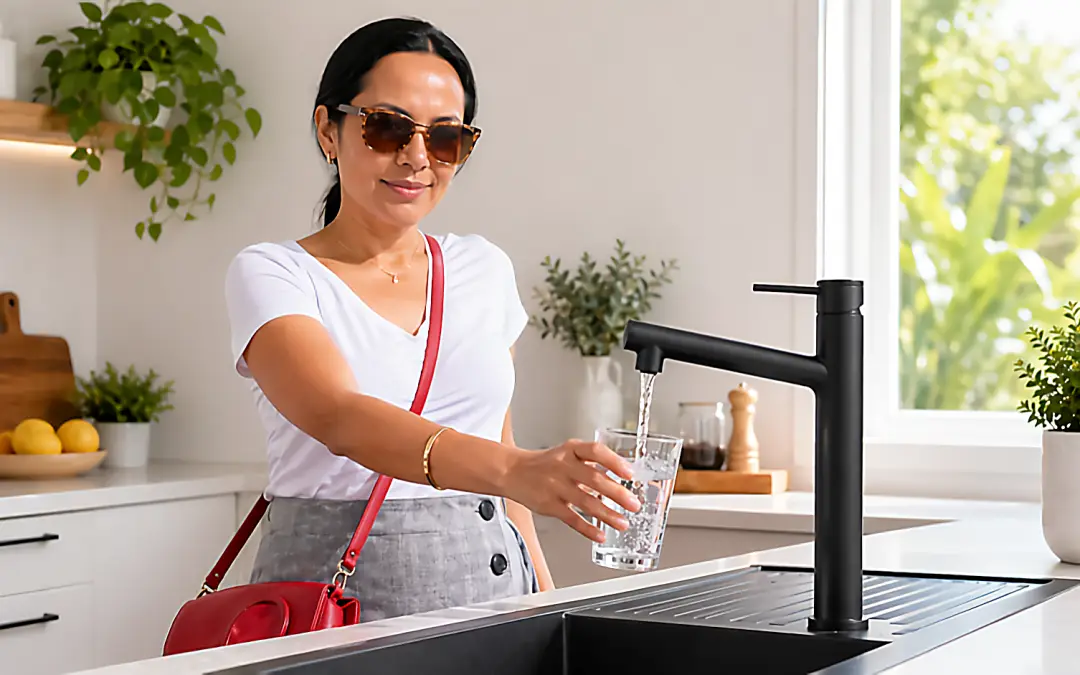
You can switch between regular tap water and filtered water at the flick of a switch. The pull-out spray also helps with everyday kitchen jobs, such as rinsing vegetables or cleaning the sink.

So this is not just a water filter. It is a better kitchen tap.

You can see the full range here: Taqua water filter taps.

What I look for in a water filter tap

As a licenced plumber, I not only look at how a tap looks. I look at what it does.

A Taqua water filter tap is designed to reduce the things many homeowners worry about most. That includes free chlorine, pesticides, musty odours, soluble lead, trihalomethanes, and PFAS.

Whywait’s Taqua filter guide lists removal rates for several contaminants, including:

✅ Free chlorine, more than 97%

✅ Pesticides, more than 93%

✅ Musty odours, more than 96%

✅ Soluble lead, more than 89%

✅ Trihalomethanes, more than 99%

Those numbers matter because they can affect taste, smell, and confidence.

Water should taste fresh. Not chemical. Not flat. Not like something you have to force yourself to drink.

For the full breakdown, read Inside the Taqua water filter: what it removes and why it matters.

Why homeowners should choose Taqua over bottled water

Bottled water feels like an easy fix. Until it does not.

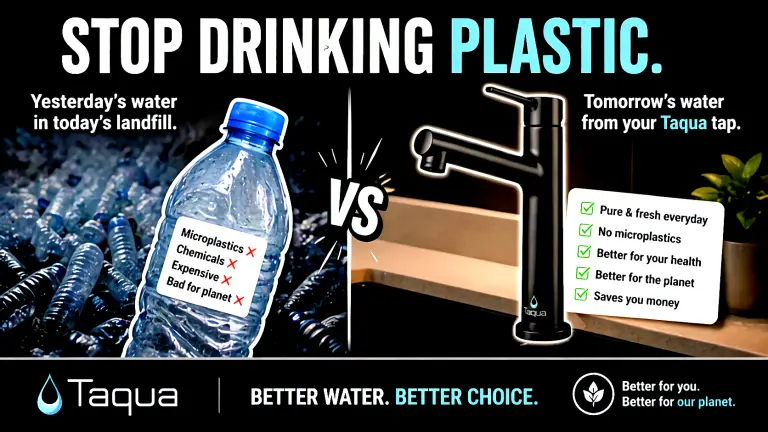
❌ It costs more over time.

❌ It creates plastic waste.

❌ It takes up fridge space.

❌ And it turns a simple daily need into another thing to manage.

A Taqua tap gives you filtered water straight from the kitchen sink. No hauling bottles. No stack of plastic. No filter jug is sitting on the bench, like a reminder that the tap still hasn’t been sorted.

Just filtered water when you want it.

That is the kind of upgrade people notice quickly.

Why the tap material matters too

I look beyond the filter. The tap itself matters.

Many people focus only on what the filter removes. I also look at the materials that come into contact with your drinking water.

That is one reason I like Taqua. Taqua taps are lead-free, with components that come into contact with your drinking water. That gives homeowners another layer of confidence.

You are not just filtering the water. You are choosing a tap designed with drinking water safety in mind.

That is a smarter way to look at it.

Easy to maintain, easy to keep loving

A water filter only works well if people can live with it easily.

That is another reason I recommend Taqua. The cartridge usually lasts about four months under standard household use. It is also quick and simple to replace.

No tools. No drawn-out process. No need to call a plumber for a cartridge change. That makes a real difference.

Because the best water filter in the world is no good if it becomes a chore.

Why a licensed plumber has to install it

A Taqua tap needs proper installation. That is not just my preference; it is the law. It matters for performance, compliance, warranty cover, and long-term reliability.

Under the Queensland Plumbing and Drainage Act 2018, a licensed plumber must install the tap. That protects the homeowner and the product.

When Whywait installs a Taqua tap, they remove the old sink mixer, fit the new Taqua tap, connect it properly, test it, and show you how to use it.

That last part matters. You should not be left guessing how your new tap works after the plumber leaves.

If you are ready to move forward, learn more about our Taqua water filter tap supply and installation.

An experienced plumber's opinion

If your water smells harsh, tastes odd, or leaves you unsure, my advice is simple. Do not ignore that feeling. Perception is reality.

People often put these things off because the tap still works. The water still runs. Life gets busy. We get it. But drinking water touches your day every day.

Cleaner drinking water is not a luxury. It is a practical upgrade that can change how your kitchen feels. It can also help you stop relying on bottled water.

I’ve worked with countless taps for over 49 years. My opinion is that Taqua stands out because it combines filtered water, smart design, easy cartridge replacement, and proper kitchen function in one tap.

Whywait Plumbing has supplied and installed Taqua taps since 2018. So this is not a passing fad for us.

It is my kitchen tap at home. Taqua is a tap I personally love installing in others’ homes. I love watching the reaction when a client first tastes the water from their new Taqua tap.

And once people make the switch, they often wish they had done it sooner.

Ready to install a Taqua tap?

If you are tired of second-guessing your drinking water, talk to the Whywait Plumbing team.

We supply and install Taqua water filter taps for Gold Coast homeowners who want cleaner, fresher, better-tasting water at home.

We will help you choose the right tap, install it properly, and show you how it works.

Clean water at home should feel simple. With the right plumber and the right tap, it does.

Frequently Asked Questions

Gold Coast tap water is treated before it reaches your home. But safe and pleasant are not always the same thing. Many homeowners still notice a chlorine smell, flat taste, or other water quality concerns.

Chlorine is used in water treatment. Some homes still notice its smell or taste at the kitchen tap. A quality water filter tap can help reduce that chlorine taste and smell.

A Taqua tap is designed to reduce free chlorine, pesticides, musty odours, soluble lead, trihalomethanes, PFAS, and other unwanted contaminants.

No. Taqua taps are designed to reduce unwanted contaminants while retaining essential minerals. That helps the water taste natural and fresh.

Bottled water costs more over time, creates plastic waste, and takes up space. A Taqua tap gives you filtered water straight from your kitchen sink.

The filter cartridge usually lasts about four months under standard household use. Replacement is quick and simple.

Yes. Taqua taps are lead-free, with components that come into contact with drinking water.

Yes. Whywait Plumbing supplies and installs Taqua water filter taps. Your tap is fitted by licensed plumbers, tested properly, and shown to you before we leave.

For many homeowners, yes. It delivers better-tasting filtered water at the tap, reduces bottled water use, and eliminates the clutter of separate filter systems.

CALL NOW