Whywait Plumbing Services Logo

OFFICE HOURS

Mon to Fri 7.30am – 4pm
24-Hour EMERGENCY SERVICE

CALL 7 DAYS FOR SERVICE!

YOUR TRUSTED GOLD COAST PLUMBERS & GAS FITTERS

OFFICE HOURS
Mon – Sun 7.30am – 4pm
24 Hr Emergency Service

🏠 Lead Free WaterMark Plumbing Products on the Gold Coast: ABCB’s 2028 Deadline Explained

🏠 Lead Free WaterMark Plumbing Products on the Gold Coast: ABCB’s 2028 Deadline Explained

🔥 Lead Free WaterMark Plumbing Products Are the New Normal (But the ABCB Just Delayed Enforcement)

Direct takeaway: The ABCB has agreed that existing non-lead-free WaterMark products can still be installed until 1 May 2028.

😬 That means the lead-free shift just got slower, easier to dodge, and harder to police.

🔧 First, what "lead-free" actually means

🟦 “Lead-free” does not mean zero lead.

🟦 Under the Plumbing Code of Australia 2022, lead-free means ≤ 0.25% weighted average lead content for products that contact drinking water.

💡 That limit exists because water isn’t “just water”It’s tea, ice, baby bottles, the lot.

🧱 What the ABCB decided (the dates you must remember)

📌 The ABCB Board met on 15 December 2025.

📌 The Public Record was published on 19 December 2025.

Here’s what they locked in.

📅 The new timeline (simple, blunt, important)

🏭 From 1 May 2026, manufacturing non-lead-free lines stops
If a product line does not hold a Lead Free WaterMark, it can’t be manufactured under current arrangements.

🧾 From 1 May 2026 — licences can be suspended
Any product line not recertified with a lead-free WaterMark by 1 May 2026 can have its WaterMark licence suspended.

If suspended, it becomes unable to be installed.

🔁 From 1 May 2026 to 1 May 2028 — “sell-down installs” continue
Only existing stock in hand from current WaterMark-certified product lines can continue to be installed.

This is specifically to support the sell-down of stock already in the market.

No more extensions
The Board confirmed no further extensions beyond 1 May 2028.

😡 The real issue: the risk got pushed downstream

👷 The extension sounds “reasonable” until you see who carries the burden. It’s the Licensed Plumber.  Again.

⚠️ That creates a nasty grey zone:

✅Two products that look identical

🔥One is legal, one isn’t

🔥Same supplier, same shelf, same jobsite pressure

🔥And a clock ticking while the client stands there watching.

On busy sites, people rush. That’s when mistakes happen.

🔍 "So what should I look for?"

✅ Look for the Lead Free WaterMark trademark.

✅ Check the WaterMark licence number against the official register.

✅ If it touches drinking water, don’t guess. Verify.

🧠 Simple rule: If you can’t confirm it, don’t install it.

Not worth the stress. Not worth the comeback. Not worth the reputation hit.

💥 Why this extension can backfire hard

📦 Long sell-down windows invite “creative” stock movement

❌ Surplus stock finds a home.

❌ It gets discounted.

❌ It gets redirected.

❌ It pops back up where it shouldn’t.

🌏 There’s also a real risk of surplus stock being redirected into Australia, including from New Zealand.

❌ That’s not drama. It’s how markets behave when deadlines loosen.

🐢 It rewards delay

❌ Some brands already did the hard work.

❌ They invested. They retooled. They recertified.

❌ This extension gives slower operators more time to keep moving old products.

At every level, this is frustrating. And honestly, it’s not fair, as enforcement will be legislated back to the plumber on the job doing the installation.

Plumbers are once again being forced to be the bad cop.

🏠 What this means for Gold Coast homeowners and property managers

💧 If you’re renovating, upgrading a bathroom, fitting a fridge line, or replacing mixers, every aspect of this matters.

😬 Real-world risks you want to avoid:

❌ Paying for “new” tapware that is actually old stock

❌ Mixed cartons and swapped products on site

❌ Compliance headaches later

❌ That lingering doubt when your kids fill a bottle.

Water is personal. And once doubt is there, it doesn’t leave easily.

Whywait Policy: Lead-Free Valves & Taps

From 1 January 2026, every valve and tap we install will be Lead Free WaterMark certified. Because it touches your drinking water, and we won’t gamble with that.

This also removes confusion around old stock, mixed cartons, and shifting deadlines. If it’s not Lead Free WaterMark, we won’t fit it.

Want peace of mind? Ask our plumber to show you the Lead Free WaterMark on the packaging before install.

✅ What we recommend (fast, practical, no fluff)

🧍 If you’re a homeowner

📌 Ask this before work starts:

“Will every drinking water product be Lead Free WaterMark-certified?”

📸 Ask for proof:

Packaging photos before install (tapware, valves, mixers)

🛒 Avoid risky buys:

Cheap online tapware with vague certification claims

⏸️ Pause if unsure:

One day delay beats years of second-guessing

🏢 If you manage strata or rentals

🧾 Add one line to scopes:

 “Lead Free WaterMark required for all drinking water contact products.”

🧩 Request simple evidence:

 A short compliance note on invoices

🔁 Standardise where possible:

 Same approved product lines across the building.
Less confusion. Fewer mistakes. Cleaner audits.

👷 If you’re a builder or installer

🧰 Build a “2026–2028” site checklist

 Keep it in the ute

 Share it with apprentices

🧾 Verify every time

 Check the mark, then confirm the licence number

Don’t rely on “supplier said”.

🗃️ Quarantine older stock

 Label it clearly

 Keep it separate.

Old stock drifting between jobs is how trouble starts.

🧡 Where Whywait stands

🤝 We understand supply pressure. However, we don’t like grey areas that penalise good plumbing businesses.

Lead free WaterMark plumbing is ultimately about health. In reality, plumbing is a vital component of the healthcare system.

We want:

✅ Clear guidance for licensed plumbers

✅ Strong consumer protections

✅ A fair playing field.

Because “close enough” plumbing can look perfect…

Right up until it doesn’t.

Lead Free WaterMark Plumbing Quick FAQ's (scannable, helpful, honest)

✅ Can non-lead-free WaterMark products still be installed after 1 May 2026?

Yes, but only existing stock in hand and only until 1 May 2028.

✅ What happens if a product line isn't recertified by 1 May 2026?

The WaterMark licence may be suspended, and that product line can't be installed.

✅ What should I look for?

The Lead Free WaterMark trademark and a valid licence number

✅ Does "lead-free" mean zero lead?

No. It means a weighted average lead content of < 0.25% for drinking water contact products.
A Healthier Future with Lead Free Taps: What You Need to Know

A Healthier Future with Lead Free Taps: What You Need to Know

Lead-Free Taps for a Healthier Future

The Australian Building Codes Board (ABCB) has recently announced a transition period for adopting lead-free plumbing products in Australia. In this blog post, we’ll discuss the implications of this change, the benefits of lead-free plumbing, and how you can prepare for the transition. So let’s work together to create a healthier future for all!

The ABCB’s Transition Plan

As of May 1st, 2023, the ABCB has initiated a shift towards lead free taps and plumbing products across Australia. This decision aims to reduce lead exposure in drinking water and create healthier environments for everyone. The transition period will last until May 1st, 2026, after which only lead-free plumbing products will be allowed for use in drinking water systems throughout Australia.

Why Lead-Free Plumbing Matters

You may be wondering why there’s a push for lead-free plumbing products. The primary reason is the potential health risks associated with lead exposure. Health experts have long warned about the dangers of lead, particularly for children. Elevated lead levels can lead to developmental delays, learning difficulties, and behavioural problems. In addition, lead exposure can cause cardiovascular, kidney, and reproductive issues in adults.

By switching to lead free taps and plumbing products, we can significantly reduce the risk of lead exposure and contribute to healthier communities.

How Lead-Free Plumbing Benefits You

Switching to lead free taps and plumbing products not only provides health benefits but also offers several other advantages:

  • Environmentally friendly: Lead-free plumbing products reduce the amount of lead in landfills, helping protect our soil and water sources.
  • Increased durability: Many lead-free plumbing products are made from materials such as stainless steel or silicon bronze, known for their durability and resistance to corrosion.
  • Better water quality: Removing lead from plumbing systems can improve the taste and clarity of drinking water, providing a better experience for you and your family.
  • Compliance with future regulations: As the ABCB’s new regulations come into effect, transitioning to lead-free products ensures your plumbing system will be compliant and safe.

Preparing Your Home or Business for the Transition

At Whywait Plumbing, we are committed to providing the best service while prioritising your health and safety. Here’s how we plan to adapt to the new lead free taps and plumbing requirements:

  • Training and education: We ensure that our team is well-versed in the new regulations and understands the importance of using lead-free products.
  • Inventory update: We are transitioning our inventory to lead-free plumbing products, ensuring that all future plumbing work complies with the new regulations.
  • Client education: We believe in informing our clients about industry changes and how they affect you. We are here to answer any questions about lead-free plumbing products and their benefits.
  • Quality assurance: We are dedicated to offering the highest quality lead-free plumbing products, ensuring your plumbing system is safe, reliable, and environmentally friendly.
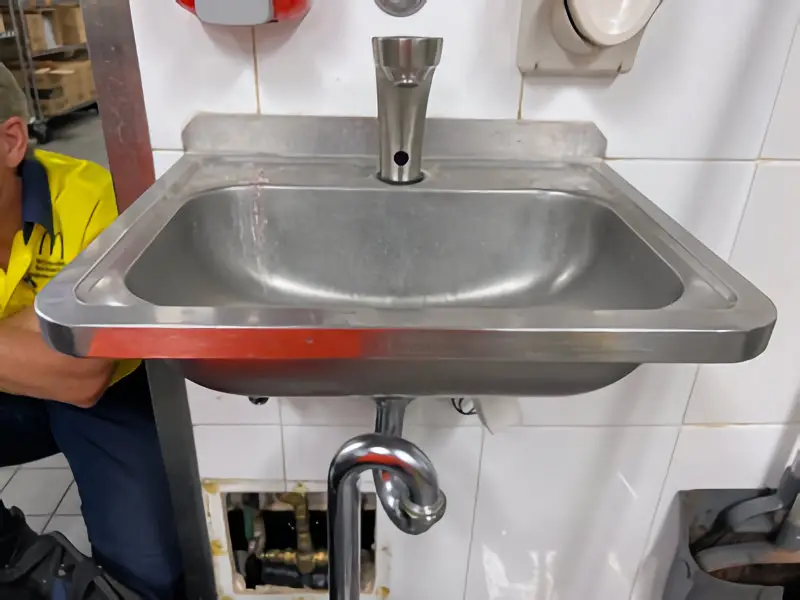
lead free taps installed by Whywait Plumbing

The photo above showcases businesses adapting to the new lead-free plumbing regulations. In this example, we replaced older-style taps containing lead with new compliant stainless steel, lead-free taps in the wash-up basins in the kitchen area at McDonald’s Oxenford. We have been installing these taps for the past two years, anticipating the transition to lead-free taps.

The sensor tap visible in the basin is a stainless steel hob-mounted infrared sensor tap. For commercial kitchens, these taps serve as an eco-friendly, water-efficient, and cost-effective alternative when upgrading sensor taps. The advanced infrared sensor technology ensures a sanitary, touch-free operation, making it an ideal choice for public applications.

A Healthier Future with Lead-Free Plumbing

The transition to lead-free plumbing products is crucial to creating safer and healthier environments for all Australians.

At Whywait Plumbing, we’re committed to informing you and helping you navigate this significant change. So we can build a brighter, healthier future for you and your loved ones. If you have any questions or concerns about lead-free plumbing, please don’t hesitate to contact us. We’re always here to help!

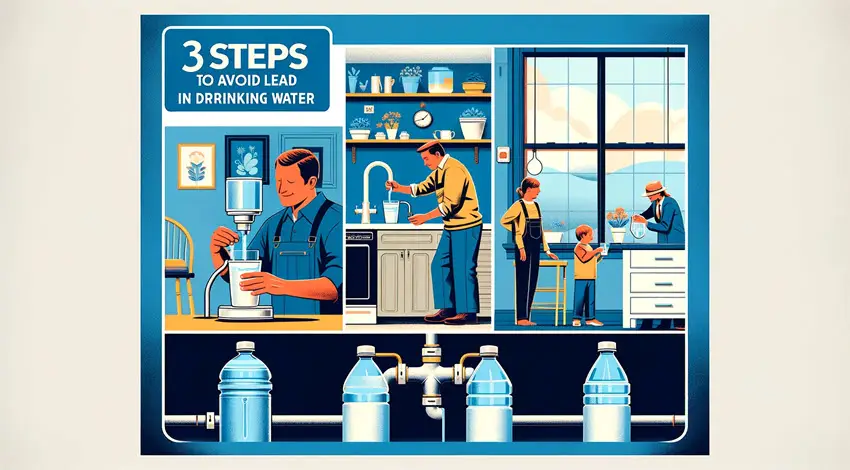
3 Steps to Avoid Lead In Your Drinking Water

3 Steps to Avoid Lead In Your Drinking Water

Dissolved lead in your drinking water is a reality 

In Australia, the presence of dissolved lead in our drinking water isn’t just a tale from a far-off land; it’s a stark reality we face right here. Lead, a metal we’ve long used in a myriad of plumbing products nestled within the walls of our homes and buildings, lurks unseen. The usual suspects? Brass fittings and taps are found in most kitchens and bathroom.

It’s a peculiar thing about some brass plumbing fittings; they’ve got a bit of a nefarious side. Leave your water sitting in those pipes for too long, especially in the hot water system, and lead decides it’s time to take a swim. This unwanted guest is far more likely to drop by your tap water when it’s been heated up to around 70 degrees. Why? Because heating the water isn’t just about getting it hot. It increases the levels of all dissolved metals, with lead being one of the most unwelcome.

This little factoid brings us to a golden rule for Aussie households: always, and I mean always, opt for cold water when you’re filling up for a drink or cooking. It’s a simple step that can make a big difference in keeping lead out of your diet.

And for those of you collecting rainwater in rainwater tanks, there’s another wrinkle to consider. The increased acidity in rainwater isn’t just tough on your gutters; it also plays a role in leaching more of those dissolved metals and lead from your brass plumbing fittings.

So, what’s the takeaway? It’s about being aware and taking those small but significant steps to protect your health and that of your family. Keep an eye on your water use, and let’s keep our water safe and lead-free.

3 simple steps to reduce exposure to lead in water

Practical Steps to Minimise Lead Exposure in Your Home’s Drinking Water

In our sunburnt country, the notion of lead piping as a common conduit for our drinking water is almost a non-issue – a nod to the proactive steps taken many years ago in Australian home and building construction standards. Consequently, it’s a rare occurrence for Aussies to find themselves grappling with elevated blood lead levels due to their drinking water.

However, complacency has never been our style, especially when it comes to safeguarding our health and that of our families. Here are some straightforward, no-nonsense strategies to keep the spectre of lead in your drinking water at bay:

  • Cold Tap Wisdom: Make it a steadfast rule in your household to use only water from the cold tap for drinking and cooking. It’s a simple yet effective first line of defence against lead.

  • Morning Rituals: Kick off your day with a good deed for your health. Flush the cold water taps destined for drinking and cooking for about 30 seconds every morning. This practice ensures that the water you’re using is fresh, having not stagnated in the pipes overnight.

  • Coming Home to Freshness: If your home has been left unoccupied for a while, a thorough welcome home for your plumbing is in order. Give all cold water taps a good three-minute flush to bid farewell to any dissolved metals that have taken up residence in your absence. This tip is particularly handy for those returning from a holiday or extended leave.

  • Public Park Pro Tip: Enjoying the great outdoors and need a sip from a water bubbler or tap in a public park? Give it a quick 30-second flush, especially if it looks like it hasn’t seen much action. It’s a small step that can make a big difference in reducing exposure to lead.

  • Testing? Not Necessary: Before you think about testing your water for lead, take a breath and relax. By following the above suggestions, you’re already taking proactive steps to flush out dissolved metals like lead, copper, and nickel from your drinking water.

Embracing these practices doesn’t just contribute to your peace of mind; it actively enhances the quality of water you and your loved ones consume daily. So, here’s to taking control with simple actions that make a significant impact on our well-being. Cheers to clean, safe drinking water in every Aussie home!

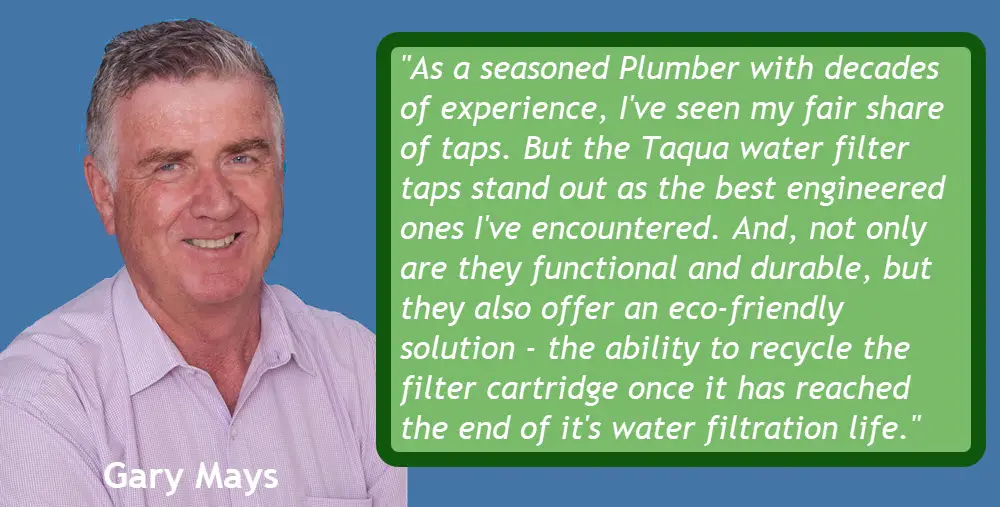
Taqua built-in water filtration taps recommended by Gary Mays
CALL NOW
CALL NOW